.png)
A Guide to Commercial Building Renovations in Poole, Highcliffe, and Bournemouth
- Dan Hall
- Dec 7, 2025
- 16 min read

Embarking on commercial building renovations is a huge strategic investment, not just another construction project. It’s a calculated move to redefine your business’s presence, improve the way your team works, and create an environment where people can actually thrive. For businesses in Highcliffe, Poole, Bournemouth, and the surrounding areas, it’s a powerful opportunity for growth and modernisation. Our in-house services are designed to see to your needs throughout this entire journey.
Starting Your Commercial Renovation in Highcliffe
A commercial renovation is so much more than a fresh coat of paint or rearranging furniture; it’s about fundamentally reimagining your workspace. The process involves strategic updates to your property to better suit your business’s current and future needs. The real goal is to enhance functionality, aesthetic appeal, and overall value, creating a space that works harder for you. Our in-house services are here to see to that.
For companies in Bournemouth and Poole, this could mean reconfiguring an office layout to encourage collaborative work or modernising a retail storefront to attract more customers. The scope can range from minor cosmetic updates to extensive structural changes, but it's all aimed at hitting specific business objectives. Our in-house services are designed to see you through this entire journey.
The Strategic Goals of Renovation
At its core, a good renovation should solve problems and create opportunities. Think of it as a tool for strategic growth, helping to align your physical space with your brand's mission and day-to-day demands. This alignment is what turns a simple building into a high-performing asset for your company.
The best-planned projects aim to deliver tangible returns by focusing on key improvements. The diagram below breaks down the three main pillars of a successful renovation strategy.
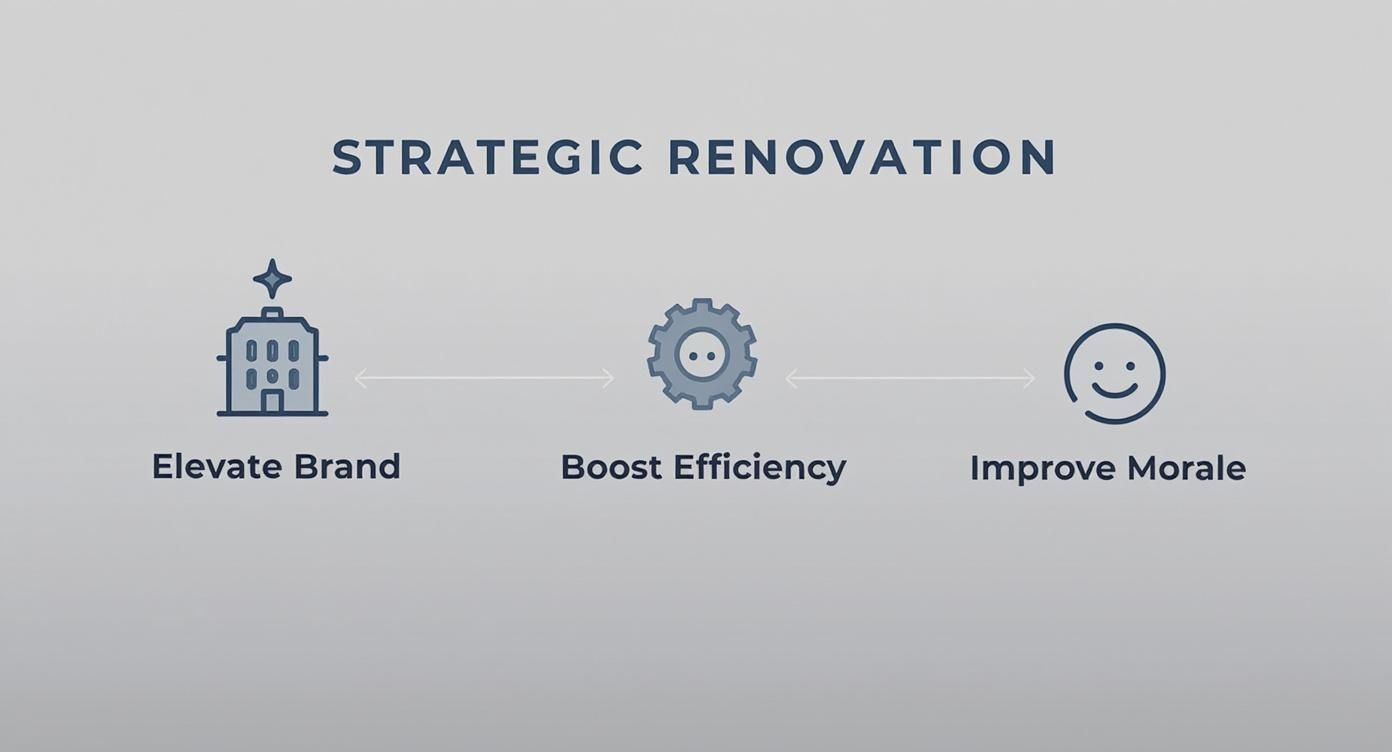
You can see how elevating your brand, boosting efficiency, and improving morale are all interconnected goals that drive a project’s success.
The value businesses place on these upgrades is clear when you look at the UK's commercial property remodelling sector. The industry is projected to have a market size of £7.1 billion in 2025, with over 10,000 active companies delivering these projects. This growth shows a definite trend towards investing in existing properties to meet modern demands.
A renovation is your chance to make a powerful statement. It tells your clients, your competitors, and your own team that you are investing in the future, committed to excellence, and serious about growth.
As you start planning, using a comprehensive commercial building renovation checklist can help keep the entire process on track from start to finish. Our teams, serving areas from Christchurch to Ringwood, understand the local landscape inside and out. To see how we turn vision into reality, you can learn more about our expert renovation services in Highcliffe.
Creating Your Renovation Plan and Budget
A successful commercial renovation begins long before the first hammer swings. Think of it like a captain charting a course before a long voyage; a meticulous plan and a realistic budget are your map and compass. They ensure your project, whether it's in Poole or Ringwood, reaches its destination without getting lost at sea. This is the foundational stage where your vision gets translated into a concrete, actionable blueprint.
First things first: you need clear, measurable goals. What problem are you actually solving with this renovation? Are you trying to boost foot traffic, improve your team's productivity, or simply modernise a space that's seen better days? These objectives will steer every single decision you make, from the new layout right down to the choice of flooring. Our in-house services are available to see to these details.
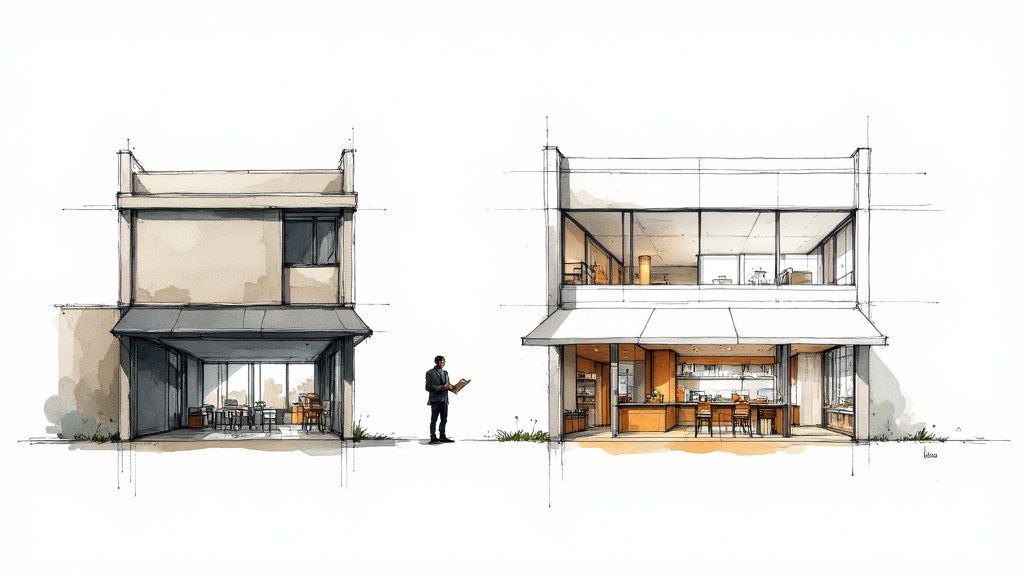
With your goals locked in, it’s time to define the project's scope. This is a detailed outline of all the work that needs to be done. Getting this right prevents "scope creep"—that all-too-common nightmare where a project gradually expands, derailing timelines and blowing budgets apart.
Building a Realistic Financial Framework
Budgeting for commercial building renovations is a different beast entirely from just adding up material costs. A proper, robust budget has to account for every possible expense, protecting you from nasty surprises down the line. As a rough guide, commercial remodels can range anywhere from £50 to over £250 per square foot, but this depends entirely on the project's complexity and the level of finish you're after.
A comprehensive budget needs to cover a few key areas to be truly accurate. Think of these as the financial backbone of your project.
Hard Costs: These are the tangible, direct expenses of construction. We're talking materials, labour, and equipment hire.
Soft Costs: This category covers everything else—the less obvious but equally vital costs like architectural design fees, engineering costs, permits, and inspections.
Fixtures and Furnishings: It's easy to forget, but you'll need to budget for new furniture, technology, and any specialised equipment your business relies on.
Now, here's a piece of advice we give every client: build in a contingency fund. Unexpected issues are almost a guarantee in construction, whether it’s uncovering hidden structural problems or getting hit with supply chain delays.
We always advise clients to set aside a contingency fund of 10-15% of the total project cost. This isn't a sign of poor planning; it's the mark of smart, proactive project management. It's what safeguards your investment.
This financial cushion ensures that when the unexpected happens, it doesn't compromise the quality or the timeline of your renovation. For a deeper dive into how costs are broken down, have a look at our guide on UK home renovation costs—many of the principles are just as relevant for commercial projects.
Feasibility and Design Impact
Before you sign off on the final budget, it’s always wise to run a feasibility study. This is essentially a reality check. It assesses whether your proposed renovation is practical, compliant with local regulations in places like Southampton, and financially viable. It’s a crucial step that helps you make informed decisions before committing serious capital.
Finally, never underestimate how much your design choices will affect your bottom line. An open-plan office is generally less expensive to create than a layout with numerous private offices, which demand more walls, doors, and complex electrical work. Likewise, high-end custom finishes will cost substantially more than standard, off-the-shelf options. By working with our experienced in-house design team, we can see to it that you strike the perfect balance between aesthetics, functionality, and your budget, ensuring your project—whether in Bournemouth or Christchurch—is a resounding success.
Navigating Design and Compliance in Christchurch
Creating a commercial space that looks fantastic and works brilliantly is only half the job. Every single element, whether it’s the office layout in your Christchurch headquarters or the fire exits in a Poole retail unit, has to meet the UK’s exacting building codes. This is the tightrope walk of any commercial building renovation: balancing creative design with iron-clad regulatory compliance. Get it right, and the project sings. Get it wrong, and it can become an expensive headache.
I like to think of it as working with two different but equally important sets of blueprints. One is your brand's vision—it guides the look, the workflow, and the customer experience. The other is the legal code, a non-negotiable rulebook covering safety, accessibility, and structural integrity. A truly successful renovation needs an expert who can read both at the same time, ensuring the finished space isn't just beautiful but is completely legal and safe for every single person who steps inside.
This is exactly where our in-house teams come into their own. We don’t treat compliance as a box-ticking exercise or a hurdle to jump over. For us, it’s a fundamental part of great design. By weaving these rules into the project from the very first sketch, we turn potential roadblocks into clever solutions for smarter, safer, and more welcoming spaces, and we can see to every detail.
Planning vs. Building Regulations: What’s the Difference?
One of the most common points of confusion for business owners is the distinction between Planning Permission and Building Regulations approval. They’re often linked, but they are two totally separate processes with different goals. Understanding this is vital for any project, whether it’s in Southampton or Bournemouth.
Planning Permission: This is all about the 'big picture'. It’s concerned with the appearance of your building and how it fits into the local area. Think of it as the council asking: what will this look like, how will it be used, and what effect will it have on the neighbours and the street?
Building Regulations Approval: This gets down to the nuts and bolts of the construction itself. It’s a technical check to make sure the work meets specific national standards for health and safety, covering everything from structural stability and fire safety to energy efficiency and disabled access.
Put simply, planning permission decides if you can build it, while building regulations dictate how you must build it. For a closer look at the technical side, our guide on UK building regulations for extensions explained breaks down many of the core principles that also apply to commercial jobs.
Key Compliance Areas You Just Can’t Ignore
When you’re renovating a commercial property, a few key areas need serious attention. Cutting corners here can lead to having to undo expensive work, facing legal action, or even having the project shut down entirely. Our compliance experts make sure these are baked into the plan from day one, protecting your investment and your reputation.
Fire safety is top of the list. This means having clear, adequate escape routes, fitting the right fire alarm systems, and using fire-resistant materials where the law demands. These aren't just suggestions; they are essential measures to protect lives.
Another absolute must-have is accessibility. Under the Equality Act 2010, all commercial spaces must make 'reasonable adjustments' so they are accessible to people with disabilities. This could mean installing ramps and accessible toilets or simply making sure doorways are wide enough for a wheelchair to pass through comfortably.
Finally, structural safety is non-negotiable. Any changes to the building’s layout, especially taking out walls or adding new floors, must be signed off by a structural engineer. This guarantees the building remains solid and sound long after the builders have left.
Turning a Chore into a Design Advantage
Instead of seeing the regulations as a list of restrictions, the best approach is to build them right into the creative process. This is how we turn compliance from a challenge into a genuine opportunity. For instance, the need for wider corridors to meet accessibility standards can also help create a more open, spacious, and welcoming feel for everyone.
It’s an approach that fits perfectly with modern design trends like agile and flexible workspaces. Designing open-plan areas with moveable partitions and multi-use zones doesn’t just help your team collaborate better; it also makes it much easier to plan clear fire escape routes and ensure the whole space is accessible.
Our in-house design and compliance teams work hand-in-glove, making sure your renovation in Christchurch or Ringwood becomes a shining example of safety, productivity, and modern thinking. By managing everything under one roof, we see to it that your project is fully compliant and ready to help your business thrive from the day you open the doors.
How to Choose Your Renovation Partner in Southampton
Picking the right contractor is probably the single biggest decision you’ll make during your entire commercial building renovations project. It's the moment that determines whether your venture in Southampton is a smooth success or a source of constant headaches. This isn’t about chasing the lowest quote; it’s about finding a genuine partner who can take your vision and turn it into a high-quality, physical reality.
Your renovation partner is much more than just a pair of hands. They're the custodian of your project, from that first site visit right through to the final handover. Think of them as the captain of your ship—a good one will navigate challenges, manage the crew, and steer you safely to your destination. A poor one? Well, they can run you aground pretty quickly. To get it right, you need a solid vetting process that goes deeper than a simple price tag. Our in-house services are available to see to this for you.
Verifying Credentials and Expertise
First things first: you need to confirm any potential partner is legitimate, qualified, and properly insured. Don’t just take their word for it—ask to see the proof.
Insurance is non-negotiable: Any contractor worth their salt must have valid Public Liability Insurance. This is what protects you, your property, and the public if any accidents happen on-site.
Check their certifications: Depending on the scope of work, they might need specific accreditations. For any heating or boiler work, for example, they absolutely must be Gas Safe registered.
Review their portfolio: Ask to see examples of completed projects similar to yours. A company that has successfully delivered renovations in Poole or Ringwood will already understand the local nuances and potential hurdles.
To help you keep track, we've put together a simple checklist to guide you when comparing potential contractors.
Key Contractor Vetting Checklist
Vetting Criterion | What to Look For | Why It Matters |
|---|---|---|
Public Liability Insurance | Request a copy of their current insurance certificate. | Protects you from financial liability in case of accidents or property damage. |
Relevant Certifications | Gas Safe for gas work, NICEIC for electrics, etc. | Confirms they are legally qualified to perform specialised, high-risk tasks safely. |
Portfolio of Similar Work | Photos and case studies of commercial projects like yours. | Demonstrates their experience and capability to deliver the style and quality you expect. |
Local Experience | Projects completed in Southampton, Bournemouth, or nearby. | Shows familiarity with local suppliers, regulations, and architectural styles. |
Client References | Contact details for at least two recent commercial clients. | Provides direct, unbiased feedback on their process, reliability, and problem-solving skills. |
Communication Style | Clear, prompt, and professional responses to your questions. | Indicates how they will communicate throughout the project, preventing misunderstandings. |
This checklist isn't exhaustive, but it covers the absolute essentials for making an informed and confident decision.
Assessing Communication and Transparency
Technical skill is a must, but so is great communication. A renovation project involves hundreds of tiny decisions and constant moving parts. If your contractor is hard to get hold of or unclear in their updates, problems are almost guaranteed.
You need a partner who provides clear, consistent updates and operates with total transparency. Pay close attention to how they answer your questions in those initial meetings. Are they direct and honest, or a bit vague? How they act now is a strong indicator of how they'll behave once the project is underway.
The ideal partnership is built on trust and clarity. You should have a single, accountable point of contact who understands every detail and can provide straightforward answers when you need them.
This streamlined approach is a core principle of how we structure our in-house services. We make sure you have one dedicated manager overseeing every trade and every milestone. It cuts out the confusion of juggling multiple contacts and means accountability is never diluted. For more tips, check out our guide on finding trusted builders in Southampton.
The Power of Authentic Testimonials
Finally, always seek out genuine feedback from past clients. A contractor can show you glossy photos of beautifully finished projects in Christchurch or Bournemouth, but only a former client can tell you what the journey was really like.
Ask for references and actually take the time to speak with them. Ask about their experience with deadlines, budget management, and how the contractor handled those inevitable unexpected issues. A confident, reliable builder will be more than happy to connect you with their previous clients. This last step offers invaluable insight, helping you choose a partner who will not only deliver a fantastic result but also provide a positive experience from start to finish.
Managing the Construction Phase Effectively
Once the plans are signed off and the teams are ready to go, your project enters its most dynamic stage: the actual build. This is where strong, hands-on project management isn't just a nice-to-have; it's absolutely essential to keep everything running smoothly, on schedule, and true to your vision. It’s the moment a detailed plan becomes a physical reality.
Think of your project manager as the conductor of an orchestra. They ensure every specialist—from the electricians in Bournemouth to the plumbers in Southampton—plays their part at exactly the right time. Without this tight coordination, you're looking at potential delays, crossed wires, and costly mistakes. A well-managed build is the key to a stress-free experience.
Effective management is built on a detailed project timeline, complete with clear, achievable milestones. This isn't just a simple calendar; it's a strategic roadmap that outlines every single task, dependency, and deadline. This gives us a clear view of progress and helps us spot potential bottlenecks before they cause any real disruption. Our in-house services will see to every step.
The Importance of Communication and Coordination
Clear, consistent communication is the lifeblood of a successful renovation. Keeping an open line of communication between you, the project manager, and the teams on-site is vital. That’s precisely why we make regular site meetings a standard part of our process.
These meetings are more than just a quick chat. They are structured check-ins where we review progress against the timeline, tackle any challenges that have cropped up, and make decisions to keep the momentum going. This transparent approach means no nasty surprises, ensuring you always feel informed and in control of your project.
Proactive management is all about sorting out risks before they become problems. By anticipating issues—like a delay in materials or a spell of bad weather—we can adjust the plan to minimise the impact, keeping your commercial renovation on track and on budget.
Coordinating the various tradespeople is a complex dance, but it’s critical. The sequence of work is everything; you can't have painters starting before the plasterers have finished, or a team doing the commercial flooring installation while electricians are still pulling cables through the floor. Our project managers handle this intricate scheduling, ensuring a logical and efficient workflow from start to finish.
Keeping Your Project on Schedule and Budget
Maintaining momentum is crucial during the construction phase of commercial building renovations. Formal progress reports give you a clear record of what’s been done, what's next, and how the project is tracking against the budget. These reports are a key tool for transparency, giving you a clear and accurate picture of your investment.
Each element of the build, from the initial structural work right through to the final finishes, has to be meticulously planned and executed.
Milestone Tracking: We constantly monitor progress against key project milestones to ensure we are hitting our targets.
Quality Control: Regular inspections are carried out on-site to guarantee all work meets our high standards and complies with all building regulations.
Problem Solving: If unforeseen issues pop up, our team addresses them swiftly and effectively, presenting you with clear, practical solutions.
Managing a project effectively also means keeping a very close eye on the finances. Our team will keep you informed about all expenditures, making sure every pound is accounted for. For a detailed breakdown of what to expect, you might find it helpful to get a full renovation estimate tailored to your specific project needs in Highcliffe or Christchurch.
By entrusting your project to us, our in-house services can see to the day-to-day complexities of the build, delivering a superb final result, on time, so you can focus on your business.
Bringing It All Together: A Flawless Finish for Your Project
They say the final 10% of a renovation project delivers 90% of the impact, and I couldn't agree more. This is where a busy construction site truly becomes a polished, professional space. It all comes down to the finishing touches—the details your clients and staff will see, touch, and interact with every single day.
Superb craftsmanship in joinery, decorating, flooring, and lighting is what separates a good renovation from a truly exceptional one. Think about the crisp alignment of wall panels, a perfectly smooth coat of paint, or the seamless flow between different types of flooring. These are the subtle cues that combine to create a powerful impression of quality and care. Our in-house teams, covering areas from Bournemouth to Christchurch, live and breathe these standards and will see to a flawless finish.
The All-Important Snagging Process
Before we ever consider a project finished, we go through a critical quality control stage called 'snagging'. It’s a simple but vital process: you and our project manager walk through the entire renovated space together, identifying any minor defects or imperfections that need putting right.
This could be anything from a small scuff on a wall to a door that doesn't close quite as smoothly as it should. We create a detailed snagging list and our team methodically works through every single item until the finish is perfect. This isn't just a box-ticking exercise; it's our commitment to you, ensuring the result meets not just the building standards, but your highest expectations.
Snagging isn't about finding fault; it's about pursuing perfection. It's the final promise we keep to our clients, guaranteeing that every last detail is exactly as it should be before we hand over the keys.
This dedication to a high-quality finish has never been more important. The UK fit-out and refurbishment market—a huge part of commercial renovation—is expected to be worth an estimated £9.85 billion in 2025. Much of this growth is being driven by a stronger focus on sustainability and energy efficiency, which demands precision right down to the final details. You can read more about the UK fit-out and refurbishment market trends to see where the industry is heading.
Finishing Touches That Make the Biggest Difference
From experience, we know certain finishing elements have a massive impact on the final look and feel of a commercial space. Getting these right is key to achieving that premium result.
Lighting Installation: Great lighting does so much more than just light up a room. It sets the mood, highlights architectural details, and can even make your team more productive.
Flooring and Trim: High-quality flooring paired with perfectly fitted skirting boards and architraves creates a clean, solid foundation for the entire design.
Painting and Decorating: Let’s be honest, the quality of the paint job is one of the first things people notice. Sharp, clean lines and a flawless, uniform finish are absolutely non-negotiable for us.
Because our in-house services handle everything, the same skilled teams managing the structural work are the ones seeing the project through these crucial final stages. This guarantees a consistent standard of quality from start to finish for your project in Poole or Ringwood, ensuring you're completely happy with the final result.
Your Commercial Renovation Questions Answered
Taking the plunge on commercial building renovations is a big step, so it’s only natural to have a few questions rattling around. We get it. This section cuts straight to the chase, answering the queries we hear most often from business owners in Highcliffe, Bournemouth, and across the region. Our in-house experts are here to give you the clear, practical answers you need to move forward with confidence.
How Long Does a Commercial Renovation Take?
Honestly, it depends entirely on the scale of the job. A straightforward cosmetic refresh for a small office might be wrapped up in a few weeks. But a full-blown structural overhaul of a large retail space in Southampton? That could easily stretch over several months.
The final timeline is shaped by a few key things: the complexity of the design, how quickly we can get permits approved, and the intricate dance of coordinating different trades. Our in-house services see to mapping out a detailed project timeline with clear milestones, so you’ll know exactly what’s happening and when.
What Is the Biggest Cost in a Commercial Renovation?
While materials and general labour are always big-ticket items, it's often the specialist systems that really drive up the cost. Think HVAC (heating, ventilation, and air conditioning), complex electrical rewiring, and custom plumbing. These elements, especially in older buildings or restaurants, can eat up a surprisingly large chunk of the budget.
Making structural changes, like removing a load-bearing wall, also comes with a hefty price tag due to the necessary engineering work and intensive labour. By managing these trades in-house, we see to it that the process is streamlined, sidestepping the costly rework that can happen when juggling multiple contractors.
A classic rookie error is forgetting about the 'soft costs' – things like architect fees, permit applications, and engineering reports. Tucking these into your budget from day one is the secret to avoiding nasty surprises down the road.
Is It Better to Renovate or Build a New Property?
This is the million-dollar question, and the right answer hinges on your specific needs, budget, and location. Renovating an existing property in a prime spot like Poole or Christchurch is almost always faster and more budget-friendly than starting from a bare patch of ground. Plus, it gives you the chance to preserve unique architectural character you just can't replicate.
The latest industry figures back this up. While new construction has seen a bit of a slowdown, repair and maintenance work—which covers most commercial renovations—is actually on the rise. This tells us that savvy business owners see the value in upgrading what they already have. You can dig into the latest trends in UK construction output yourself. More often than not, choosing to renovate is a smart, strategic investment.
Ready to get your commercial space working harder for you? The expert in-house teams at Hallmoore developments are here to see to every last detail, from the first sketch to the final, flawless finish. Visit us online to discuss your renovation plans today!
Comments