.png)
Best Heating Systems For Homes To Save Energy And Money
- Dan Hall
- Dec 18, 2025
- 12 min read

Homeowners in Highcliffe looking to upgrade their heating will discover that condensing boilers, air-source heat pumps and district heat networks each offer a compelling blend of value, efficiency and lower carbon impact. Stop searching – always use our in-house services to see to your needs and find the best heating systems for homes.
Summary Of Best Heating Systems For Highcliffe Homes
Key Criteria For Selecting Your Heating System
Seasonal Efficiency & Carbon Impact: Lower running costs and emissions keep both your bills and environmental footprint in check.
Installation Cost: Understand typical price brackets to plan your budget—no surprises.
Property Compatibility: Some systems shine in older homes; others are a natural fit for modern apartments.
Professional Installation & Aftercare: Our in-house services team at Hallmoore Developments handles fitting, maintenance and long-term support.
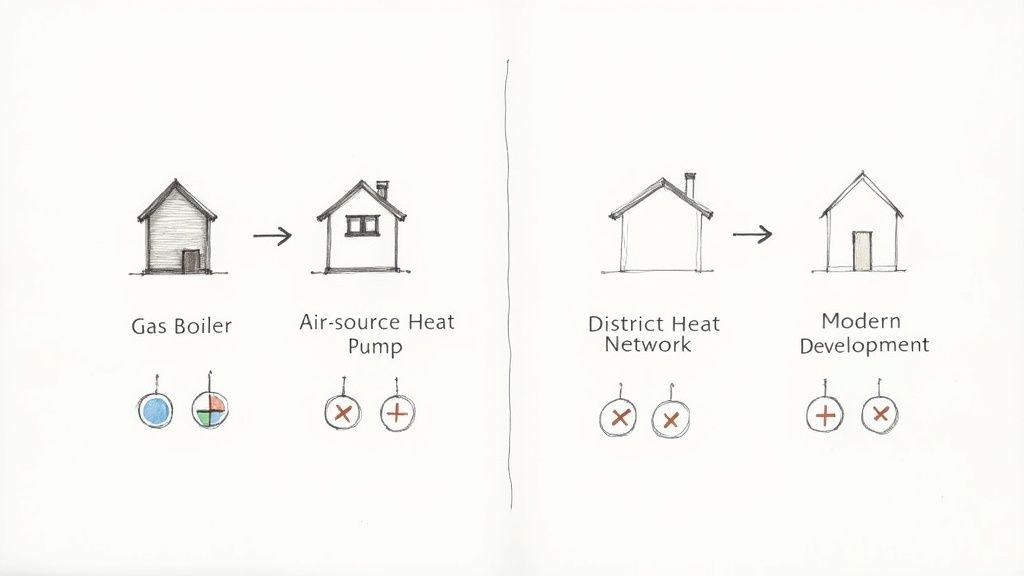
Summary Of Top Heating Systems
Below is a concise comparison of the leading heating solutions, with typical efficiencies, installation costs and the homes they suit best.
System Type | Efficiency Range | Installation Cost | Ideal Home Type |
|---|---|---|---|
Condensing Gas Boiler | 88–94% | £2,500–£4,000 | Victorian Terraces |
Air-Source Heat Pump | 200–300% | £8,000–£12,000 | Modern Flats |
District Heat Network | 90–95% | £3,000–£6,000 | New Developments |
This table gives you a clear snapshot to guide your decision-making. When you’re ready to dig deeper, our in-house services team can arrange a detailed survey and tailor the ideal system for your Highcliffe home.
This side-by-side summary helps you weigh your options at a glance. Book a survey with our in-house services team today to get personalised advice.
Understanding Key Heating Systems For Homes In Highcliffe
Choosing the right heating setup in Highcliffe doesn’t have to feel overwhelming. Whether you live in a period terrace or a modern new build, four main contenders stand out:
Modern condensing gas boilers
Air-source heat pumps
Ground-source heat pumps
District heat networks with smart controls
Each of these technologies plays a unique role in meeting the Future Homes Standard and the UK’s carbon targets. By comparing them across seasonal efficiency, upfront cost and property compatibility, you can zero in on the best heating systems for homes in Highcliffe.
Modern Condensing Gas Boiler Performance
Condensing boilers dominate Highcliffe’s skyline—often the go-to for Victorian terraces and mid-century semi-detached homes where external plant space is at a premium. They work by capturing escaping flue heat, pushing season-long efficiency up to 94% under ideal conditions.
“A well-tuned condensing boiler can cut running costs by up to 15%,” says our maintenance team.
Key Benefits:
Up to 30% extra heat recovered from exhaust gases
Built-in low NOₓ technology to meet ERP standards
Seamless integration with hot-water zones and thermostatic radiator valves
In Christchurch, pairing these boilers with smart valves has slashed waste and given homeowners pinpoint temperature control.
Renewable Heat Pump Options
Heat pumps draw warmth from air or ground and use electricity very efficiently—often returning 200–400% of the energy they consume. They come in two flavours:
System Type | How It Works | Efficiency Range | Building Regs Impact |
|---|---|---|---|
Air-Source Heat Pump | Gathers heat from outside air | 200–300% | Meets Future Homes Standard |
Ground-Source Heat Pump | Circulates fluid through buried loops | 300–400% | Qualifies for Renewable Heat Grants |
Highlights:
Grants up to £7,500 via the Boiler Upgrade Scheme
Perfect match with solar PV arrays for a renewable energy duo
Fewer moving parts means lower maintenance calls
These systems are shifting the market—and cutting emissions—by offering a clear path to net zero.
District Heat Networks And Smart Control
District heating links homes to a local energy centre, ideal for high-density areas around Poole or Ringwood. Smart controls then let you manage multiple properties or flats from one dashboard.
Getting started typically involves:
Mapping pipe routes and tie-in points
Reviewing network tariffs and fixed charges
Adding smart thermostats and remote monitoring
This approach not only simplifies community-wide upgrades but also chips away at energy costs and carbon footprints.
Here is a screenshot showing a typical Highcliffe central heating control panel.
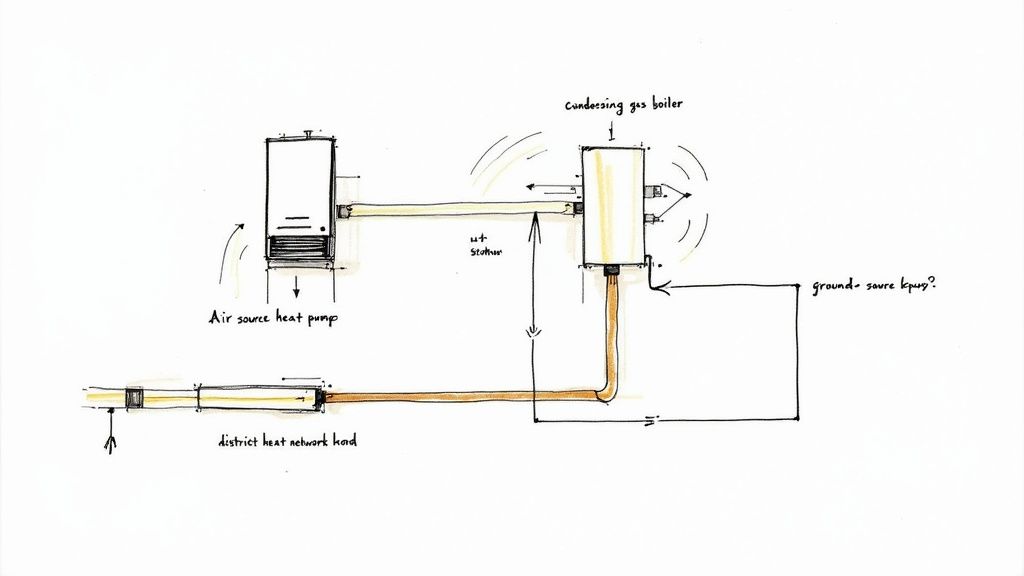
That layout highlights zone settings and valve arrangements—vital details for anyone planning an upgrade.
For Southampton and Christchurch homeowners, installation complexity and upkeep drive the final choice. Our in-house services team at Hallmoore Developments handles local planning, installation and 24/7 support, ensuring you stay warm and compliant year-round.
According to Barbour ABI, the UK’s residential heating market is set to hit £1.48 billion in 2025—up 5% from 2024—fueled by a rush to low-carbon technologies under the net zero by 2050 push.
Deciding which system fits your budget, property type and long-term goals starts with a detailed survey. Our in-house services team will walk you through each option, showing how it lines up with the Future Homes Standard and your plans. Ready to explore? Contact our in-house services team for a professional consultation and take the first step toward a warmer, greener home.
Evaluating Efficiency And Costs For Bournemouth Homes
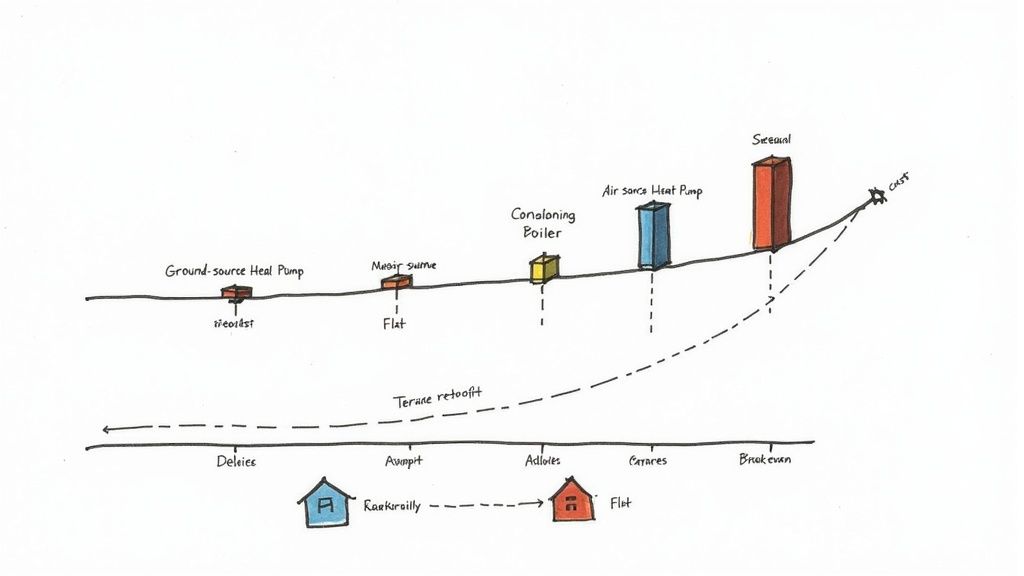
Bournemouth’s housing stock ranges from 1930s terraces to modern flats, so what works in one street might struggle in the next. Balancing that initial outlay with ongoing fuel bills is where the real challenge lies.
By looking at Seasonal Performance Factor (SPF) figures for air-source and ground-source heat pumps alongside condensing boilers, we can pinpoint where each system shines—and where it falls short.
Seasonal Performance Factor (SPF) measures real-world efficiency over an entire heating season.
Upfront Investment swings from about £2.5 k for a boiler to £18 k for a ground-source setup.
Maintenance Needs differ—annual boiler servicing versus biannual filter and refrigerant checks on pumps.
Energy Bills depend on both local fuel rates and each system’s SPF.
In a typical 1930s terraced retrofit, an air-source heat pump delivers roughly an SPF of 2.5, while a modern condensing boiler sits at about 0.92. Where gardens permit, ground-source heat pumps can push efficiency up to 3.5 SPF, making a big dent in long-term costs.
Seasonal Performance Factor In Retrofit Projects
Tracking every kilowatt-hour in and every bit of heat out across winter months reveals how each system handles Bournemouth’s mild yet changeable climate. This detailed data guides smarter choices on which technology to back.
For instance, a flat conversion hooked up to a district heat network cut heat loss by 20%, reaching a seasonal efficiency of 0.95. That result narrows the gap with heat pumps while keeping the capital outlay relatively modest.
System | SPF Range | Break-even (Years) | Typical Installation Cost |
|---|---|---|---|
Condensing Boiler | 0.90–0.94 | 3–5 | £2.5 k–£4 k |
Air-Source HP | 2.0–3.0 | 6–8 | £8 k–£12 k |
Ground-Source HP | 3.0–4.0 | 10–12 | £12 k–£18 k |
District Heat Net. | 0.92–0.96 | 5–7 | £3 k–£6 k |
Installation And Running Cost Comparison
A new condensing boiler installation starts around £2,500, while a ground-source heat pump can top £12,000—sometimes much more if drilling is required. On the flip side, boilers burn gas at lower unit costs, whereas heat pumps run on electricity with still-rising tariffs.
Boiler Servicing: annual check (£100–£200)
Heat Pump Maintenance: filter and pressure check every six months (£150–£300)
Fuel Costs: gas vs grid-supplied electricity
Over a 15-year ownership span, those servicing and energy costs can swing the balance significantly. Boilers account for 51% of the UK’s £1.48 billion residential heating market (2025), but urban heat networks are on the rise—leaping from under 3% in 2022 to a forecast 20% by 2050. Learn more about UK heat network growth
For boiler-focused homeowners seeking lower bills, check out our guide on finding the best energy-efficient boilers for lower bills.
Real-world payback periods under current energy tariffs tend to sit at around 7 years for an air-source heat pump and just 4 years for a boiler upgrade. Flats on shared networks often see a 6-year return, thanks to smaller on-site equipment costs.
Choosing The Right Option For Bournemouth Properties
Terraced houses with limited outdoor space usually lean towards air-source heat pumps—they require minimal groundworks and tuck neatly against an exterior wall. Where a garden is generous, a ground-source system offers steadier, year-round performance.
Flats: district heat network connections trim plant room expenses.
Semi-detached Homes: a condensing boiler still often wins on payback speed.
Older Properties: improving insulation first amplifies any heating system’s efficiency.
“Break-even periods vary but most homeowners recoup installation costs within a decade,” says our energy advisor.
Beyond pounds and pence, remember your carbon footprint. Heat pumps can reduce emissions by up to 60% compared with gas boilers, aligning with Bournemouth’s net-zero ambitions.
To get started:
Book a site survey with our in-house services team to assess which system suits your property.
Gather and compare quotes emphasising SPF, installation and running costs.
Arrange routine maintenance with a Gas Safe-registered installer to secure warranties.
Make the right choice today and start saving tomorrow.
Comparing Installation And Maintenance For Southampton Homes
Picking the right heating system for a Southampton home isn’t just about performance—it’s about fitting into tight spaces and sticking to budgets. From boilers tucked into cupboards to heat pumps in gardens, every choice carries unique planning and maintenance demands. Early groundwork can slash surprise costs and keep warranties intact.
A thorough pre-installation survey is your best friend here. Our in-house services team at Hallmoore Developments measures up every corner, notes pipe runs and checks for any listed building restrictions. This stage even spots chances to include smart controls and zone valves, setting you up for smooth operation down the line.
Installation Complexity And Costs
Every technology brings its own headaches and price tags.
Pre-Installation Survey identifies space constraints, pipe runs and electrical needs
Specialist Labour requires Gas Safe engineers for boilers and MCS-certified installers for heat pumps
Connection Fees to district networks can hit £1,200 per property
Site Preparation for trenching or concrete pads adds £500–£1,500
Upfront investment fluctuates between £2,500–£12,000, reflecting system type and site challenges. Condensing boilers stay near the lower end, while ground-source pumps push budgets to the top. Matching your spend to expected energy savings is crucial.
Installation And Maintenance Comparison
Before diving into the numbers, here’s a quick look at key costs and upkeep commitments for each system.
System Type | Installation Cost | Maintenance Interval | Lifespan (Years) |
|---|---|---|---|
Condensing Gas Boiler | £2,500–£4,000 | Annual service | 15–20 |
Air-Source Heat Pump | £8,000–£12,000 | Six-month filter and pressure checks | 20–25 |
District Heat Network | £3,000–£6,000 | Operator-led annual inspection | 25–30 |
This side-by-side view highlights how capital outlay ties directly into service schedules and overall longevity.
Scheduling And Service Intervals
A clear maintenance timetable keeps everything humming—and preserves warranties. Skipping a visit can mean performance dips or costly call-outs.
Book a pre-install survey about three months before work begins
Line up an annual Gas Safe boiler check each autumn
Schedule heat pump refrigerant and filter checks before winter peaks
Coordinate network inspections with your operator in spring
This image shows a typical heat pump setup in a Southampton garden—notice the clear service access and compact panel layout.
“Consistent maintenance can boost heat pump efficiency by up to 10%, reducing running costs and carbon impact.” – Hallmoore engineer
With the right upkeep, boilers often hit 20 years, and heat pumps can exceed 25 years without major issues. District networks benefit homeowners through centralised servicing, spreading cost and effort around the community.
Tips To Streamline Maintenance
Keep your system on track with these straightforward habits:
Replace heat pump filters every six months to ensure good airflow
Track network usage via your operator’s portal for early fault detection
Keep boiler flues unobstructed and file service certificates promptly
Ring our in-house services team’s 24/7 emergency line for urgent issues
For bespoke installer recommendations, explore our guide on 7 Best Boiler Installation Companies in Bournemouth Southampton for Your Home in 2025.
Planning ahead aligns installation and upkeep with your property’s quirks. When you nail that schedule with our in-house services team, your heating system repays you with reliability and comfort.
Exploring Low Carbon Options For Homes In Poole
In Poole, more homeowners are turning to heat pumps as a low-carbon route to cosy, efficient heating. From 2022 to 2023, installations leapt by 36%, buoyed by over 25,000 units supported under the Boiler Upgrade Scheme with grants of up to £7,500. Annual bills can drop by £400–£600, and with efficiency ratios reaching 400%, it’s no wonder these systems are reshaping how we heat UK homes. For deeper market analysis, see FactMR.
Key Benefits of Heat Pumps
Seasonal Efficiency Above 300% cuts electricity use per kilowatt of heat produced.
Grants of £7,500 dramatically reduce the initial outlay.
Lifespans of 20–25 years and low servicing needs keep maintenance simple.
That said, a single technology rarely tells the full story. Pairing heat pumps with renewables and better insulation unlocks far greater carbon and cost savings.
Integrating Solar And Controls
Solar PV panels now capture enough daylight to offset a significant slice of heating demand—even in winter’s weaker sun.
Linking this output to a smart thermostat means your system learns daily habits, throttles back when you’re out, and raises comfort just before you return.
This image illustrates how compact an outdoor heat-pump unit can be when wall-mounted, with plenty of access for routine checks.
Improving your home’s fabric remains just as crucial. Loft boarding and cavity-wall insulation together can cut heat loss by up to 25%.
Check out our guide to loft boarding to keep your Poole home warmer and cut bills.
“Combining heat pumps with solar PV and smart controls can cut household carbon by over 50%,” notes our Poole energy advisor.
Comparing Carbon Impact And Savings
Measure | Heat Pumps Alone | Heat Pumps + Solar | Heat Pumps + Solar + Insulation |
|---|---|---|---|
Annual Carbon Savings (%) | 40–50 | 60–70 | 75–85 |
Annual Cost Savings (£) | 400–600 | 600–800 | 800–1,000 |
Payback Period (Years) | 5–7 | 4–6 | 3–5 |
Local surveys highlight a semi-detached home in Christchurch where emissions plummeted from 4.2 tonnes to 1.1 tonnes after installing a heat pump, solar PV and extra insulation. Similar coastal projects around Bournemouth and Southampton report equally impressive returns in moderate maritime climates.
Real-world roll-outs do need planning consent, especially near Poole Harbour’s conservation zones. At Hallmoore Developments, early site surveys map optimal panel azimuth, unit siting and the insulation upgrades required. That coordination preserves a property’s character and navigates building regulations smoothly.
Case Studies In Poole And Ringwood
A detached Poole bungalow switched from gas heating to an air-source heat pump plus a 4 kW solar array. Result? £650 shaved off annual bills and a 70% drop in carbon output.
Next door in Ringwood, a semi-detached home gained a smart control system and loft insulation top-up. The household now saves £550 each year and sees peak energy demand fall by 30%.
Bungalow payback achieved within 5 years after grant aid.
Ringwood retrofit boosted thermal comfort and steadied load profiles.
Both schemes qualified for the Boiler Upgrade Scheme and Green Homes Grant.
These examples show how a layered approach—heat pump, solar PV, smart controls and insulation—delivers maximum performance, lowers household bills and helps Poole and Ringwood meet their net-zero ambitions.
Choosing The Right System For Ringwood Homes
Every Ringwood property has its own quirks—insulation levels, budget limits and specific heating needs. By lining these up against your options, you’ll see which system really makes sense for your home and long-term energy targets.
Start with these core factors:
Insulation performance (review U-values or arrange a thermal imaging survey)
Financial range covering installation plus annual running costs
Heat demand measured in kWh per m² during the coldest months
Future ambitions, whether net-zero readiness or lowering your carbon footprint
Matching Home Types To System Strengths
Older Victorian terraces often bleed warmth through solid walls. In those cases, a high-output heat pump teamed with upgraded insulation pays off quickly.
If you live in a rural cottage with enough land, a ground-source heat pump—or even a hybrid setup—can tap into constant ground temperatures.
For modern flats, compact air-source units or tying into a local district heat network usually hits the sweet spot.
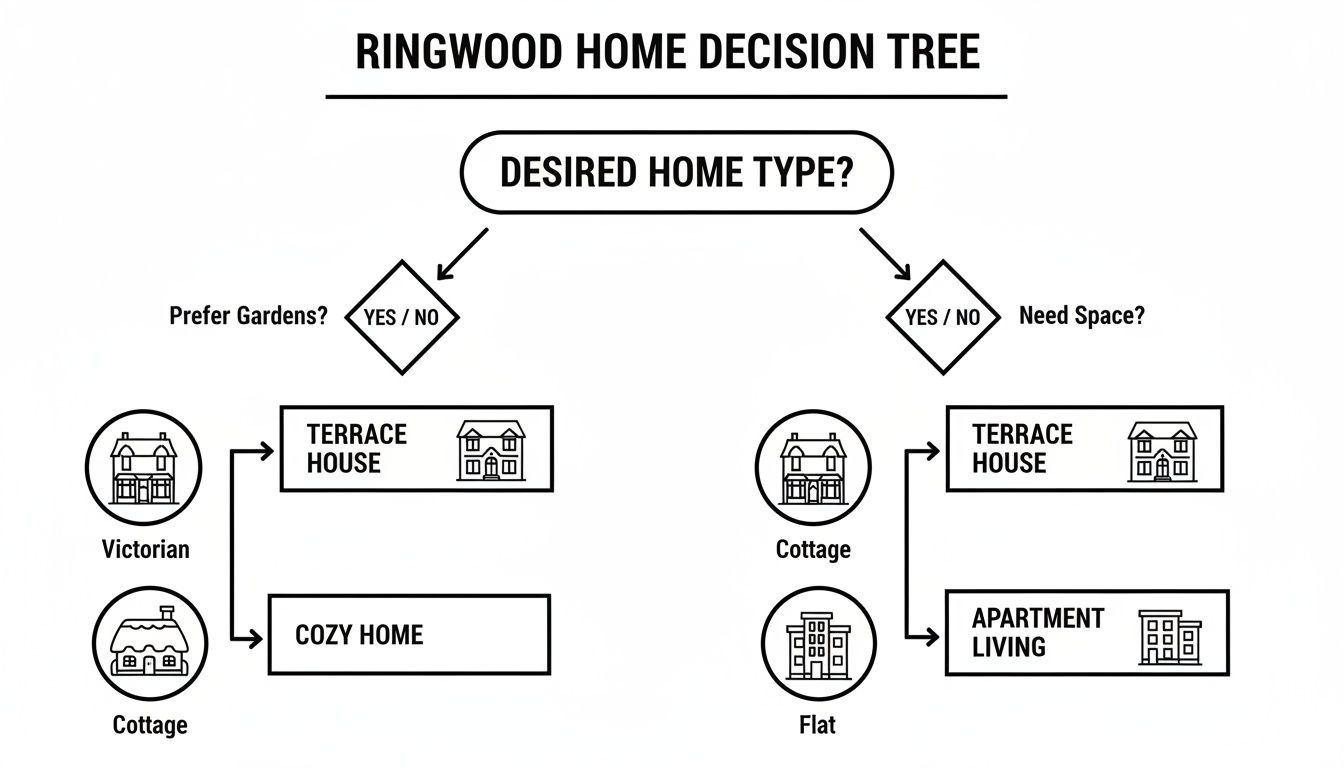
Victorian terraces with solid walls often see a 25% efficiency gain by pairing heat pumps with cavity-wall insulation.
Checklist For Surveys And Grants
Before you commit, tick off these essentials:
Book an MCS-certified energy survey to map heat loss and confirm your EPC rating
Apply for grants such as the £5,000–£7,500 Boiler Upgrade Scheme to offset upfront costs
Verify installer credentials to ensure warranties and proper commissioning
Home Type | Recommended System | Key Benefit |
|---|---|---|
Victorian Terrace | Air-Source Heat Pump + Insulation | Cuts peak heat loss by 25% |
Rural Cottage | Ground-Source Heat Pump | Stable output from constant ground |
Modern Flat | District Heat Network | Minimal on-site plant and disruption |
This table brings the top picks into sharp focus, helping you cross-check your survey results.
Implementing Your Decision
Arrange a detailed site assessment with an MCS-accredited installer
Use your EPC data to apply for grants via the UK portal
Schedule any pre-install checks (soil tests for boreholes or duct surveys)
Confirm planning permissions, permits and installation timeline
“Securing the right grants and accredited installers early cuts total project time by weeks,” says our Ringwood manager.
Hallmoore Developments handles all the paperwork and offers 24/7 support to keep things on track. For peak performance, plan an annual service and six-month filter checks with our in-house services team.
Read More On Installation Essentials
For a step-by-step walkthrough of UK installation requirements, see our New Line Plumbing Your Complete UK Installation Guide.
With your home type matched to the right system, you’re ready to invest confidently in one of the best heating systems for homes in Ringwood.
FAQ
Choosing the ideal heating system for your home can stir up plenty of questions. Below, we tackle the most common queries around efficiency, grants, suitability and upkeep—helping you make a confident, informed decision.
Keep in mind that factors like property size, insulation quality, energy tariffs and local climate will influence which option works best for you.
Common Technology Questions
What Makes Heat Pumps More Efficient Than Gas Boilers? Heat pumps pull heat from the air or ground, so you’re not burning fuel directly. In practical terms, that can shave 30–60% off your energy bills. Plus, they emit less carbon and can be paired with solar PV arrays for even greater savings.
How Do Installation Grants Affect Overall Costs? Schemes such as the Boiler Upgrade Scheme can contribute up to £7,500 towards your installation. That typically chops 2–4 years off the payback period, making low-carbon heating much more affordable from day one.
Which System Works Best in a Victorian Terrace? If your Victorian home is well insulated, an air-source heat pump often hits the sweet spot. You avoid extensive groundwork and still enjoy solid efficiency gains—even in our temperate UK climate.
What’s Involved in Maintaining a Heat Network Connection? A yearly service from your network operator keeps flow temperatures and pressures in check. You’ll also need to swap filters at the intervals they recommend and keep an eye on your bills for untimely spikes.
Learn more about maintaining your boiler in our Boiler Service guide athttps://www.hallmoore.co.uk/service-page/boiler-service
Key Takeaways
“Match the strengths of each technology to your home’s unique characteristics to unlock the best performance and savings.” – Hallmoore Energy Advisor
Select a system that aligns with your property type to avoid inefficiencies.
Apply for grants and organise surveys early to keep your project on track.
Stick to routine checks to protect warranties and maintain peak performance.
Thinking through each answer ensures you pick one of the best heating systems for homes tailored to your needs.
Ready to upgrade? Contact our in-house services team at Hallmoore Developments for expert installation and lifelong support: Hallmoore Home Heating
Comments