.png)
A Homeowner's Guide to building regulations southampton
- Dan Hall
- Dec 25, 2025
- 15 min read

Think of building regulations as the official rulebook for construction. They’re completely separate from planning permission. While planning asks if you can build something, building regulations dictate how it must be built to be safe, healthy, and energy-efficient. For any homeowner in Southampton, getting this right is the first step to a successful, stress-free project.
Understanding the Building Regulations Southampton Follows
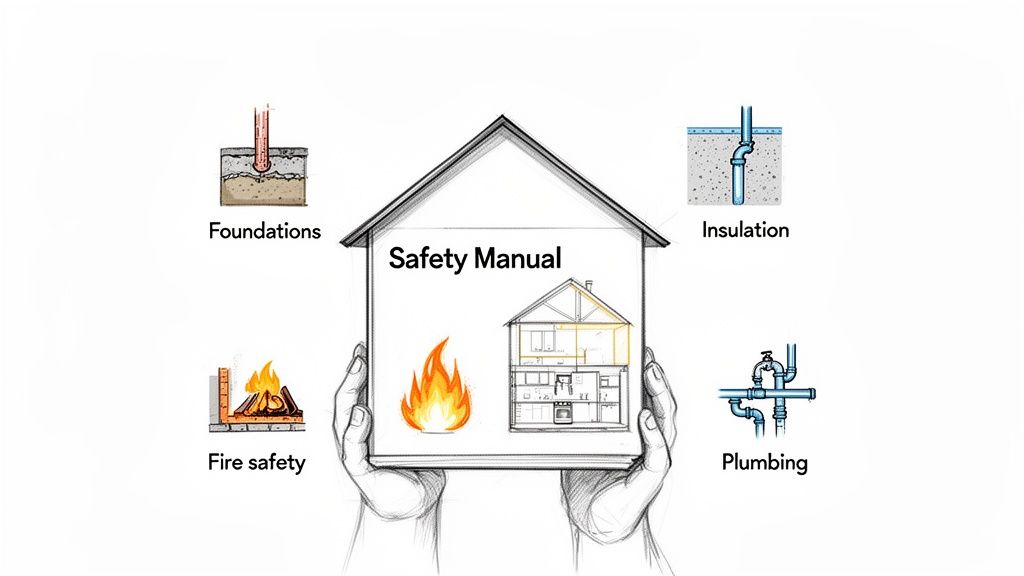
When you’re planning a home improvement project in Southampton, Poole, or the surrounding areas, it’s easy to focus on the exciting parts—the layout, the colours, the finishes. But beneath all that, a strict set of technical standards called the Building Regulations ensures your home is structurally sound and safe for your family.
These aren't just guidelines or design preferences; they are legally enforceable minimum standards for health and safety.
Imagine them as a detailed checklist covering almost every part of the build. This checklist makes sure your new extension has a foundation strong enough to support its weight, your loft conversion has proper fire escape routes and insulation, and any new plumbing is installed correctly to prevent leaks and health hazards down the road.
The Purpose Behind the Rules
At their core, building regulations are all about protection. They exist to protect you, anyone who lives in the house after you, and even the general public.
By setting a baseline for construction quality, they make sure buildings are resilient, comfortable, and efficient. This applies to every project, big or small, whether you're in a busy part of Southampton or a quiet street in Christchurch. The rules are the bedrock of a safe structure, preventing poor workmanship that could lead to dangerous—and expensive—problems later.
For a homeowner, meeting building regulations isn't just a box-ticking exercise. It’s fundamental to protecting your investment, ensuring your family's safety, and making your property legally saleable in the future.
Why Expert Guidance Is Essential
Navigating the web of building regulations Southampton property owners face requires specialist knowledge. The standards are laid out in a series of government-approved documents covering everything from structural integrity and fire safety to drainage, ventilation, and electrical work.
For instance, any work involving gas—like installing a new boiler or moving a radiator—must be handled by a Gas Safe registered engineer to meet these strict requirements. No exceptions.
At Hallmoore Developments, our in-house teams of plumbers, electricians, and renovation specialists deal with these exact codes every single day across Highcliffe, Bournemouth, and Ringwood. We know the specific local requirements inside-out and ensure every part of your project is fully compliant, from the first drawing to the final coat of paint. By exploring our diverse building services, you can see how our in-house services guarantee your project meets every standard from day one, giving you complete peace of mind.
It’s one of the biggest head-scratchers for anyone starting a home renovation: what on earth is the difference between planning permission and building regulations? They sound similar, but they’re two completely separate hurdles to clear, each with its own rulebook. Getting this straight from day one is absolutely vital for any project in Southampton or across Hampshire.
Think of it like this: planning permission is like asking the council if you can host a big party. They’re not worried about the playlist or the snacks. They want to know if your party (your new extension, for example) is going to upset the neighbours, block their sunlight, or look out of place on the street. It’s all about the big picture and how your project impacts the look and feel of the area.
On the other hand, building regulations are the strict health and safety rules for the party itself. These rules make sure the floor won’t collapse under the weight of your guests, the electrics won't spark a fire, and the plumbing is up to scratch. It’s a technical inspection to guarantee your new structure is safe, sound, and built correctly.
What Are They Actually Asking?
A project in Bournemouth or Ringwood might need planning permission, building regulations approval, both, or sometimes neither. It all comes down to understanding what each process is designed to check.
Planning Permission asks: "Should this project even be happening here?" It’s looking at aesthetics, how the land is used, local conservation policies, and the general impact on your surroundings.
Building Regulations ask: "Is this being built properly and safely?" This is purely about the technical side of things – the nuts and bolts of the construction work.
This means you could get planning permission for a stunningly designed extension, but if the foundations aren't deep enough or the steel beams are the wrong size, it will fail the building regulations Southampton inspectors enforce. The two processes are completely independent.
Juggling Two Different Sets of Rules
Because they have different jobs, the applications and approvals are handled separately. You'll likely be talking to different departments at Southampton City Council, or you might even use a private approved inspector for the building regulations part.
One of the most common mistakes we see is homeowners assuming that getting planning permission means their building methods are automatically fine. That's a huge myth. Planning gives you the thumbs-up for the idea, while building regulations certify the actual construction.
To make this crystal clear, let's break down the key differences you’ll face when planning a project in Christchurch, Poole, or anywhere on the south coast.
Planning Permission vs Building Regulations at a Glance
This table should help you quickly see how the two systems compare.
Aspect | Planning Permission | Building Regulations |
|---|---|---|
Primary Goal | Controls the look and use of buildings and land to fit in with the local area. | Ensures buildings are safe, healthy, and energy-efficient for the people inside. |
What It Covers | Aesthetics, impact on neighbours, parking, road safety, and conservation area rules. | Structural integrity, fire safety, insulation, ventilation, drainage, accessibility, and gas/electrical safety. |
Controlling Body | Your Local Planning Authority (like the planning department at Southampton City Council). | A Building Control Body (either the council's team or a private Approved Inspector). |
When It's Needed | For most new builds, large extensions, or significant changes to a building's appearance or use. | For almost all new building work, structural changes, and specific jobs like fitting new windows or boilers. |
Getting your head around this division is the first major step towards a smooth, compliant, and successful renovation.
At Hallmoore Developments, our in-house services are well-versed in navigating both of these processes. We make it our job to ensure your project not only looks fantastic and sails through planning but is also built to the exacting safety standards demanded by building regulations. This gives you a seamless journey, from the first sketch to the final completion certificate.
When Do You Need Building Regulations Approval for Your Home?
Many homeowners are surprised to learn that building regulations in Southampton cover a lot more than just grand extensions or brand-new houses. These rules are all about ensuring safety, health, and energy efficiency, which means they touch on a wide range of common projects you might be thinking about for your property.
It’s a common myth that only huge structural changes need a sign-off. The reality is, even jobs that seem small can fall under building control if they involve your home's structure, fire safety, drainage, or energy performance. Getting this wrong can cause real headaches down the line, especially when you come to sell your home.
These regulations aren't just modern red tape; they have deep historical roots. The need for such standards often came from disaster. The Great Fire of London in 1666, for instance, which wiped out around 80% of the city, led to the first major building act. This groundbreaking law insisted on brick or stone for external walls and brought in rules for party walls to stop fire spreading—ideas that still shape today's standards.
Common Projects That Need Approval
So, which jobs actually require a building regulations application? It’s not just about putting up new walls; it’s also about what you take away or change. A perfect example is creating that trendy open-plan living space by knocking through the wall between your kitchen and dining room. If that wall is load-bearing (meaning it holds up the floor or roof above), you absolutely need building regulations approval to make sure a proper steel beam is fitted correctly.
Here’s a straightforward list of home improvements that almost always need a green light from building control:
Structural Alterations: This covers removing or changing any load-bearing wall, chimney breast, or even an internal partition that supports floors or the roof.
New Extensions: Every extension, from a small single-storey addition to a large two-storey wrap-around, has to comply.
Loft Conversions: Turning your attic into a liveable room like a bedroom or office involves major structural work and critical fire safety measures.
Garage Conversions: If you want to transform an attached garage into a proper room, it needs approval to meet standards for insulation, ventilation, and fire safety.
Internal Works and Installations
Beyond the big structural jobs, many internal changes also come under the regulations. This is where a lot of homeowners can get caught out. The rules are there to protect you from hidden dangers like dodgy wiring or unsafe gas appliances.
You'll need to get in touch with the building control department for these types of jobs:
Installing a New Boiler: Any work involving gas must be done by a Gas Safe registered engineer, and the installation needs to be certified to prove it complies with building regulations.
Significant Electrical Work: This means adding a brand-new circuit to your home, like for a new kitchen or extension. Minor jobs are often exempt, but big changes need signing off.
Replacing All Your Windows: Swapping out windows is covered by regulations for thermal efficiency, safety glazing, and ventilation.
Underpinning Foundations: Any work to strengthen or fix your home's foundations is a major structural job that requires approval.
New Bathrooms or Kitchens: While a bit of decorating doesn't need approval, you will need it if you're changing the layout of the drainage systems or altering the structure. You can find out more on renovating these key spaces in our guide to beautiful bathrooms and kitchens.
One crucial takeaway is that building regulations apply to 'controlled fittings' and 'controlled services'. This basically means any work touching your gas, electrics, plumbing, and heating systems has to meet the required standards.
For instance, even external changes like adding certain charred cladding options would need a close look at fire safety and material compliance under the regulations.
At Hallmoore Developments, our in-house services manage every single trade. This joined-up approach means that from the new boiler in your utility room to the steel beam in your extension, every part of your project meets the highest standards of safety and compliance.
How to Navigate the Southampton Building Control Process
Working with Southampton City Council’s Building Control department might seem daunting at first, but it’s actually a well-oiled system designed to make sure your project is built safely and to a high standard. Getting it right comes down to a solid grasp of understanding local building codes and how they apply specifically in areas like Southampton and Poole.
The whole journey kicks off with a choice between two main application pathways. Which one you pick really depends on the size of your project and how quickly you want to get spades in the ground.
Your Two Main Application Routes
For most homeowners, there are two clear options to get your project moving while satisfying the building regulations Southampton has in place. Each has its own place and is better suited to different kinds of work.
The Full Plans Application: This is the go-to route for bigger projects like extensions, loft conversions, or major structural alterations. You submit a full set of detailed architectural drawings and technical notes to the council for checking before any work starts. Once they’re happy everything meets the standards, you receive a formal approval. This gives you and your builder a pre-approved blueprint to work from, offering total peace of mind and avoiding expensive surprises on site.
The Building Notice: This is a much simpler, faster option for smaller, more straightforward jobs. Instead of sending in detailed plans upfront, you just give the council notice that you intend to start work within 48 hours. The inspector then checks the details and compliance as the work progresses during their site visits. While it’s a quicker way to start, it does carry more risk. You don’t have that upfront certainty that your plans are compliant, and if an inspector finds an issue mid-build, you might have to alter or even undo completed work.
What Happens During a Site Inspection?
Once your project is underway, a building control surveyor from the council (or an approved private inspector) will visit your property at key stages to check the quality of the work. These aren't just tick-box exercises; they are vital checkpoints to ensure every part of the build is safe, compliant, and built to last.
Think of the building control surveyor as an independent expert whose job is to protect your interests. They are there to verify that the work on-site meets the required technical standards, catching potential problems before they get covered up and become major headaches later on.
For a typical extension project, whether in Christchurch or Ringwood, you can expect visits at several critical points in the build.
Key Inspection Stages Explained
Foundations and Excavations: The surveyor needs to see the trenches before any concrete is poured. They’ll check the ground conditions and make sure the depth and width of your foundations are adequate for the structure you're building.
Damp Proof Course: Next, they’ll inspect the damp proof course (DPC) and any membranes. This is to ensure your new structure is properly protected from rising damp and ground moisture.
Drains and Drainage: Before the drainage trenches are backfilled, the inspector checks that all new pipework has been laid correctly with the right gradient (or 'fall') to prevent future blockages.
Structural Work: This is a big one. They'll need to see key structural elements like steel beams (RSJs) and floor joists before they are boarded over or hidden from view.
Roof Structure: The surveyor will pop back to inspect the roof's timber frame, checking that the joists are the correct size and have the right bracing before the tiles go on.
Insulation: To meet modern energy efficiency standards, the inspector will check that the correct type and thickness of insulation has been fitted in the floors, walls, and roof.
Completion: The final visit is a thorough check of the finished project. They’ll sign off on everything from fire safety and ventilation to staircases and structural integrity, ensuring it meets all relevant regulations.
The flowchart below gives you a good idea of how common projects trigger this process.
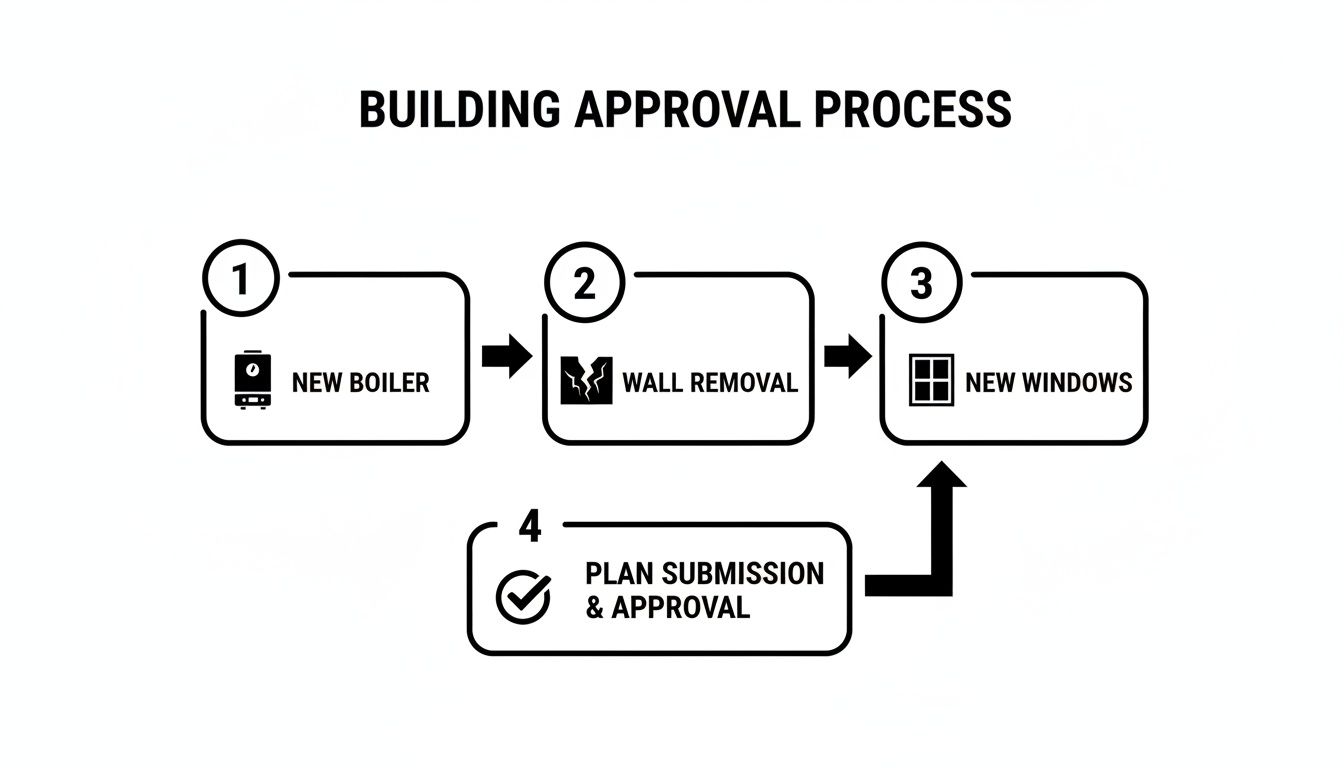
As you can see, even smaller jobs like a new boiler or window replacement fall under the same regulatory umbrella as a large extension.
At Hallmoore Developments, our in-house services manage this entire process for you. We prepare and submit the right application, handle all communications with the building control officers, and book in every site inspection at exactly the right time. Our expertise turns what can feel like a bureaucratic headache into a smooth, seamless part of your build, as you can see in our portfolio of completed projects.
Special Considerations for Historic and Listed Buildings
Southampton’s rich history isn’t just in museums; it’s etched into the very fabric of the city, from ancient walls to charming period properties. Taking on a renovation in one of these historic or listed buildings is a special kind of project. It’s a delicate balancing act between meeting modern safety and efficiency standards—as required by building regulations Southampton authorities enforce—and preserving the building’s unique, irreplaceable character.
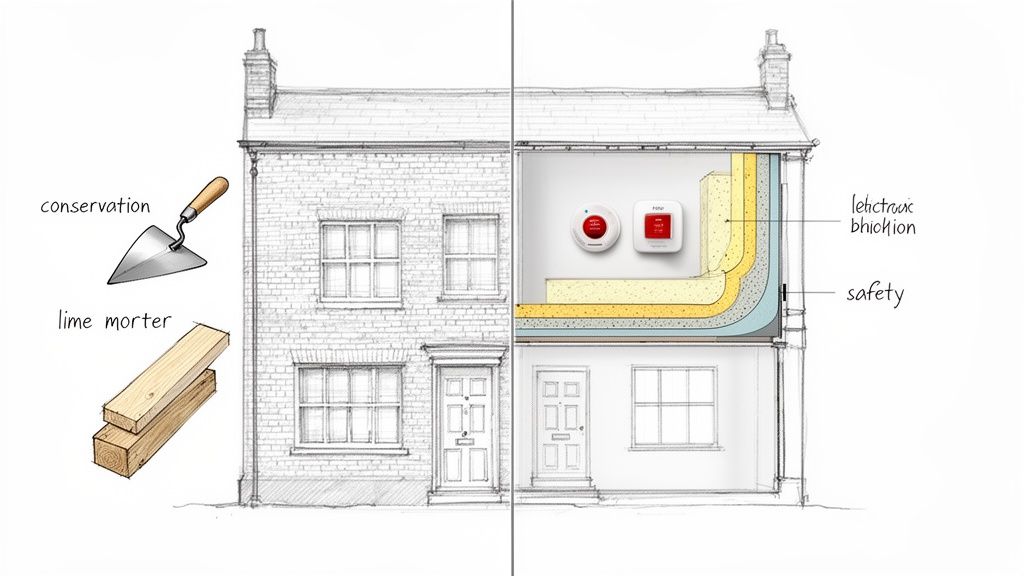
This isn’t like a standard renovation in a modern home, where choices are straightforward. Projects involving historic buildings come with an extra layer of scrutiny. You can’t just rip out old single-glazed windows for standard uPVC units or cover everything in modern plasterboard. Conservation officers will rightly insist on specific materials and traditional building techniques to maintain the property's historical integrity.
Southampton has a long, proud history of protecting its heritage, even when faced with widespread destruction. This commitment was clear during the post-WWII reconstruction of the bomb-ravaged city. Amid proposals for 108 new listings and 28 ancient monuments in 1946-47, a remarkable 81% of these sites were located within the city's main development zones. This legacy of preservation continues today, with Southampton now home to 317 listed buildings. For a deeper dive, you can explore more about Southampton's listed building history on Wikipedia.
The Unique Demands of Listed Building Consent
Before you can even begin thinking about building regulations, you’ll almost certainly need to get Listed Building Consent. This is a separate hurdle from both planning permission and building control, and it’s a legal must-have for any work that could alter the building's special character.
The consent process is all about proving that your proposed changes are both necessary and sympathetic to the original structure. For instance:
Repairs: You’ll be expected to use like-for-like materials. If the original lime plaster needs attention, you can't just patch it up with a modern gypsum-based product.
Windows: Replacing original timber sash windows will likely mean commissioning bespoke, handcrafted replacements that are a perfect match, not just grabbing something off-the-shelf.
Insulation: You have to be careful when adding insulation to avoid trapping moisture or damaging historic fabric. Breathable materials like sheep's wool are often specified over modern rigid foam boards.
Balancing Preservation with Modern Standards
Once you have Listed Building Consent in hand, you still have to comply with building regulations. This is where real expertise comes into play. How do you meet today's tough energy efficiency targets while using traditional materials? How can you guarantee fire safety in an old timber-framed house without destroying its historic features?
The key is careful negotiation and collaboration. The goal is to find solutions that satisfy the building control officer's safety requirements and the conservation officer's preservation goals. This often involves detailed justifications and specialist techniques.
This complex dialogue is where having a skilled team makes all the difference. Our in-house services at Hallmoore Developments have deep experience in this niche field. We work closely with conservation officers and architects from day one, developing a plan that respects the property's past while making it safe, comfortable, and functional for modern life. To see our commitment to quality craftsmanship and professional integrity, you can learn more about our team and company values. Whether your property is in Highcliffe, Bournemouth, or the historic heart of Southampton, we have the expertise to honour its heritage while securing its future.
Time to Start Your Southampton Building Project the Right Way
Now that you’ve got a handle on the crucial role of building regulations Southampton has in place, you can move forward with your project confidently. Getting this right isn’t just about ticking boxes for the council; it's the very foundation of your family's safety, the security of your financial investment, and a legal must-have for when you eventually sell up.
The smartest next step? Partnering with an expert who can manage this whole process for you, taking the weight completely off your shoulders.
Your Complete In-House Solution
At Hallmoore Developments, we offer a complete, in-house solution that takes you from the first design ideas right through to holding the final completion certificate in your hand. Our team handles every single trade under one roof, from structural work in Highcliffe to plumbing in Poole and decorating in Ringwood. This all-in-one approach completely removes the stress of trying to juggle multiple contractors.
Our transparent pricing, exceptional customer service, and full Gas Safe registration give you total peace of mind. You can be sure there are no hidden costs or compliance worries waiting around the corner.
We genuinely believe a successful project is built on clear communication and expert management. When you choose our in-house services, you’re ensuring every part of your build—from the foundations to the final light fittings—is handled by a single, accountable team that’s completely dedicated to quality. It's how we bring your vision to life without all the usual headaches.
If you have a renovation or extension in mind for your Southampton, Bournemouth, or Christchurch home, the first step is a simple chat. We'd be happy to talk through your ideas in a no-obligation consultation. For a detailed breakdown of what to expect, take a look at our guide on receiving a full renovation estimate. Let our in-house services show you how our local expertise can make your project a compliant, stress-free success from day one.
Your Questions About Southampton Building Regulations Answered
When it comes to home improvements, navigating the world of building regulations Southampton homeowners face can feel a bit daunting. To give you some clarity, we've put together answers to the most common questions we hear from clients across Highcliffe, Bournemouth, and the surrounding areas.
How Long Does Building Regulations Approval Take in Southampton?
Honestly, the timeline really depends on which route you take. If you submit a ‘Full Plans’ application, you’re looking at a decision from Southampton City Council within about five weeks, though this can stretch to two months for more complex projects.
The other option is a ‘Building Notice’, which lets you start work just 48 hours after you’ve submitted it. The trade-off is that you don’t get that upfront certainty of having fully approved plans before you begin. The total time until you get your final completion certificate will come down to your project's size and how many inspections are needed. Our in-house services manage this process proactively to keep your project in Christchurch or Poole moving without any frustrating delays.
What Happens If I Don't Get Building Regulations Approval?
Deciding to skip the proper approvals is a massive risk, and the consequences can be serious. The council has the legal authority to issue an enforcement notice, which could force you to undo, alter, or even tear down the work you’ve paid for, all at your own expense.
The biggest headache usually appears when you try to sell your home. A missing completion certificate is a huge red flag for solicitors and buyers. It can stop a sale in its tracks or force you to slash your asking price. Our in-house services make sure you're fully compliant, protecting your investment for years to come.
Do I Also Need a Party Wall Agreement?
It's very likely you might. A Party Wall Agreement is a completely separate legal matter from building regulations. If your extension, loft conversion, or any structural work involves a wall or boundary you share with a neighbour, you’ll probably need to serve a notice under the Party Wall etc. Act 1996.
This is a civil issue that’s handled directly between you and your neighbour, and it’s designed to prevent disputes before they start. We always check if this is needed right at the beginning of any project in Ringwood or Southampton and can guide you on the right way to handle it.
Can I Use a Private Inspector Instead of the Council?
Yes, you absolutely can. You have a choice between using the local authority building control (LABC) service from Southampton City Council or hiring a private ‘Approved Inspector’. Both perform the exact same legal job: making sure your project meets all the required building regulations.
Sometimes, a private inspector can offer a bit more flexibility with their scheduling. At Hallmoore Developments, we have great relationships with both council and private inspectors and can advise you on the best fit for your specific project.
Ready to get your project started with complete peace of mind? The team at Hallmoore Developments is here to manage every detail, from planning and compliance right through to the final coat of paint. Contact us today for a no-obligation consultation and let our in-house experts bring your vision to life.
Comments