.png)
A Landlord's Guide to Gas Safety Certificate Requirements in Highcliffe
- Dan Hall
- Jan 22
- 13 min read

For landlords in places like Bournemouth and Poole, getting your head around gas safety certificate requirements isn't just good practice—it's a non-negotiable legal duty. The law is crystal clear: under the Gas Safety (Installation and Use) Regulations 1998, you must hold a valid CP12 certificate for your rental property. This yearly check is the only way to be certain that all gas appliances, flues, and pipework are safe for your tenants. Our in-house services are designed to see to your every need, ensuring you remain compliant.
Understanding Your Legal Gas Safety Duties in Bournemouth
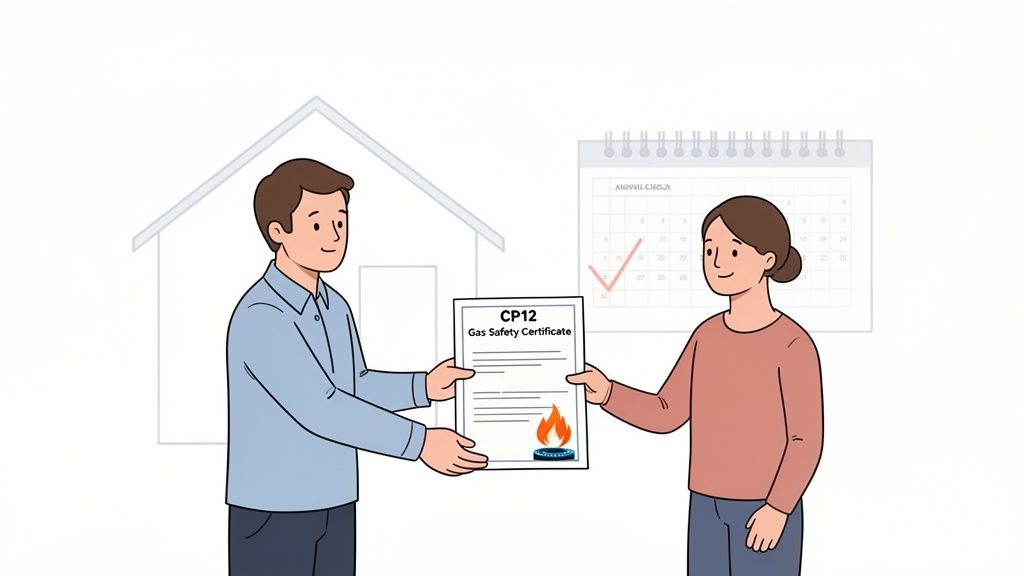
Juggling your responsibilities as a landlord, whether you're in Southampton or Christchurch, can sometimes feel overwhelming. But the core principle of gas safety is simple. Our in-house services are here to help.
Think of the gas safety certificate, often called a CP12, as being like a vehicle's annual MOT. It's a mandatory inspection that confirms your property’s gas systems are safe and up to standard, protecting your tenants from hidden dangers like gas leaks and carbon monoxide poisoning.
This isn't just about ticking a box. It's about safeguarding lives and protecting your investment. The rules apply to every gas appliance and bit of pipework you own and provide for your tenants to use.
The Consequences of Non-Compliance
Cutting corners on gas safety can have devastating consequences. The UK's Gas Safety (Installation and Use) Regulations 1998 are incredibly strict, stating that only Gas Safe registered engineers are qualified to carry out these annual checks.
Landlords who fail to meet gas safety certificate requirements can face unlimited fines from the local authorities, with penalties often reaching up to £6,000 per property, per breach. In the worst-case scenarios, it can even lead to criminal prosecution.
To get a full picture of your duties, it's worth reading a comprehensive landlord compliance guide.
To make this easier to digest, here's a quick rundown of your main legal obligations:
Core Gas Safety Requirements at a Glance
Requirement | Legal Mandate | Frequency | Who Can Perform It |
|---|---|---|---|
Annual Safety Check | Gas Safety (Installation and Use) Regulations 1998 | Every 12 months | A Gas Safe registered engineer only |
Provide Certificate | The regulations require you to give a copy to tenants. | Within 28 days of the check or at the start of a new tenancy. | The landlord or managing agent |
Record Keeping | You must keep records of the safety checks. | For at least two years. | The landlord or managing agent |
This table sums it up nicely: these aren't suggestions, they are firm legal requirements with clear timelines and responsibilities.
How Our In-House Services Can Help in Ringwood
Making sure you're compliant year after year takes diligence and a reliable partner. At Hallmoore Developments, our in-house team of Gas Safe registered engineers offers a straightforward, dependable solution for landlords across the region, from Highcliffe to Poole. We use our in-house services to manage the entire process for you—from scheduling the check to issuing the certificate—giving you complete peace of mind.
By partnering with a trusted provider, you not only fulfil your legal obligations but also demonstrate a clear commitment to your tenants' well-being. This proactive approach is the foundation of responsible property management.
Our aim is to make meeting your gas safety certificate requirements as simple and stress-free as possible. If you're new to all this, you can get a clearer understanding by reading our guide on what a gas safety certificate is.
Who Needs a Gas Safety Certificate in Ringwood?
If you're a landlord renting out a property with any gas appliances, the law is refreshingly simple: you are legally on the hook for getting them safety-checked every single year. This isn't just a guideline; it's a firm legal duty designed to keep your tenants safe.
This rule applies across the board, whether you're managing a sprawling portfolio of properties or just letting out a single room in your own home. The Gas Safety (Installation and Use) Regulations 1998 don't care about the size of your operation—only about the safety of the people living in your property. Our in-house services are available to help all landlords meet their obligations.
What Kinds of Tenancies Does This Cover?
The requirement for a gas safety certificate isn't just for a standard flat rental. If you’re a landlord in Highcliffe, Bournemouth, or anywhere in the surrounding area, you absolutely must have a valid certificate for any of these situations:
Standard Residential Lets: This is the most obvious one. It covers any house or flat rented out on a typical tenancy agreement, like an Assured Shorthold Tenancy (AST).
Houses in Multiple Occupation (HMOs): Properties with multiple tenants from different households sharing facilities are under an even bigger microscope when it comes to safety. A gas certificate here is non-negotiable.
Short-Term and Holiday Lets: Don't assume that because you only rent your property for a few weeks a year on Airbnb, you're exempt. You have the exact same legal responsibility to ensure every gas appliance is safe for your guests.
Letting to a Lodger: If you have a lodger living with you and they have access to rooms with gas appliances—think the kitchen hob or a living room gas fire—you are classed as a landlord in the eyes of the law. You need a certificate.
The Buck Stops with the Landlord
A very common source of confusion is what happens when you use a managing agent. You might pay an agent to handle the day-to-day running of the property, including maintenance, but the ultimate legal responsibility for gas safety rests firmly with you, the property owner.
Your agreement with the agent should spell out who arranges the annual check. But if they forget or fail to do it, the liability falls squarely on your shoulders. It’s a critical detail to grasp—this is one legal duty you simply cannot pass on. For a deeper dive, our practical guide for Bournemouth, Southampton, and Poole breaks down a landlord's responsibilities, especially around boiler care.
The law is designed to place the final responsibility for tenant safety squarely on the shoulders of the property owner. Relying on a third party without verifying that the gas safety check has been completed and documented is a significant risk.
What If You're a Homeowner in Southampton?
Legally speaking, if you own and live in your own home, you are not required to get a gas safety certificate. However, just because the law doesn’t force you to, it doesn’t mean the risks from a faulty boiler or gas fire disappear.
That's why an annual gas safety check is widely considered the gold standard for protecting your own family. Our expert, in-house engineers at Hallmoore Developments provide the same meticulous inspection for homeowners as we do for landlords. We see this simple, preventative check as a fundamental part of responsible homeownership, offering invaluable peace of mind. Our in-house services are available to all homeowners.
What Our Gas Safe Engineers Actually Inspect in Southampton
Ever wondered what really happens during a gas safety inspection? Many landlords and homeowners in places like Southampton and Christchurch picture a quick, box-ticking exercise, but it’s far more thorough than that. Think of it less like a simple check and more like a comprehensive health MOT for your property’s entire gas system.
When one of our Hallmoore Developments Gas Safe engineers visits your property, they're starting a meticulous process designed to spot hidden dangers. This isn't just about meeting gas safety certificate requirements; it’s about proactively protecting your tenants and your property from very serious risks. Every step is methodical and has a purpose.
This flowchart breaks down the different gas certificate needs for landlords, HMOs, and homeowners in Southampton.
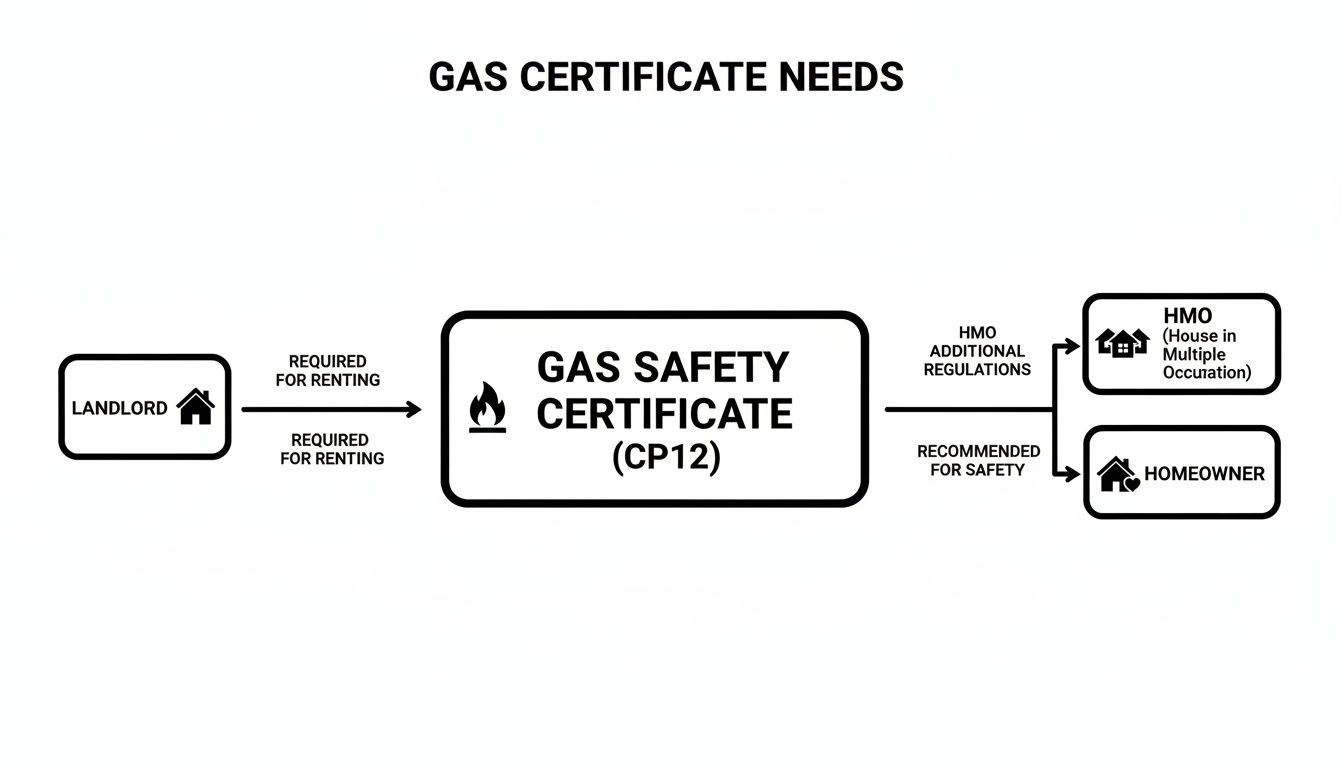
As you can see, while it's a legal must-have for landlords and HMOs, a gas safety check is also a highly recommended best practice for any homeowner wanting to ensure their family's safety. Our in-house services can provide this for you.
Appliance and System Integrity Checks in Poole
The inspection always kicks off with the appliances themselves, whether that’s your boiler, a gas hob, or a fire. Our engineers run a series of critical tests to make sure everything is working exactly as it should be.
Appliance Operating Pressure: First, they check that gas is flowing to each appliance at the correct pressure. If it's too high or too low, it can lead to unsafe operation and even damage the appliance over time.
Safety Device Verification: Modern appliances have built-in safety features, like flame failure devices. We test these to confirm they’ll do their job in an emergency, cutting off the gas supply instantly if a flame goes out.
Gas Tightness Test: This is one of the most vital steps. The engineer will check the entire gas pipework system for leaks, from the meter right up to each appliance, making sure no gas is silently escaping into your property. You can learn more about what to do in this scenario by reading our guide on how to detect gas leaks.
Ensuring Safe Combustion and Ventilation in Highcliffe
An appliance can be working perfectly but still be dangerous if it isn't burning gas correctly or if harmful fumes aren't being removed safely. This is a major focus for our engineers.
They'll visually inspect the flame on your appliances. A lazy, yellow flame instead of a crisp, blue one is a classic red flag for incomplete combustion, which can produce deadly carbon monoxide.
The flue and ventilation inspection is non-negotiable. A blocked flue can cause a backdraft of toxic fumes into a living space, turning a perfectly functional boiler into a silent threat.
Finally, they ensure all flues and chimneys are clear of obstructions and fitted correctly. They also check for adequate ventilation in rooms with gas appliances, which is absolutely essential for safe operation and preventing the build-up of dangerous gases. Our in-house team is dedicated to seeing every one of these vital checks through for our clients across Highcliffe, Bournemouth, and Poole.
Managing Your Gas Safety Certificate: Costs and Renewals in Christchurch
Let's talk about the practical side of things – how much this all costs and how to stay on top of renewals. For landlords managing properties, knowing the numbers and timelines is half the battle. The good news? Gas safety certificate requirements and costs are straightforward, and the renewal rules have some handy flexibility built right in.
The final price for a certificate isn't a one-size-fits-all deal. It really depends on where your property is and how many gas appliances need a thorough check. Here at Hallmoore Developments, we believe in being upfront with our pricing for landlords everywhere from Poole to Ringwood. No nasty surprises, just clear costs so you can budget properly with our in-house services.
Budgeting for Your Gas Safety Certificate in Poole
One of the first questions we always get is, "So, what's this going to set me back?" Across the UK, you can typically expect the cost of a Gas Safety Certificate to fall somewhere between £60 and £90.
This usually covers the first appliance. If you have more, there's often a small extra charge of around £10 for each additional one. While you might see slightly higher prices in London and the Southeast, it’s a predictable and fairly modest annual expense. When you weigh it against the massive fines and legal headaches of not having one, it's a no-brainer. You can discover more insights about these costs on efficienthomeenergy.uk.
Think of your annual gas safety check as a small, fixed investment. It’s not just about ticking a legal box; it’s about protecting your tenants, your property, and your peace of mind from much bigger, more expensive problems down the line.
Navigating the Annual Renewal Window in Highcliffe
Keeping your certificate up to date doesn't have to be a last-minute panic every year. Back in 2018, the rules were updated to give landlords a bit more breathing room, creating a flexible renewal window that works a lot like a car's MOT.
This change allows you to get your next gas safety check done any time within the 10 to 12-month period after your last one, without losing out on validity.
Here’s how it works: say your current certificate expires on 1st November. You can book the inspection as early as 1st September. Your new certificate will still run until 1st November of the next year, preserving your original renewal date. This simple tweak makes it so much easier to schedule our in-house engineers at a time that works for you and your tenants in Southampton, without that looming deadline pressure.
And while you're thinking about gas safety, it’s a great time for homeowners to consider other ways to keep their systems running smoothly. It's always worth looking into essential boiler services for homeowners in Christchurch to keep everything efficient and safe. At Hallmoore Developments, our goal is to make compliance simple, helping you stay organised with zero fuss.
Avoiding Common Gas Safety Compliance Traps in Poole
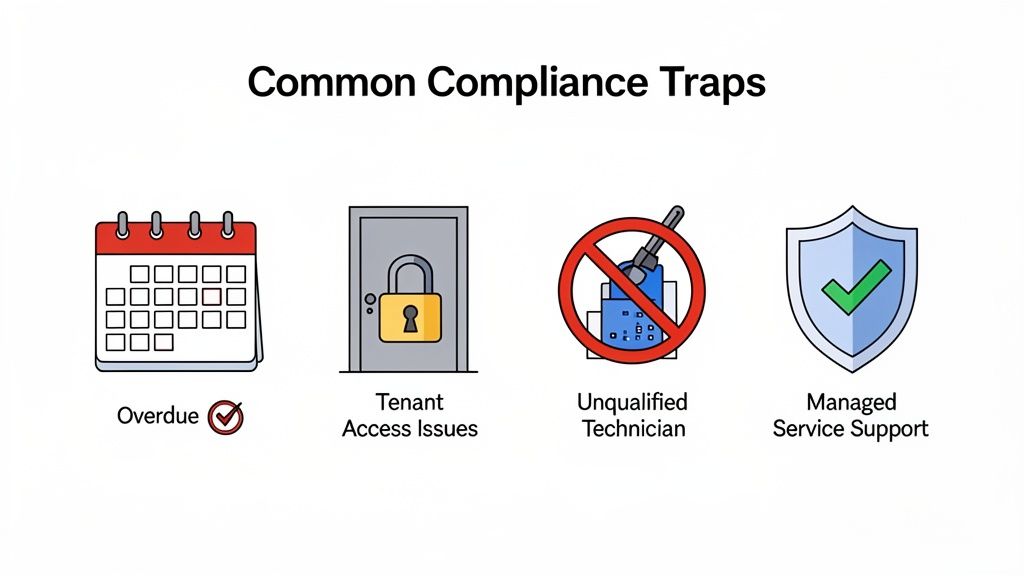
Staying on top of your annual gas safety certificate requirements is a non-negotiable part of being a landlord. Yet, it’s surprisingly easy to slip up. Juggling renewal dates, tenant schedules, and engineer bookings creates a perfect storm for simple oversights that can have very serious consequences.
Even the most organised landlords can get caught out. Recent data shows a worrying trend: staying compliant is getting harder. According to a Housemark survey, less than half (45%) of social landlords managed 100% gas safety compliance as of March 2024. That’s a steep drop from 2019 when over two-thirds hit the mark, signalling a growing problem across the board. You can read the full housing compliance research findings here.
Let's break down the three most common traps we see and how our in-house services help you sidestep them.
The Pitfall of Forgotten Renewals in Christchurch
The most common trap is the simplest one: the renewal date just slips your mind. With everything else you're managing, the 12-month anniversary of your last gas safety check can easily pass by unnoticed, a problem that only multiplies if you have several properties in areas like Christchurch or Poole.
A missed deadline means your property is instantly non-compliant, no ifs or buts. The easiest fix? Set multiple reminders in your digital calendar at least two months before the certificate expires. That buffer gives you plenty of time to book an engineer and liaise with your tenants without any last-minute panic.
Partnering with a managed service provider like Hallmoore Developments takes this entire problem off your plate. Our in-house team handles all the scheduling and sends automated reminders, so your properties stay compliant, year after year.
The Challenge of Gaining Tenant Access in Poole
Another frequent headache is just getting into the property. Your tenants have their own lives and schedules, and finding a time that works for an engineer's visit can feel like a logistical nightmare. These delays can easily push you past your compliance deadline.
The solution here is clear and early communication. Give your tenants as much notice as possible and offer them a few flexible time slots to choose from. While the legal minimum is 24 hours' notice, giving more is always a good idea. It helps maintain a positive relationship and makes tenants far more cooperative.
Hiring Unqualified Engineers in Bournemouth
The final, and most dangerous, trap is accidentally hiring someone who isn't Gas Safe registered. A certificate from an unqualified individual is completely invalid. This not only leaves you legally exposed but, more importantly, puts your tenants' safety at serious risk.
Always, always verify an engineer's credentials on the official Gas Safe Register before you even think about booking them.
At Hallmoore Developments, this is a risk you never have to worry about. All our gas services are carried out by our own trusted, directly employed Gas Safe registered engineers. We use our in-house services to manage every single aspect of your gas safety needs in Bournemouth and the surrounding areas, ensuring your tenants are safe and you remain fully compliant.
What Happens After the Gas Safety Check?
So, our Gas Safe engineer has visited your property in Bournemouth, completed the inspection, and handed you a shiny new gas safety certificate. Job done, right? Not quite.
Think of that certificate less as a finish line and more as the starting pistol for your ongoing duties as a landlord. Getting the check done is crucial, but what you do next is just as important for staying compliant and, most importantly, keeping your tenants safe. Our in-house services can help manage this for you.
Keeping Records and Tenants in the Loop
Once you have that certificate in hand, the law sets out two clear responsibilities with strict deadlines. These rules apply whether your property is in Southampton, Poole, or anywhere else in the UK.
Here’s the breakdown:
For New Tenants: You absolutely must give them a copy of the valid, in-date gas safety certificate before they move in. This isn't a "nice-to-have"; it's a non-negotiable part of their check-in process.
For Your Current Tenants: You have 28 days from the date of the inspection to provide them with a copy of the new certificate.
For Your Files: You need to keep a copy of every gas safety certificate for at least two years. This creates a clear, documented history of your property's safety record.
Keeping meticulous records isn't just about ticking boxes for compliance. It's your proof—a vital paper trail that protects you legally and shows you're a responsible landlord who takes safety seriously.
At Hallmoore Developments, we believe in supporting landlords across Christchurch and Ringwood from start to finish. Our job doesn’t end when our in-house engineer leaves. We help you manage the entire process, from the inspection itself to keeping your records straight. This holistic approach includes all aspects of gas appliance care, which is why regular maintenance is so vital. You can learn more about how we support landlords with our professional boiler service options.
Got Questions? We've Got Answers
When it comes to gas safety certificate requirements, it’s natural to have a few questions. We get calls all the time from landlords across Bournemouth, Southampton, and the local area, so we've put together some straightforward answers to the most common queries.
What Happens if a Property Fails Its Gas Safety Check in Poole?
First things first, don't panic. If one of your appliances is flagged as unsafe during an inspection, our Gas Safe engineer’s number one priority is to make the situation safe, which usually means disconnecting the appliance right away.
We’ll contact you immediately to explain what’s happened, providing a clear report on the issue and a transparent quote for the fix. Because our engineers are part of the in-house team at Hallmoore Developments, we can get the repair work sorted quickly using our in-house services, getting your Poole property compliant and keeping your tenants safe without any frustrating delays.
Do I Need a New Certificate for New Tenants in Christchurch?
Nope, you don't. A gas safety certificate is tied to the property, not the tenants. It remains valid for a full 12 months, regardless of who is living there.
The crucial part, though, is your legal duty to provide new tenants with a copy of the current, valid certificate before they move in. It’s a non-negotiable part of their move-in pack for any rental property in Christchurch.
Are Gas Hobs and Cookers Included in the Inspection in Ringwood?
Yes, absolutely. The check covers every single gas appliance you own and provide for your tenants. That means boilers, water heaters, gas fires, and of course, any gas hobs or cookers in the kitchen.
Our Hallmoore engineers are meticulous. They will thoroughly inspect every gas appliance in your Ringwood property to ensure it's operating safely and meets all the standards needed to pass the check.
Don't leave your property's compliance or your tenants' safety to chance. For a reliable, professional service covering all your gas safety certificate requirements in Highcliffe, Bournemouth, Southampton, Christchurch, Poole, and Ringwood, you need experts you can trust. Our in-house, Gas Safe registered engineers are ready to help.
To get your gas safety certificate sorted, contact Hallmoore developments today by visiting our website at https://www.hallmoore.co.uk.
Comments