.png)
A Practical Guide on How to Choose Bathroom Tiles in Highcliffe and Bournemouth
- Dan Hall
- Jan 25
- 16 min read

Choosing the right bathroom tiles is a balancing act—you’re weighing up aesthetics, durability, and of course, the budget. The secret? Start by getting a real feel for your space and your personal style. From there, our in-house experts in Highcliffe can help you zero in on a material like porcelain or ceramic that’s built for a high-moisture environment, before finally landing on a size and colour that makes the room sing. Get this sequence right, and you're on track for a beautiful, functional bathroom that will stand the test of time.
Your Essential Guide to Choosing Bathroom Tiles in Highcliffe
Kicking off a bathroom renovation is always exciting, but let’s be honest, choosing the tiles is where the magic really happens. This decision is the cornerstone of the whole design. It’s about so much more than just picking a pretty pattern; it defines the room's entire feel, its day-to-day functionality, and its long-term value. For anyone renovating a home, from Bournemouth to Southampton, getting this foundational element spot-on sets the stage for a space you'll love for years.
But the sheer number of options can feel a bit much. With countless materials, sizes, and colours out there, it’s easy to feel overwhelmed. This guide is here to cut through the noise, giving you clear, practical advice that works for homes in areas like Poole and Christchurch. Our in-house service will break down everything you need to know, from picking materials tough enough for the damp UK climate to crafting a style that’s all yours.
Setting the Foundation for Success
Before you even think about stepping into a tile showroom, the most important work happens right inside your own home. You need a solid understanding of your space and what you want to achieve. Nailing this initial planning phase is what prevents those costly mistakes down the line and ensures the final look is exactly what you pictured.
Have a think about these key points:
Who’s using the bathroom? A hectic family bathroom in Ringwood needs tough, non-slip floor tiles. A guest ensuite, on the other hand, gives you the freedom to go for something more decorative or delicate.
What’s the natural light like? A small, darker bathroom will feel bigger and brighter with light-coloured, glossy tiles that bounce light around. Got a larger, sunnier room? You can afford to be bold with darker, more dramatic tones.
What’s your overall style? Are you chasing a sleek, modern look or something more classic and timeless? Your tile choice is the single biggest factor in setting the bathroom's aesthetic.
Your tile selection is one of the most permanent decisions in a bathroom renovation. Taking the time to plan properly ensures your investment is not just beautiful today but remains a timeless and functional part of your home for years to come.
Getting your head around these factors gives you the confidence to make the right calls. While this guide focuses on traditional tiling, it's worth knowing there are modern alternatives for a quick refresh. For instance, you could explore options for bathroom wrapping in Dubai to give old tiles and cabinets a new lease of life without a full-blown renovation. Here at Hallmoore Developments, our in-house service covers every detail, from helping you choose the right tiles to carrying out a flawless installation, guaranteeing your vision is realised exactly as planned.
Porcelain vs. Ceramic vs. Natural Stone: Which Tile is Right for Your Bathroom in Southampton?
Choosing the right material for your bathroom tiles is probably the single most important decision you'll make in the entire project. It goes far beyond just what looks good. The material dictates how the room feels underfoot, how it stands up to daily use, and how much work you'll need to put in to keep it looking great.
When you're weighing up porcelain, ceramic, and natural stone, you're really balancing aesthetics against the practical realities of a wet, busy environment. Getting this right from the start can save you a world of headaches and costly repairs down the line. It’s the foundation of a successful bathroom renovation, and our in-house team is here to guide you through the choices.
Porcelain: The Durable Workhorse
For modern bathrooms, porcelain is the undisputed champion, and for very good reason. It’s made from a finer, denser clay that’s fired at incredibly high temperatures, making it unbelievably tough and almost completely non-porous.
With a water absorption rate of less than 0.5%, porcelain is practically waterproof. This makes it the go-to choice for floors, walls, and especially high-moisture zones like shower enclosures and wet rooms.
Think about a busy family bathroom in Christchurch that sees constant splashes and footfall. You need a floor that can resist wear, stains, and water without a second thought. Porcelain delivers that peace of mind and requires minimal upkeep. Its inherent strength also means it’s highly resistant to chipping and cracking, keeping it looking pristine for years.
The move towards porcelain isn't just a fleeting trend; it's a market reality. In the UK, porcelain tiles now dominate a huge chunk of the market precisely because of their superior performance in our damp climate. Reports consistently show that homeowners and builders prefer porcelain for its wear resistance, low maintenance, and high-end aesthetic appeal. Our in-house service frequently recommends porcelain for its reliability.
Ceramic: The Versatile and Budget-Friendly Option
Ceramic tiles offer a fantastic sweet spot between style, performance, and affordability. They’re made from a slightly coarser clay and fired at lower temperatures than porcelain, making them a little more porous and less dense.
But don't let that put you off. The protective glaze on top gives them excellent water resistance, making them a superb option for bathroom walls.
Imagine you're renovating a guest bathroom in Southampton. You want a classic, stylish look—maybe a timeless metro tile or a decorative pattern—without blowing the budget. Glazed ceramic tiles will give you that high-end finish on the walls for a fraction of the cost of other materials. While our in-house service wouldn’t typically recommend them for high-traffic floors, for wall applications where they won't face heavy wear, they’re perfect.
Natural Stone: The Touch of Luxury
There’s no denying it—natural stone brings an unmatched sense of organic beauty to a bathroom. Materials like marble, slate, limestone, and travertine are completely unique, with individual veining and colour variations that create a truly one-of-a-kind surface. A master bathroom in Ringwood clad in marble, for instance, instantly feels like a personal spa retreat.
This luxury, however, comes with a trade-off: maintenance.
Natural stone is porous and has to be sealed regularly (often annually) to protect it from water damage, staining, and etching from everyday products like soap or cleaners. Slate is one of the more forgiving options in this category, offering a rustic, textured finish that also provides a bit of natural slip resistance.
Key Takeaway: While natural stone offers unparalleled beauty, it demands commitment. Be prepared for the ongoing maintenance routine before falling in love with its aesthetic appeal.
To help you get your head around the options, we've put together a quick comparison table.
Bathroom Tile Material Comparison
This table gives a quick snapshot of how the most common bathroom tile materials stack up against each other.
Material Type | Water Resistance | Durability | Average Cost per m² | Best For |
|---|---|---|---|---|
Porcelain | Excellent | Very High | £30 - £80+ | Floors, shower walls, wet rooms, and high-traffic family bathrooms. |
Ceramic | Good (Glazed) | Medium | £20 - £50 | Bathroom walls, backsplashes, and low-traffic guest bathroom floors. |
Natural Stone | Fair (Requires Sealing) | Medium-High | £50 - £150+ | Luxury master bathrooms, feature walls, and areas with less direct water. |
Ultimately, the best material comes down to your space, your lifestyle, and your budget.
If you're still weighing things up, this decision tree can help you visualise the process, starting with the most practical questions first.
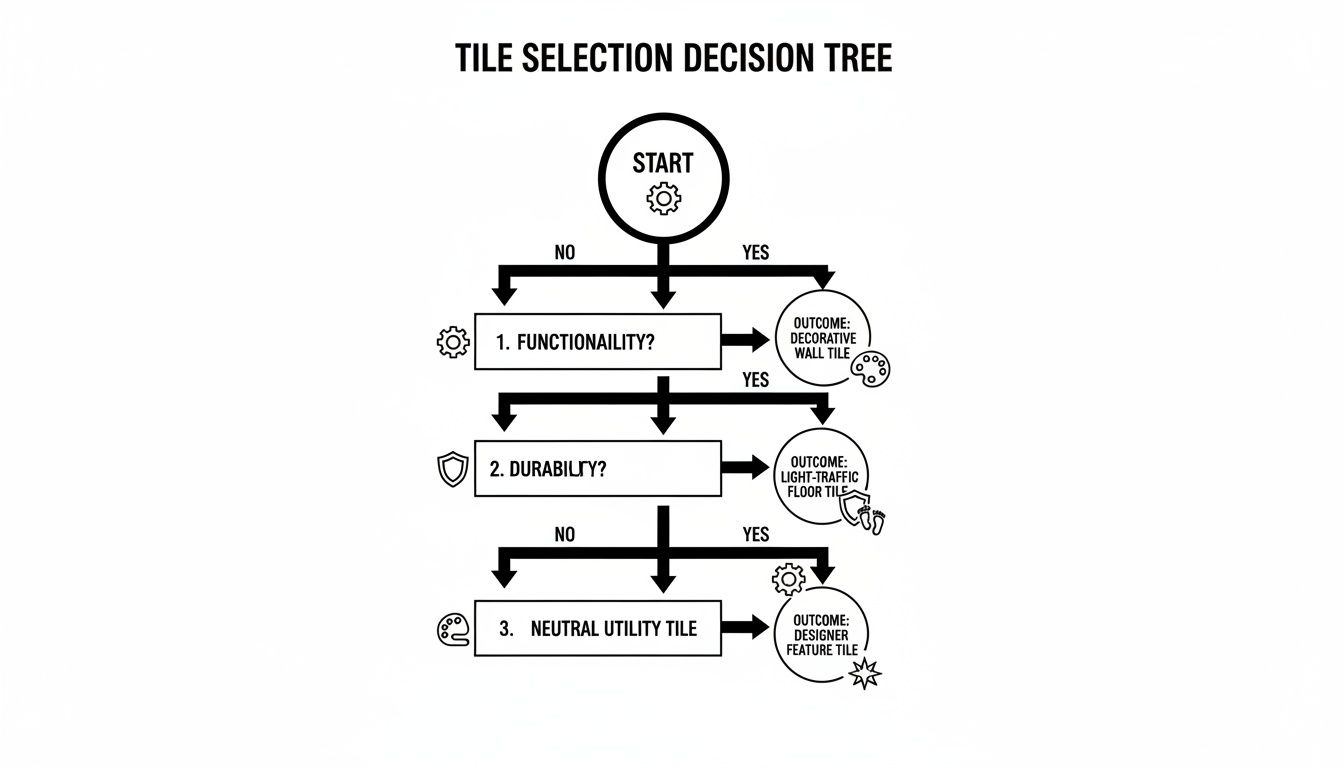
As the flowchart shows, your choice should always begin with the tile's purpose. Nail the functionality first, and then you can narrow down the style. It’s a solid principle that applies to choosing most finishes, which you can read more about in our guide on using sustainable building materials for modern homes.
Of course, the best way to get it right is with expert advice. Our in-house team at Hallmoore Developments can walk you through the pros and cons of each material, helping you source the perfect tile for your project in Bournemouth or the surrounding areas.
Selecting the Right Tile Size and Scale for Your Poole Bathroom
Once you’ve landed on the right material, the next big decision is the size and scale of your tiles. This choice is so much more than a matter of personal taste; it's a powerful design tool that can completely change how a room feels. Get it right, and you can make a tiny bathroom feel grand. Get it wrong, and even a large space can feel cluttered and chaotic.
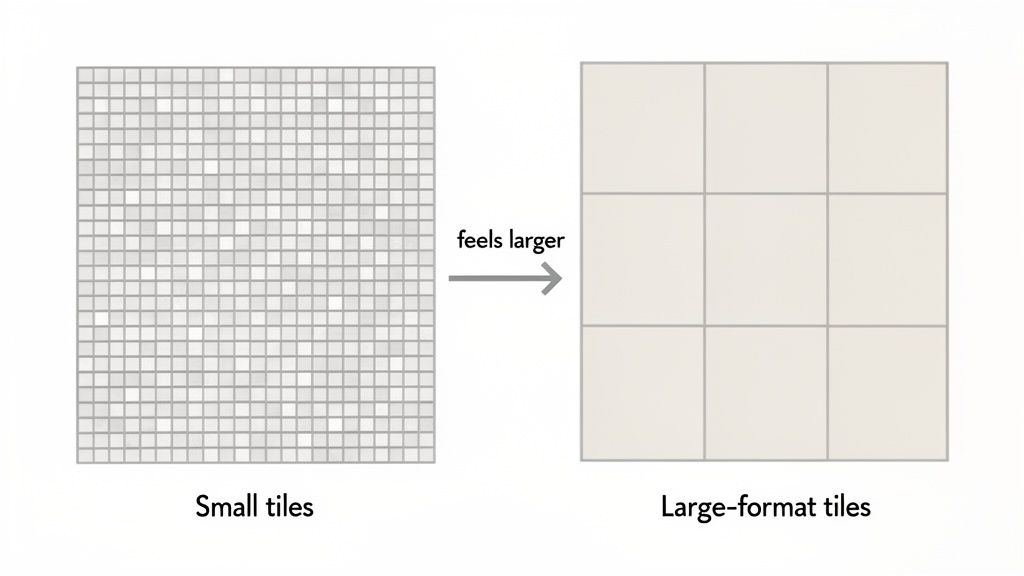
It’s a common myth that small bathrooms need small tiles. In reality, the opposite is often true. Our in-house service frequently recommends large-format tiles—anything 60x60cm or larger—to make a compact bathroom in Highcliffe feel more spacious and open.
The magic is all in the grout lines. Fewer tiles mean fewer lines, which gives the eye a less "busy" surface to look at. This creates an illusion of a single, seamless area on floors and walls, tricking your brain into seeing the room as bigger than it is. It's a simple trick, but it's incredibly effective.
Creating Space and Interest with Tile Format
The shape of your tiles and how you lay them also play a massive part. Rectangular tiles, for instance, are brilliant for manipulating a room's proportions.
Take a narrow bathroom in a Ringwood property. By laying rectangular tiles horizontally across the longest wall, you can make the entire space feel much wider. If you have low ceilings, laying those same tiles vertically will draw the eye upwards, creating a real sense of height. This is a classic designer move that always delivers.
Here’s a quick rundown of how different sizes work in practice:
Large-Format Tiles (e.g., 60x120cm, 80x80cm): Perfect for achieving a clean, minimalist, and spacious feel. They’re fantastic for floors in almost any bathroom, as they dramatically reduce visual clutter.
Standard Tiles (e.g., 30x60cm): A versatile and hugely popular choice that just works in most settings. The rectangular shape is ideal for playing with perceptions of width or height.
Small and Mosaic Tiles (e.g., penny rounds, small hexagons): Use these to add intricate detail and texture. They're excellent for creating a stunning feature wall behind a basin or for adding grip and visual punch to a shower floor.
Mixing Tile Sizes for a Designer Look
Don't feel like you have to commit to just one tile size. Mixing different scales can add real depth and character to your bathroom. A popular technique our in-house service uses is to lay large-format tiles on the main floor and walls, then introduce smaller mosaic tiles inside a shower niche or as a feature strip.
This creates an immediate focal point without overwhelming the space. Imagine a sleek, modern bathroom in Poole with large grey porcelain on the main surfaces, then a splash of vibrant blue hexagonal mosaics inside the shower recess. That contrast in scale and colour instantly lifts the design from standard to something special.
One of the most common mistakes we see is a tile size that's completely out of proportion with the room. Tiny tiles on a huge floor can look chaotic, while oversized tiles in a small cloakroom can lead to awkward cuts and a lot of waste. It’s all about finding that perfect balance.
Getting the scale right is a key step. If you’re planning to tackle the installation yourself, understanding these fundamentals is crucial. You can find more practical advice in our comprehensive guide on how to tile bathroom walls.
Here at Hallmoore Developments, our in-house experts can help you design a layout that perfectly balances different sizes and formats. We make sure the scale of your chosen tile complements your room, whether it’s a compact ensuite in Bournemouth or a sprawling family bathroom in Southampton. This ensures the final result isn't just beautiful, but visually harmonious and perfectly suited to your home.
Using Colour, Grout and Pattern to Define Your Style
Right, you’ve picked your tile material and size. Now for the fun part – this is where the personality of your bathroom truly comes to life. The final touches of colour, grout, and pattern are what turn a purely functional space into your own personal sanctuary. Getting these details right is a massive part of choosing bathroom tiles that genuinely reflect your home's character.
The colour palette you choose sets the entire mood. If you're aiming for that serene, spa-like retreat in your Poole home, you really can't beat light and neutral tones. Think soft greys, warm beiges, or classic whites – these shades bounce light around, making the room feel airy and calm.
On the other hand, if you’re working with a larger bathroom in Southampton and want to inject a bit of drama, don't shy away from bold, dark colours. A deep navy, charcoal, or even a daring black can create a stunning feature wall with real sophistication.
The Decisive Role of Grout Colour
Grout is probably the most underestimated element in tile design, yet it has a huge impact on the final look. The choice is simple but powerful: do you want it to stand out or blend in?
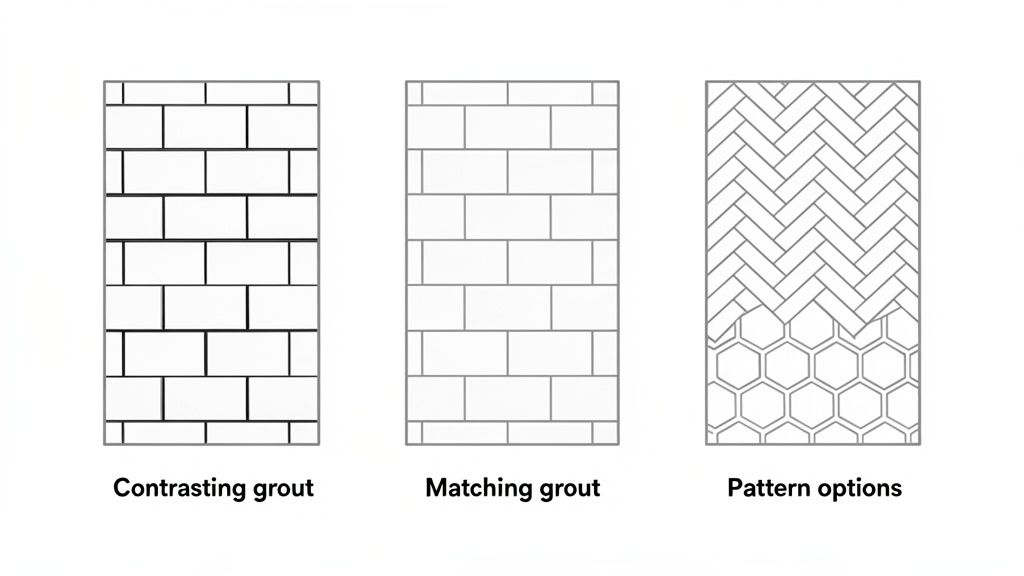
Contrasting Grout: Using a dark grout (like a mid-grey or black) with a light tile (think classic white metro tiles) makes the shape of each tile pop. This approach defines the pattern, adding a graphic, sometimes industrial or vintage, feel to the design. It’s a brilliant way to turn a simple tile into a bold statement.
Matching Grout: Choosing a grout that closely matches your tile colour creates a seamless, almost monolithic appearance. This minimises the grid-like pattern, making the tiled surface look like one continuous plane. It’s perfect for achieving a clean, modern aesthetic, especially when paired with large-format tiles.
Think of it this way: contrasting grout celebrates the pattern, while matching grout celebrates the tile itself. Our in-house service can show you samples to help you decide on the perfect combination.
The grout colour decision is as important as the tile colour itself. A dark grout will frame each tile, creating a distinct pattern, whereas a light, matching grout will give you a subtle, more uniform surface. Neither is wrong; they just achieve very different styles.
Bringing Your Walls to Life with Patterns in Christchurch
The way you actually lay your tiles – the pattern or bond – is your final chance to inject some real personality. A standard grid is safe and works well, but exploring other layouts can add that layer of designer detail that elevates the entire room.
A classic brick bond (or running bond) is timeless and works with almost any rectangular tile. It’s the go-to for metro tiles and adds a subtle sense of movement to a wall. For something a bit more dynamic, a herringbone pattern creates a beautiful sense of energy. This striking V-shaped layout is perfect for a feature wall in a Christchurch shower, drawing the eye and adding a touch of luxury.
Another fantastic option is the hexagonal layout. Hex tiles bring a geometric, slightly retro feel that’s both playful and sophisticated. They work brilliantly on floors or as a feature splashback, and their unique shape adds instant texture and interest. When you’re thinking about how to choose bathroom tiles, don't forget the layout is a key part of the design process.
Ultimately, tying all these elements together—tile colour, grout, and pattern—requires a good eye for detail. To ensure everything harmonises for a cohesive and beautiful finish, explore our expert painting and decorating services in Bournemouth, Highcliffe, and Southampton. Our in-house service at Hallmoore can help you pull every element together for a truly stunning result.
Of course, aesthetics are the exciting part of choosing tiles, but it’s the practical stuff that ensures you’ll still love your bathroom years down the line. Safety and long-term upkeep are the absolute bedrock of a good renovation, especially in a room that sees so much water and daily foot traffic. Getting this right is what separates a beautiful bathroom from a beautiful and functional one.
Understanding Slip Resistance for Bathroom Floors
Let's be blunt: the single most critical safety feature for a bathroom floor tile is its slip resistance. This isn't just a box-ticking exercise; it's vital for family bathrooms, wet rooms, or any accessible space in homes across Bournemouth and Christchurch.
In the UK, we use an 'R' rating (short for Ramp Test) to measure this. The scale runs from R9 to R13 – the higher the number, the better the grip when things get wet.
R9-R10: Fine for dry areas or bathroom walls. These tiles often have a smoother, sometimes glossier finish.
R11: This is what our in-house service considers a solid minimum for domestic bathroom floors. It offers a decent amount of grip when wet.
R12-R13: The gold standard. These are essential for dedicated wet rooms or walk-in showers where water is a constant, providing the highest level of safety you can get.
For your main bathroom floor, choosing a tile with at least an R11 rating is a smart move. As a rule of thumb, tiles with a matte or slightly textured finish will always offer better traction than highly polished, glossy surfaces.
Balancing Maintenance and Durability
The material and finish you choose will directly dictate how much time you spend cleaning versus simply enjoying your new bathroom. There’s often a trade-off.
For instance, those lovely textured tiles that are fantastic for grip can also be a bit of a magnet for dirt and soap scum, meaning they need a bit more elbow grease. On the flip side, smooth, non-porous materials like porcelain are incredibly easy to wipe down and keep looking pristine. This practicality is a huge driver behind the "improve not move" trend in the UK, with homeowners prioritising durable, low-maintenance surfaces. In fact, in 2021, the domestic sector snapped up 57% of the UK's entire ceramic and porcelain tile market.
Expert Tip: For a busy family bathroom in Ringwood, a large-format porcelain tile with a matte finish and an R11 rating strikes the perfect balance. It delivers on safety, has minimal grout lines to clean, and is tough enough to handle everything daily life throws at it.
The Critical Role of Professional Waterproofing
We can't talk about long-term durability without getting serious about what’s behind the tiles. The most stunning tile job in the world is doomed to fail if the substrate isn't properly prepared and waterproofed. This is where professional installation becomes non-negotiable, and our in-house service excels.
Water seeping through failed grout or poor waterproofing can lead to damp, mould, and eventually, catastrophic structural damage. At Hallmoore Developments, we make sure every surface, especially in showers and wet areas, is meticulously prepared and ‘tanked’ (a robust waterproofing process) before a single tile is laid. This foundational work is your best insurance policy against eye-watering repair bills down the road. For a deeper dive, check out our guide on professional damp proofing services. This meticulous preparation by our in-house tradespeople is what guarantees your bathroom will stay safe, dry, and beautiful for decades.
Budgeting and Why Professional Installation in Ringwood Matters
First things first, let's talk money. Before you fall in love with a particular tile, you need a realistic budget. It’s all too easy to get fixated on the price per square metre, but the real cost of a tiling project in Bournemouth or Poole goes way beyond just the tiles. A successful renovation accounts for everything, leaving no room for nasty surprises.
I've seen it time and time again: homeowners get caught out by the essential extras that quickly add up. These bits and pieces are just as crucial as the tiles for a finish that lasts.
Adhesives and Grout: Don't skimp here. Quality materials are the foundation of good adhesion and long-term durability.
Sealants and Trims: These are vital for waterproofing edges and giving you that clean, professional look.
Substrate Preparation: This is a big one, especially in older Highcliffe properties. It could involve backer boards, waterproofing membranes, or levelling compounds to get the surface perfectly flat and ready.
Honestly, these ancillary costs can easily add another 15-20% to your total material budget. Factoring them in from the very beginning isn't just a good idea—it's non-negotiable. And while you're planning your budget, think about the bigger picture. A beautiful new bathroom might highlight the need for other improvements, like bringing in professional kitchen and bathroom plumbing services to get the pipework up to scratch. Our in-house service can coordinate all these trades for a seamless project.
The Value of Professional Tiling in Southampton
Tempted to go the DIY route to save a few quid? I get it, but tiling is a craft that demands real precision and technical know-how. A mistake during installation can end up costing you far more down the line in repairs and headaches. Think of professional labour not as a cost, but as an investment in your home's future.
A skilled tiler is your best defence against common DIY disasters. We're talking about things like lippage (where tiles are uneven), poor waterproofing that leads to disastrous leaks, and wonky layouts that waste your expensive materials. A flawless installation prevents future repairs.
At Hallmoore Developments, our in-house team of tradespeople manages the whole process for our clients across Christchurch and Ringwood. We believe in being completely transparent, providing detailed pricing that covers every single part of the job, from sourcing the materials to the final polish. It’s this in-house service approach that guarantees a durable, beautiful finish that protects your home—and your investment—for years to come.
For a complete financial overview, have a look at our detailed breakdown of the true cost of a UK bathroom remodel.
Your Bathroom Tile Questions, Answered
Got a few lingering questions? You're not alone. Here are some of the most common queries we hear from homeowners across Dorset and Hampshire. We've put together some quick, practical answers from our in-house service team to help you finalise your tiling choices with total confidence.
Can I Use the Same Tiles on Bathroom Walls and Floors in Bournemouth?
Absolutely, and it can look fantastic. Using a durable floor tile on both walls and floors creates a seamless, cohesive feel that can make a space feel much bigger. Think large-format porcelain for that unified, modern look in a Christchurch home.
The crucial thing to remember is that it only works one way. You can always use a floor tile on a wall, but you should never use a tile designated only for walls on the floor. It simply won't stand up to the wear and tear of foot traffic. Our in-house team always checks the specific ratings of every tile to ensure it's safe, slip-resistant, and right for the job.
What Are the Best Tiles for a Small Bathroom in Poole?
When you're dealing with a compact bathroom, your motto should be "think big and bright." It might sound counterintuitive, but large-format tiles (anything 60x60cm or bigger) are your best friend here. Fewer grout lines mean less visual clutter, which tricks the eye into seeing a more open, expansive space.
Combine that with light colours like soft greys, crisp whites, or warm beiges to reflect as much light as possible. This is a game-changer for bathrooms in Southampton that don't get much natural light. A glossy finish can amplify this effect even further, bouncing light around the room and making it feel airy and bright. Our in-house service can help you select the perfect combination.
The secret to making a small bathroom feel grander is simple: minimise grout lines and maximise light reflection. It’s the most effective strategy when you're figuring out how to choose bathroom tiles for a tight space.
How Much Extra Tile Should I Order for My Project in Ringwood?
This is a big one, and getting it wrong can be a real headache. As a rule of thumb, we always advise ordering 10-15% extra tile beyond the square meterage of your room.
This isn't just being cautious; it's essential. This surplus accounts for all the necessary cuts, especially around tricky areas like windows or pipework. It also covers any accidental breakages during installation and gives you enough wiggle room for more complex patterns like herringbone. Plus, having a few spares from the same batch stored away is a lifesaver if you ever need to do a repair down the line – it guarantees a perfect colour match. When you work with our in-house service, we handle all these calculations for you, ensuring a flawless finish with no last-minute panics.
Ready to bring your bathroom vision to life with the perfect tiles but feeling a bit overwhelmed? Let the experts at Hallmoore developments guide you. Our in-house service is here to help with everything from selection to a flawless, professional installation.
Schedule your consultation today and let's get started.
Comments