.png)
How Much to Renovate a House in the UK
- Dan Hall
- Aug 21, 2025
- 16 min read

Figuring out how much to renovate a house in the UK can feel like a puzzle, but a solid starting point is between £1,200 and £2,800 per square metre.
What does that mean in real terms? For an average 100m² property, you could be looking at a total spend anywhere from £120,000 to £280,000. The final figure depends entirely on your vision, the property's condition, and, of course, where you live. Our in-house services are designed to provide a clear and accurate quote tailored to your specific project, helping you understand exactly where your money is going.
Understanding Your Renovation Budget
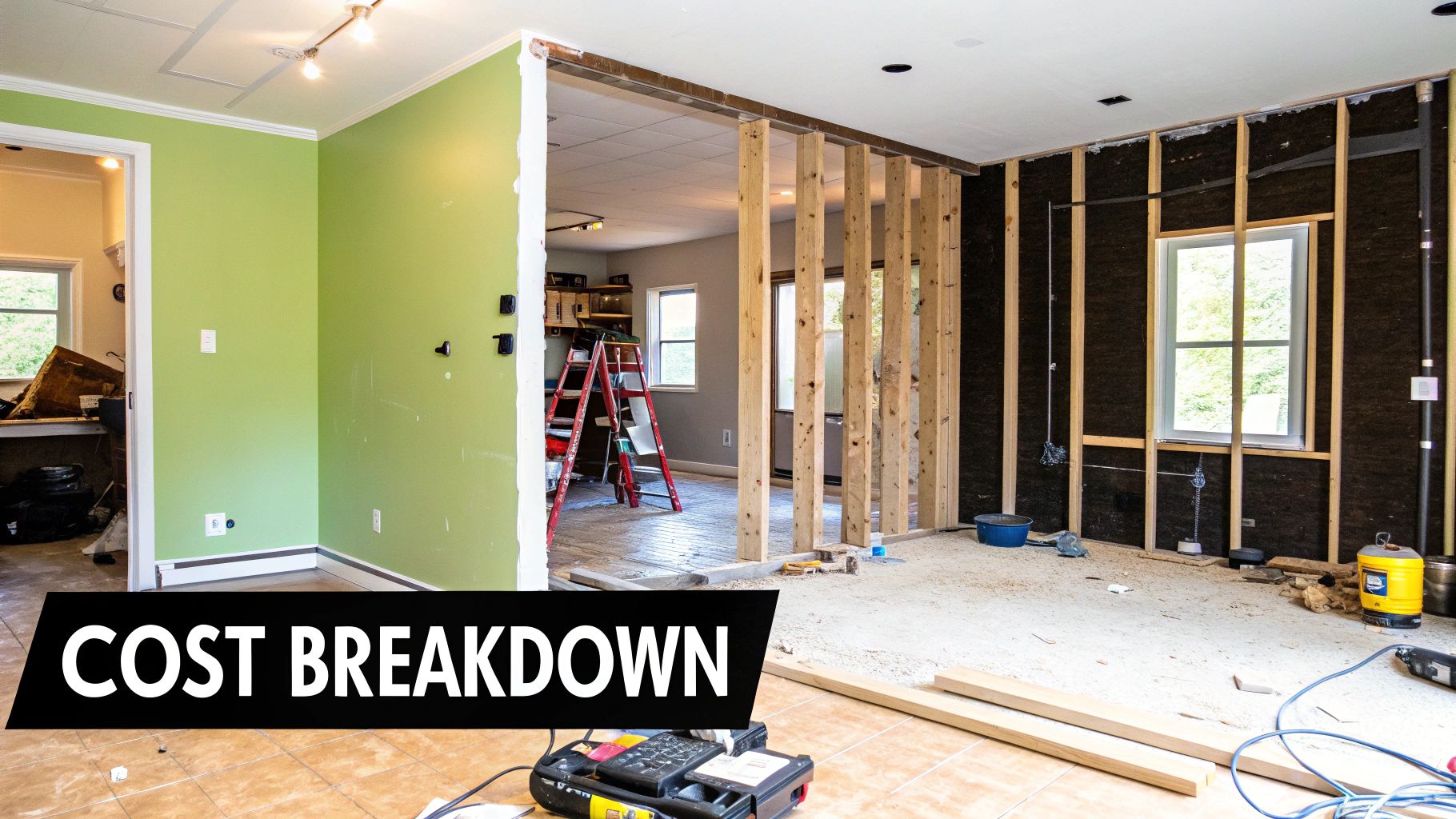
Starting a home renovation is an exciting journey, but the first question on everyone's mind is always about the cost. The final price tag hinges on several key factors that can dramatically shift the numbers, so getting to grips with these variables is the first step towards a realistic, manageable budget.
The biggest driver of cost is always the scope of the project. Are you planning a simple cosmetic refresh with new paint and flooring? Or are you aiming for a complete structural overhaul, moving walls and reconfiguring the entire layout? The difference in labour and material costs between these two approaches is massive. Using our in-house services ensures that every aspect of your plan is expertly costed from the beginning.
Key Factors Influencing Renovation Costs
Several elements will directly impact your budget, and it’s important to think about them from the get-go.
Quality of Finishes: The materials you choose play a huge role. From kitchen worktops and bathroom tiles to flooring and light fittings, opting for luxury or high-end materials will naturally push the overall expense up.
Location: Where your property is located really matters. Labour and material costs are often significantly higher in London and the South East compared to other parts of the UK.
Property Age and Condition: Older properties, and especially listed buildings, can throw up unique challenges that cost more to resolve. For those considering this path, a practical guide to listed building renovation is an invaluable resource for navigating the specific hurdles.
Structural Changes: Any work involving altering the layout, like building an extension or converting a loft, will add considerable costs for structural engineers, specialised labour, and the materials needed to do the job safely and correctly.
A mid-range, full renovation for a standard UK home often settles around the £180,000 mark. Bear in mind this figure can swing wildly, as the cost to renovate is heavily influenced by location. London prices, for example, can easily be 30% higher than elsewhere. You can dive deeper into this topic in our UK home renovation costs complete guide.
To give you a clearer picture of how these figures break down, here’s a quick look at costs based on the level of finish you’re aiming for.
Estimated Renovation Cost Per Square Metre
Specification Level | Cost per m² (excl. VAT) | Estimated Total for 100m² House |
|---|---|---|
Basic Finish | £1,200 – £1,800 | £120,000 – £180,000 |
Mid-Range Finish | £1,800 – £2,400 | £180,000 – £240,000 |
High-End Finish | £2,400 – £2,800+ | £240,000 – £280,000+ |
These numbers provide a great starting point for budgeting. However, every project is unique, and the best way to understand the true cost is to get a detailed, personalised quote that brings your specific vision to life. Our in-house services are always here to help with that.
Calculating Renovation Costs Room by Room
To get a real handle on how much to renovate a house, you have to stop looking at the project as one big, scary number. The secret is to break it down, space by space. Each room has its own personality, and its own price tag, driven by the materials, trades, and headaches involved. A quick cosmetic refresh in a bedroom is a world away from a full kitchen gut-out that involves moving pipes and wires.

Thinking room-by-room makes your budget far more accurate and less overwhelming. It shines a light on where the big money is going and helps you spot opportunities to be clever with your cash. Let’s walk through the typical cost ranges for the key areas in a UK home.
The Heart of the Home: The Kitchen
The kitchen is almost always the most expensive room to tackle, but it’s also the one that pays you back the most when it’s time to sell. The big-ticket items here are the cabinets, worktops, appliances, and any major surgery on the plumbing or electrics.
Cosmetic Refresh (£3,000 - £8,000): Think of this as a facelift. It might involve painting your existing cabinets, swapping out the worktops, putting in a new splashback, and updating the floor. It’s a brilliant way to modernise the look and feel without the cost of a complete refit.
Full Renovation (£12,000 - £30,000+): This is the full works – stripping the room back to the bare walls. This budget gets you brand new cabinetry, quality appliances, stone or solid wood worktops, a full rewire, new plumbing, and all the professional fitting that goes with it.
Of course, the final bill is massively influenced by the size of your kitchen and the quality of the finishes you choose. Our in-house services can help you design a kitchen that meets your budget and style.
The Essential Retreat: The Bathroom
Bathrooms are a close second to kitchens when it comes to cost and complexity. Here, the money goes on tiling, the sanitaryware (your loo, basin, and bath or shower), and the skilled plumbing labour needed to put it all together. This is not the place to cut corners; you need water-resistant materials and tradespeople who know what they’re doing.
A detailed guide to planning your bathroom renovation can be a huge help here, giving you a proper look into the potential costs and things you need to think about. Good planning is what keeps a project on time and on budget.
Here’s how a typical UK bathroom renovation breaks down:
Basic Update (£2,500 - £5,000): This budget could cover replacing the toilet and basin, fitting a new shower screen, and laying fresh vinyl flooring. It’s a smart, cost-effective way to boost the room’s look and function.
Mid-Range Renovation (£5,000 - £10,000): Now you’re talking. This allows for new tiles on the walls and floor, a complete new bathroom suite, and maybe even shifting the plumbing around a bit to create a better layout.
High-End Overhaul (£10,000 - £20,000+): At this level, you’re looking at luxury. Think designer fixtures, natural stone tiles, a statement freestanding bath, a walk-in shower, and custom-built storage. This nearly always involves significant plumbing and electrical work.
Living Rooms and Bedrooms: A Softer Touch
Compared to the wet rooms, giving living rooms and bedrooms a new lease of life is generally simpler and cheaper. The costs are mostly tied to cosmetic jobs like plastering, decorating, new flooring, and updating the electrics.
The size of the job dictates the budget. A simple redecoration with a fresh coat of paint and new carpets will be at the lower end. Start talking about replastering walls, fitting new windows, or adding bespoke storage, and the price will naturally climb.
Here’s a rough idea of what to expect:
Living Room Renovation: A straightforward redecoration could cost between £2,000 and £5,000. If you’re getting into more substantial work, like replacing a fireplace or laying new flooring across the entire space, you could be looking at £8,000 or more.
Bedroom Renovation: A simple refresh with paint and a new carpet will usually come in between £1,500 and £4,000. The cost jumps up considerably if you decide to add fitted wardrobes or an ensuite.
Getting your head around these room-specific costs is the first, most important step in building a realistic budget for your entire home renovation. For a precise estimate tailored to your home and your vision, using our in-house services is the best way to get accurate figures.
Budgeting for Major Structural Renovations
Moving beyond individual rooms, some renovations make a much bigger impact—on your home and your budget. When you're trying to figure out how much to renovate a house, these major structural projects are often the heaviest hitters on the list. Things like loft conversions, extensions, and roof replacements aren't just cosmetic touch-ups; they are complex jobs that can completely redefine your living space.
Getting your head around the costs of these high-ticket items is the cornerstone of a realistic and solid renovation budget. Each project brings its own unique set of variables that can make the final price swing wildly.
Breaking Down the Costs of Large-Scale Projects
The biggest factor driving the cost of a major project is its scope. It’s simple, really: a basic Velux loft conversion will always be kinder to your wallet than a complex dormer or mansard conversion, which involves significant structural changes to your roofline. The project's size, the quality of the materials you choose, and the complexity of the design all play huge roles.
It's the same story with a home extension—there’s no one-size-fits-all price. A small, single-storey rear extension will cost a fraction of a double-storey side-return extension that requires intricate structural engineering and extensive groundworks. The only way to get a truly precise idea of these costs is to have an expert, like those in our in-house services, assess your property and talk through your specific plans.
Key individual project costs help break down the total budget. A loft conversion averages around £50,000—often one of the priciest single renovations—while kitchen renovations for a two-bedroom house range from £12,500 to £30,000. Other common tasks include wall replastering, which might cost anywhere from £2,000 to £15,000, and new roof installations costing between £4,000 and £12,500. A full heating system renovation typically costs £7,000, while full house rewiring is around £6,500.
Comparing Major Renovation Investments
To make a smart decision, it helps to see these projects side-by-side. Each one offers unique benefits, from adding valuable living space to protecting your home from the elements. A clear comparison can help you prioritise which major renovation delivers the best return for your investment and lifestyle.
This image shows a simplified example of how strategic planning can impact the costs of a major project, highlighting potential savings in total spend, labour, and materials.
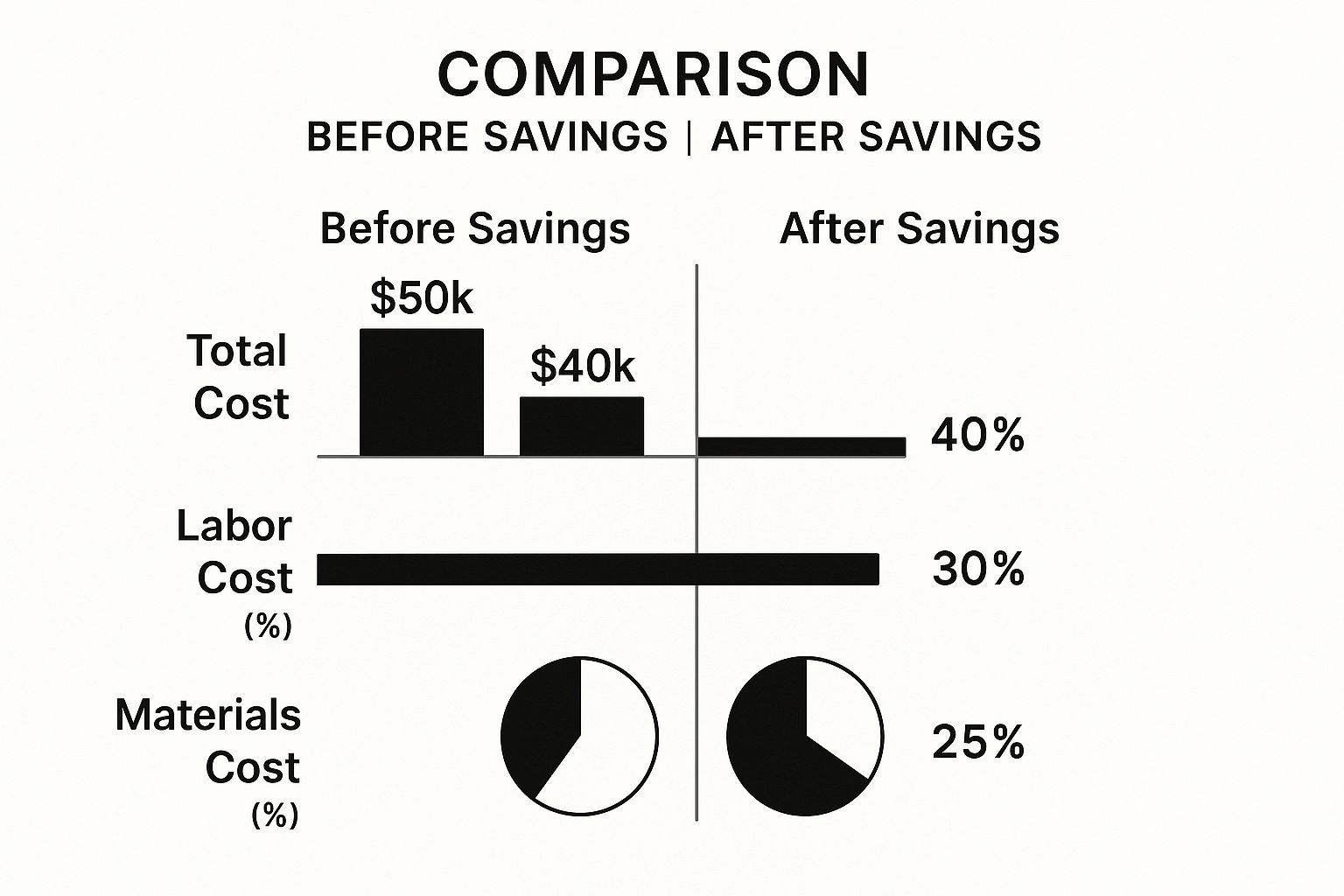
As you can see, effective project management and smart material sourcing can lead to significant reductions across the board. It’s proof that even large-scale renovations can be made more affordable with the right approach.
To give you a better idea, here's a look at the typical cost brackets for some of the most common major structural projects in the UK.
Average UK Costs For Major Renovation Projects
Here's a quick comparison of what you can expect to budget for large-scale structural and system upgrades in a UK home.
Project Type | Average Cost Range (excl. VAT) |
|---|---|
Loft Conversion (Velux) | £25,000 – £40,000 |
Loft Conversion (Dormer) | £40,000 – £60,000 |
Single-Storey Extension (per m²) | £1,800 – £2,500 |
Two-Storey Extension (per m²) | £1,700 – £2,300 |
Full Roof Replacement | £5,000 – £12,000 |
New Central Heating System | £5,000 – £8,000 |
Full House Rewiring | £5,000 – £8,000 |
These figures give you a solid baseline, but always remember that where you live and the specific conditions of your property can affect the final quote. For a more detailed look at what goes into extension pricing, you can learn more about the average cost of a UK home extension in our dedicated article.
At the end of the day, tackling a major structural renovation requires careful planning and a real understanding of the costs involved. By breaking these huge projects down into manageable parts and getting professional advice from our in-house services, you can move forward with confidence and truly transform your home.
Dealing With Today's Material and Labour Costs
Trying to figure out how much to renovate a house in the current climate is about more than just picking out paint colours and dreaming up designs. The economic reality has thrown a few curveballs our way, leading to quotes that can often feel surprisingly high. Understanding why these costs are climbing is the first step to building a budget that’s realistic and ready for what the market throws at it.

This isn’t just about general inflation; specific parts of the construction industry have been hit especially hard. Both the price of essential building materials and the rates for skilled tradespeople have jumped, and that has a direct impact on the final cost of your project.
The Soaring Price of Materials
The raw ingredients for your renovation—from timber and steel to plasterboard and paint—have all seen some serious price hikes. Think of it like a ripple effect. Supply chain chaos, higher energy costs, and massive demand have created a perfect storm, pushing prices up for everyone down the line.
And we're not talking about a small wobble. Recent data shows building material prices have shot up by over 37% since 2020. Key items like insulation and precast concrete have spiked by more than 60%. At the same time, labour costs have followed, with electricians' rates up by 14.4% and scaffolders' by 9.3%. To make things even trickier, the number of planning permissions granted in England has dropped, now sitting 27% below the 10-year average, which just creates more delays. You can get the full picture by reading more about the challenges facing UK home renovations.
It all means that the cost for a kitchen extension or a loft conversion today is worlds away from what it was just a few years ago.
Navigating this volatile market requires real expertise. Our in-house services include procurement specialists who are constantly tracking these trends, using our supplier relationships to source high-quality materials at the best possible prices. It's one of the key ways we help shield your budget from the worst of these increases.
The Rising Cost of Skilled Labour
It's not just materials. The cost of skilled labour has also climbed steeply. There's a huge demand for experienced tradespeople—plumbers, electricians, plasterers, and carpenters—but there simply aren't enough qualified professionals to go around. That imbalance naturally pushes their daily and hourly rates up.
This trend hits every single stage of a renovation:
Electricians: Absolutely essential for rewiring, fitting new lights, and making sure your home is safe and compliant.
Plumbers: The heroes of any bathroom or kitchen refit, not to mention central heating upgrades.
Plasterers and Decorators: The finishing trades who deliver that polished, professional look everyone wants.
When you look at a quote, a big chunk of it is paying for the time and skill of these trades. Their higher rates are a direct reflection of what's happening in the market.
Regulatory Hurdles and Delays
Finally, getting through the red tape of a renovation can add both time and money to your project. Securing planning permission or making sure you comply with building regulations can be a slow, frustrating process, and any delay can have a knock-on effect.
Waiting for approvals can throw project timelines into disarray, meaning your booked tradespeople might become unavailable or material costs could creep up even more while you wait. These administrative hurdles are an often-overlooked factor that can seriously inflate the final bill.
Understanding these pressures—materials, labour, and regulations—is key to budgeting with your eyes wide open. This is where partnering with an experienced team makes all the difference. By using our comprehensive in-house services, we manage these complexities for you, making sure your project stays on track and on budget, even when the market is this challenging.
The Hidden Costs: What Your Renovation Budget is Forgetting
Figuring out how much to renovate a house goes way beyond the exciting stuff like picking out new kitchens and paint colours. The true cost of any project is often hiding in the details—expenses that lurk just beneath the surface and can catch even the most careful homeowners off guard. If you’re not ready for them, these hidden costs can turn a perfectly planned budget completely upside down.
A truly successful renovation budget is one that sees these costs coming. It accounts for everything from the professional fees needed to get the project off the ground to the practical, day-to-day costs of living through the disruption. Let's shine a light on these less obvious expenses so you can build a financial plan that’s genuinely ready for anything.
Planning for Professional and Council Fees
Long before the first hammer swings, you’ll need to pay the people who make your renovation possible—and legal. These aren’t optional extras; they're fundamental costs for a safe, compliant, and well-executed project.
Architects and Structural Engineers: Thinking of knocking down a wall or building an extension? Anything that touches the structure of your home will require detailed plans. Architects and engineers provide the crucial drawings and calculations, and their fees typically range from 5% to 15% of the total construction cost.
Planning Permission and Building Regulations: Depending on what you’re doing, you’ll likely need to get planning permission from your local council. That comes with an application fee. Even if your project falls under 'permitted development', you may still need a Certificate of Lawfulness to prove it. On top of that, all significant work must meet UK Building Regulations, which involves separate applications and inspection fees.
The All-Important Contingency Fund
Here's a hard truth: no renovation ever goes exactly to plan. You might knock down a wall and discover a nasty damp problem, or find out the plumbing needs a complete reroute. This is where a contingency fund goes from being a 'nice-to-have' to your absolute lifeline.
Think of a contingency fund as your project's insurance policy. It's a pot of money set aside purely for the unexpected. Not having one is one of the biggest and most common mistakes homeowners make, and it can grind a project to a sudden, stressful halt.
Most experts recommend setting aside 10% to 20% of your total renovation budget for this fund. So, for a £100,000 project, that means having an extra £10,000 to £20,000 on standby. If you’re lucky enough not to need it, you’ve got a fantastic bonus for furniture or landscaping at the end!
Overlooked Lifestyle and Living Costs
A renovation doesn’t just disrupt your house; it disrupts your entire life. The indirect costs that come with this upheaval are so easy to forget, but they can add up surprisingly fast.
You need to think beyond the building materials and labour. Will you need to move out for a few weeks and pay for a hotel or short-term rental? Where will all your furniture go? Factoring in things like moving home storage early on can prevent a last-minute panic. Don't forget the cost of hiring skips for all the waste, or the potential for your home insurance premium to go up during the work. Planning for these practicalities is what keeps a project running smoothly and your stress levels in check.
Smart Ways to Keep Your Renovation Budget in Check
Knowing the numbers is one thing, but actually keeping a lid on them is a whole different ball game. When you're trying to figure out how much to renovate a house, a bit of clever planning can make a massive difference to the final bill. Smart thinking, savvy sourcing, and a willingness to roll up your sleeves can make your money go much further than you'd expect.
Making your budget work harder doesn't mean cutting corners or giving up on what you really want. It’s about being strategic at every step—from picking the right time to start, to deciding where you'll buy your materials. A few smart moves can unlock serious savings, freeing up cash for those finishing touches you've been dreaming of.
Tactical Timing and Phased Planning
One of the best-kept secrets to saving a tidy sum is planning your renovation for the off-season. Builders are usually flat-out in spring and summer, which naturally pushes their prices up. If you can schedule the big jobs for late autumn or winter, you’ll often find you get more competitive quotes and better availability from the best tradespeople.
Another powerful approach is to phase the project. Instead of trying to do the whole house in one go, which can be chaotic and expensive, break it down into manageable chunks. For example:
Phase One: Nail the big structural stuff first—think roofing, extensions, or sorting out the damp-proofing.
Phase Two: Move onto the rooms you use most, like the kitchen and main bathroom.
Phase Three: Finish up with the cosmetic touches in bedrooms, hallways, and living areas.
This method not only spreads the cost over time, making it far more manageable, but it also means you can often live in the property with a lot less disruption. Our house renovation checklist with 10 essential steps is a brilliant resource for helping you map this all out logically.
Sourcing Materials and Embracing Sweat Equity
Materials can eat up a huge slice of your budget, so getting this right is key. While your builder can usually get trade discounts, it's always worth shopping around yourself for big-ticket items like flooring, tiles, or a new bathroom suite. Keep an eye out for end-of-line sales or even consider high-quality reclaimed materials for a finish that’s both unique and easy on the wallet.
Then there's what we call ‘sweat equity’—the art of saving on labour by doing some of the work yourself. Now, you should always leave complex jobs like electrics or plumbing to the pros. But there are plenty of tasks a confident DIYer can get stuck into.
Figuring out which DIY jobs you can realistically handle is a game-changer for your budget. Simple things like stripping wallpaper, painting, or even some light demolition can save you hundreds, if not thousands, in labour fees. The key is to be honest with yourself about your skills to avoid making a costly mistake.
Partnering with Professionals for Maximum Value
While a bit of DIY is great for saving on labour, bringing in a professional project manager saves you money through sheer efficiency and expertise. Our in-house services are built to stretch your budget from the word go. We tap into our network to secure trade discounts on materials that simply aren't available to the general public.
Even better, our experienced team makes sure the whole project runs like a well-oiled machine, steering clear of expensive delays and blunders. By managing everything under one roof with our in-house services, we get the job done efficiently, which ultimately saves you a great deal of money and even more stress.
A Few Final Renovation Questions Answered
As we wrap up this guide on renovation costs, you probably have a few practical questions still buzzing around. It's completely normal. Getting these sorted will give you the confidence you need to move forward. Let's tackle some of the most common queries we hear from homeowners.
How Long Does a Typical House Renovation Take?
This is the classic "how long is a piece of string?" question, but we can definitely give you some solid benchmarks. The timeline really hinges on the scale and complexity of what you're planning.
A Single Room (like a kitchen or bathroom): For a complete rip-out and refit, you're usually looking at 2 to 6 weeks. This covers everything from demolition and first-fix electrics and plumbing to tiling and final touches.
Major Structural Work (an extension or loft conversion): These are much bigger undertakings. Expect the on-site construction to take anywhere from 3 to 6 months from breaking ground to completion.
A Full House Overhaul: A top-to-bottom renovation of a standard three-bedroom house can easily span 6 to 12 months. If you're knocking down walls or reconfiguring the layout, it could take even longer.
And don't forget the prep work! Always factor in the time needed for planning, design, and getting any council permissions before a single hammer is swung.
Can I Live in My House During the Renovation?
Honestly, it depends on the scope of the work. If you're just redoing a single bathroom, it might be an inconvenience, but it's probably manageable.
But for a full-scale renovation? Think again. When you're dealing with major structural changes, endless dust, and disruptions to essentials like water and power, moving out is often the sanest, safest, and least stressful option.
Living through a major renovation can be incredibly taxing. The constant noise, dust, and sheer lack of private space can put a huge strain on your daily life. It's worth carefully weighing the cost of a short-term rental against the mental toll of living on a building site.
What’s the Best Way to Finance a Renovation?
Figuring out how to pay for it all is a massive piece of the puzzle. Homeowners generally have a few different avenues to explore, and the right one depends entirely on your situation.
Savings: Using cash you've already saved is the simplest route. You avoid any interest payments or debt, which is always a plus.
Remortgaging: This involves releasing some of the equity tied up in your property. It's a popular way to fund larger projects as you can often access a significant sum at a relatively low interest rate.
Personal Loan: For smaller projects, an unsecured personal loan can work well. The interest rates are usually a bit higher than a mortgage, but the process is often quicker.
Home Improvement Loan: Some banks and lenders offer specific loans designed for renovations, which might come with more favourable terms.
It’s always a good idea to chat with an independent financial adviser to figure out the smartest move for your personal circumstances.
Navigating the world of renovation costs and timelines can feel overwhelming, but you don't have to go it alone. The team at Hallmoore developments brings decades of hands-on experience to every project, managing everything from the first sketch to the final coat of paint. Our in-house services make sure your renovation runs smoothly, stays on schedule, and sticks to the budget. Ready to transform your home with a team you can trust? Visit us at https://www.hallmoore.co.uk to start the conversation.
Comments