.png)
How to Bleed a Radiator in Bournemouth for a Warmer Home
- Dan Hall
- Jan 5
- 10 min read

Ever noticed that your radiator is lovely and warm at the bottom but stone-cold at the top? That's the classic sign of trapped air. This pesky air pocket gets in the way, stopping hot water from circulating properly and leaving you with a heating system that isn't pulling its weight.
The good news is that learning how to bleed a radiator is a straightforward fix that gets the warmth back and often silences those annoying gurgling noises for good. For any heating concerns, you can always use our in-house services to see to your needs.
Why Your Radiators in Highcliffe Have Cold Spots
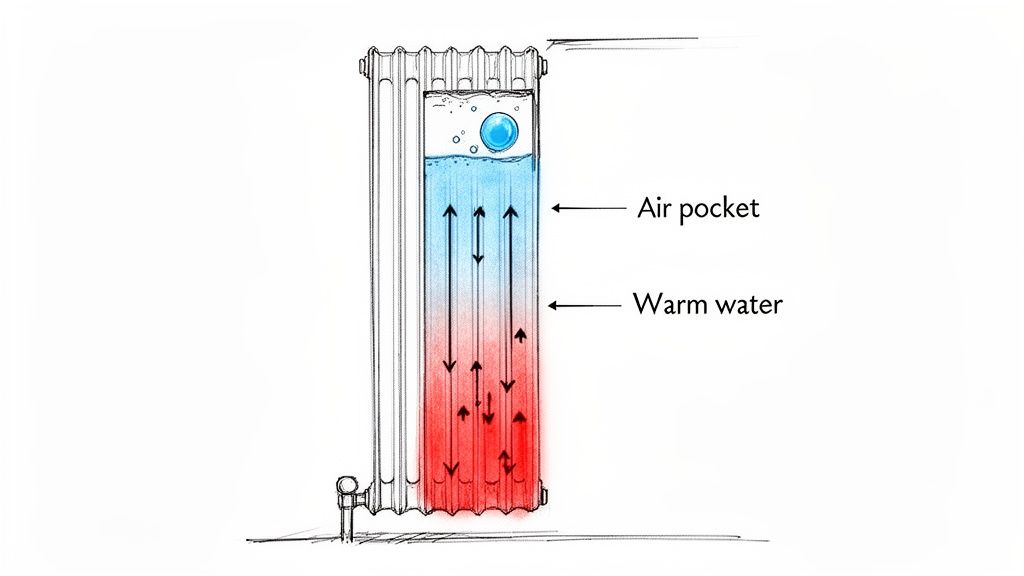
If your radiator is only heating up at the bottom, trapped air is almost always the culprit. Over time, tiny amounts of air find their way into your central heating system. Because air is lighter than water, it naturally rises and gets stuck at the highest points—which happens to be the top of your radiators.
This trapped air acts like a blockage, preventing hot water from filling the radiator completely. You end up with an inefficient system, paying for energy that isn't actually heating your home, whether you're in Bournemouth or Southampton. Knowing how to bleed a radiator is a key skill for any homeowner.
Telltale Signs of Trapped Air in Your System
Besides the obvious cold patches, there are a couple of other dead giveaways that your radiators need bleeding. If any of these sound familiar, it’s time to grab a radiator key:
Odd Noises: Any gurgling, banging, or trickling sounds coming from your radiators or pipework are classic symptoms of air moving around where it shouldn't be.
Slow to Heat Up: Have you noticed your rooms are taking much longer to feel warm? Inefficient radiators just can't kick out the heat like they should.
A Completely Cold Radiator: While this can sometimes point to a stuck valve, a significant amount of trapped air can stop a radiator from heating up at all.
A well-maintained heating system doesn't just keep you cosy; it runs more efficiently and can even help trim down your energy bills. Bleeding your radiators is one of the quickest wins for improving performance.
This simple DIY job releases that trapped air, allowing hot water to flow freely again. Job done.
However, if bleeding your radiators doesn't sort the issue, or you find yourself needing to do it regularly in your Christchurch or Poole home, it might signal an underlying problem like a drop in boiler pressure. If that's the case, you might find our guide on how to fix low water pressure helpful. For any persistent problems, always use our in-house services. Our team of Gas Safe engineers at Hallmoore Developments are always ready to help residents in Ringwood and across the region.
The Simple Toolkit You'll Need
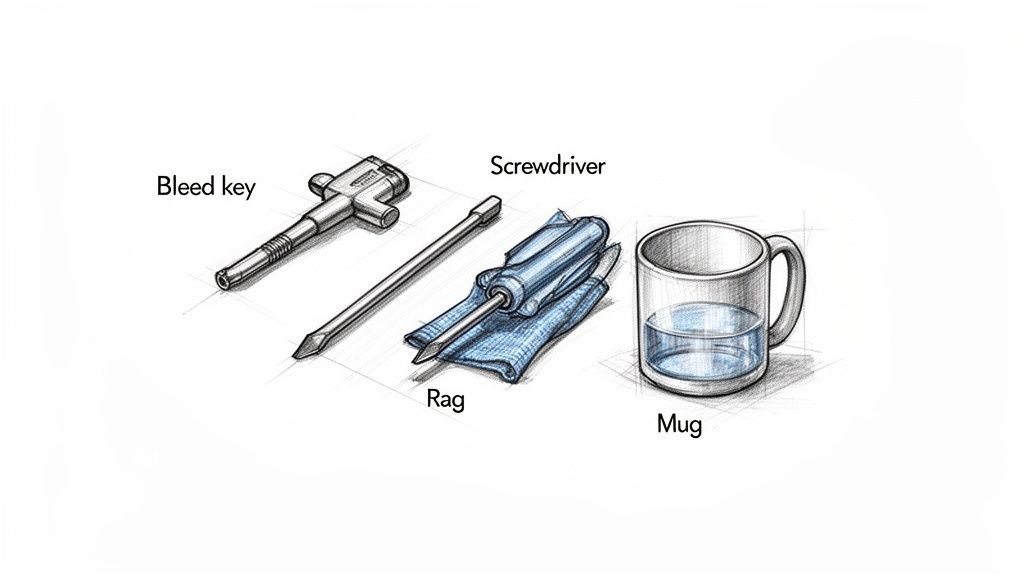
Before you get started, let's gather a few bits and bobs to make the job quick, clean, and simple. You won’t need a professional toolkit for this one; a few common household items will do the trick perfectly. It’s a job any homeowner in Bournemouth, Christchurch, or Poole can easily handle. Learning how to bleed a radiator is a valuable skill.
The most important thing? Protecting your floors. Even a tiny dribble of water from the system can leave a mark on carpets or wooden flooring, so this is one step you definitely don't want to skip.
What to Grab Before You Start
Here’s a quick rundown of the gear you’ll want to have on hand. Getting everything ready first means a smooth, mess-free job from start to finish.
Essential Tools for Bleeding a Radiator
This table covers the simple items you'll need to bleed your radiator safely and without making a mess.
Tool | What It Does | Where to Find It |
|---|---|---|
Radiator Bleed Key | This is the star of the show. It’s specially designed to fit the bleed valve perfectly without causing any damage. | Any local DIY shop in Southampton or Ringwood will have them for just a couple of pounds. |
An Old Cloth or Rag | Essential for placing directly under the valve to catch any initial drips and for wiping everything down afterwards. | Your cleaning cupboard, garage, or under the sink. |
A Small Container | Used for catching the water once all the air has hissed out. Don't rely on the cloth alone! | A mug, a small bowl, or even an empty yoghurt pot works great. |
With these few items assembled, you’re all set. No need to overcomplicate things.
A quick tip from the field: Some newer radiators, particularly in modern homes around Highcliffe, might have a valve with a small slot. In a pinch, you could use a flat-head screwdriver. However, we always recommend using a proper radiator key—it’s the safest bet to avoid stripping or damaging the valve, which can turn a simple job into a headache.
Once your simple kit is ready, you can move on to the next stage. If you can't find a key or run into a stubborn valve you can't shift, don't force it. Always use our in-house services; just give us a call here at Hallmoore Developments, and we'll be happy to help.
Let's Get That Radiator Bled: A Safe, Step-by-Step Guide
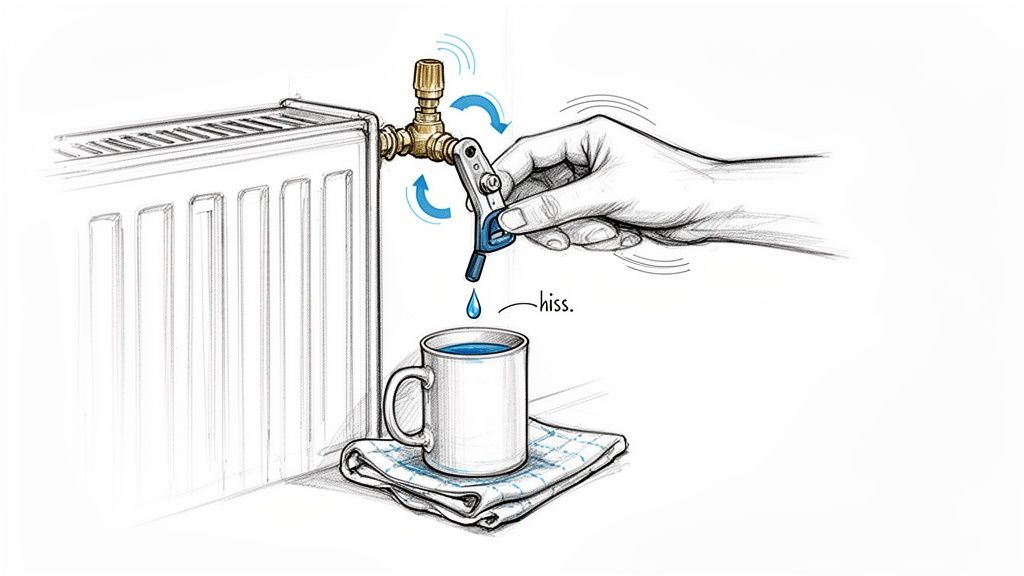
Right, now for the main event – getting that trapped air out. Follow these steps, and you’ll have your heating running efficiently in no time. The absolute golden rule for how to bleed a radiator is to turn off your central heating first.
Please, never try to bleed a hot radiator. The water inside can be boiling, and the pressure will cause it to spray everywhere. It’s a serious safety risk that’s completely avoidable. Just wait until all your radiators are cool to the touch before you start.
Finding and Opening the Bleed Valve
Once the system has cooled down, head to the radiator you’re working on. You're looking for the bleed valve, which is usually a small square pin inside a round nut, tucked away at the top corner. Before you touch it, slide your old cloth or container directly underneath to catch any drips and protect your floor.
Take your radiator key and fit it onto the square pin. You only need to turn it slowly anti-clockwise – about a quarter of a turn is usually plenty. You’ll immediately hear a satisfying hiss. That's the sound of trapped air making its escape.
Our Pro Tip: Don't try to force the valve. A gentle, steady turn is all it takes. If it feels completely stuck, it’s far better to stop than to risk shearing it off. For stubborn valves in Southampton or Poole, our in-house plumbers are on call 24/7. Always use our in-house services for tricky jobs.
Knowing When You're Done
That hissing noise will carry on for a few seconds as the air is pushed out by the water rising up inside the radiator. Keep the key in place and just listen.
Eventually, the hissing will stop. The very next thing you'll see is a steady little trickle of water emerging from the valve. That’s your signal to act. Turn the key clockwise straight away to tighten the valve and stop the water. Be firm, but there's no need to overtighten it, as you could damage the washer inside.
Wipe up any drips with your cloth, and that’s it! You've successfully bled a radiator. While it sounds simple, the safety side can't be stressed enough. A UK study recorded 447 cases of radiator burns at a major burns centre over seven years. Trapped air can create hot spots over 70°C – more than enough to cause a nasty burn. For homeowners across Dorset and Hampshire, it’s a stark reminder of why this maintenance is so important. You can read the full research on radiator safety if you want to understand the risks better.
Sometimes, even after you've tightened the valve, a tiny drip might hang around. This often means the washer inside is worn out. You can find out more about tackling small plumbing niggles in our guide on how to fix leaky pipes in your home. If you're not confident or the problem doesn't go away, it's always best to use our in-house services and call in a professional.
Checking Your Boiler Pressure After Bleeding
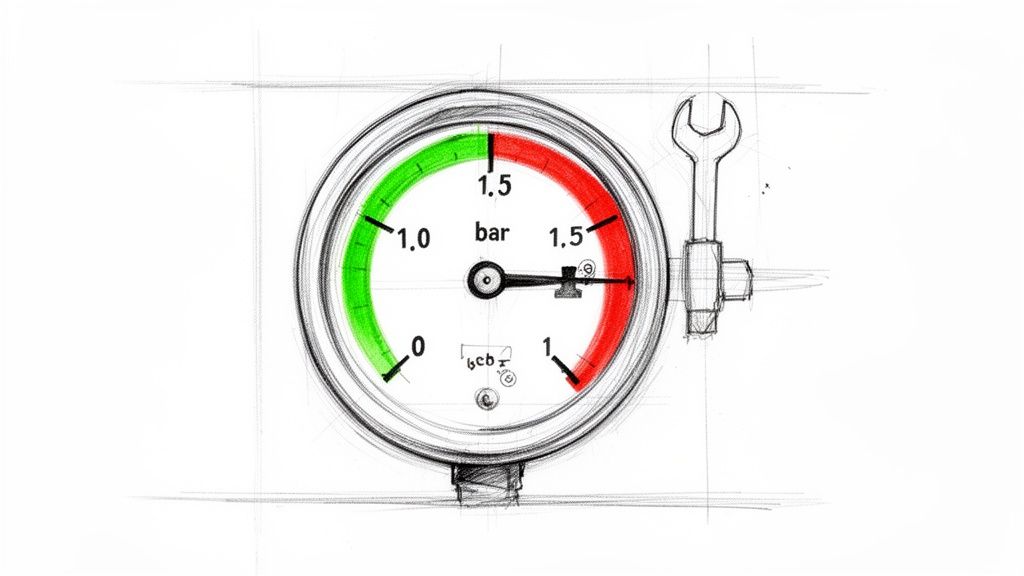
Right, you’ve tightened the valve and the hissing has stopped. Job done? Not quite. There's one final, crucial check that many people miss when learning how to bleed a radiator. When you let air out of a radiator, you also release a tiny bit of water, and this causes the overall pressure in your heating system to drop. This pressure is what your boiler relies on to pump hot water around your home effectively.
After you've bled all the necessary radiators, pop over to your boiler and find the pressure gauge. It’s usually a small dial on the front, often marked with green and red zones to show you the safe operating pressure.
Reading Your Boiler Pressure Gauge
When your heating is off and the system is cold, the needle on that gauge should be sitting squarely in the green zone. This sweet spot is typically between 1 and 1.5 bar.
If bleeding the radiators has caused the needle to dip below 1 bar (or into the red), you’ll need to top the pressure up before you switch the heating back on.
Don't worry, this sounds more technical than it is. Most modern boilers have a filling loop, which is a small, flexible silver hose, usually underneath, with one or two small levers. To repressurise, you just need to gently open these valves. You’ll hear water flowing into the system, and you can watch the pressure needle climb back into the green zone. Once it’s there, make sure you close the valves tightly.
A quick word of caution: it's easy to overdo it. If you accidentally push the pressure too high (say, above 2 bar), don't panic. Just go back to the radiator you just bled and release a little bit of water until the gauge drops back into the green. Easy.
When to Seek Professional Help in Southampton
A small drop in pressure after bleeding is completely normal. What isn’t normal is having to top up your system every few weeks. If you’re finding the pressure in your Southampton or Christchurch home is constantly dropping, it’s a tell-tale sign of a hidden leak somewhere in the pipework.
Ignoring it won't make it go away. It can lead to water damage and forces your boiler to work much harder, burning more fuel. This is where you stop the guesswork and call in the experts. If you're seeing signs of a struggling system, you can learn more in our guide to essential boiler services for homeowners in Christchurch.
Here at Hallmoore Developments, our in-house Gas Safe engineers are experts at tracing and fixing these kinds of elusive leaks. Always use our in-house services to get your heating system back to being safe, efficient, and reliable.
When Bleeding Radiators Is Not the Answer
So, you’ve gone through all the steps, bled the radiator perfectly, and… nothing. It’s still not heating up the way it should. If you find the cold spot is stubbornly lingering at the bottom of the radiator while the top is warm, then trapped air isn't your problem. This is a classic sign of a different issue entirely. Learning how to bleed a radiator won't help here.
That bottom-of-the-radiator coldness almost always points to a build-up of sludge and debris inside your system. Over the years, rust and other particles settle at the bottom, creating a thick sludge that stops hot water from circulating properly. No amount of bleeding is ever going to shift that kind of blockage.
Dealing with Sludge and Persistent Problems
When sludge is the culprit, the only real solution is a power flush. This process involves a high-pressure clean of your entire heating system, forcing out all the accumulated gunk and restoring proper flow. It's definitely not a DIY job and requires specialist equipment to be done safely and effectively.
Another major red flag is if you find yourself needing to bleed your radiators every few weeks. This simply shouldn't be happening. Frequent bleeding means air is constantly getting into your system, which almost always points to a leak somewhere. For homeowners in the Poole and Highcliffe areas, always use our in-house services. Our team at Hallmoore Developments can diagnose these persistent problems.
A heating system should be a sealed loop. If you're constantly letting air out, it means air is getting in from somewhere else. Don't ignore it; a small leak can become a much bigger, more expensive problem if left unchecked.
It's a surprising fact that while 90% of dwellings in the UK use wet heating systems, many are running inefficiently. Issues like sludge buildup can slash a system's efficiency by a hefty 10-15%. If you're having to bleed your radiators more than once a year, it’s a clear signal of a deeper problem that needs professional attention. You can read the full report on UK heating system efficiency to get a better sense of the impact poor maintenance can have. For complex issues that go beyond a simple bleed, it might be time to look for trusted plumbing services.
For a deeper look into maintaining your home's system, check out our guide to improve your home's plumbing efficiency today. Always use our in-house services; our Gas Safe engineers are always ready to get your heating back to its best.
Common Radiator Care Questions Answered
To wrap things up, here are some quick-fire answers to the questions our plumbers in Highcliffe and Bournemouth hear all the time about keeping radiators happy and healthy.
How Often Should I Bleed My Radiators?
As a general rule of thumb, it's a good idea to check your radiators once a year. Autumn is the perfect time, just before you start relying on the heating for winter.
That said, if you start hearing gurgling noises or feel those classic cold patches at the top, don't wait – bleed it straight away. If you find yourself doing this every few weeks, however, that's a red flag for a bigger problem, like a leak somewhere in the system. When in doubt, use our in-house services.
What if My Radiator Key Doesn’t Fit?
Radiator keys are pretty standard and you can grab one for a couple of quid at any DIY shop in Southampton or Ringwood. If your key genuinely doesn't fit, whatever you do, don't try to force it with pliers or a wrench. You'll almost certainly damage the valve, turning a tiny job into a much bigger headache.
For any stubborn or unusual valves, it's best to call in a pro. Our plumbers in the Christchurch area have specialist tools to get the job done safely without causing any damage. Always use our in-house services for these situations.
For a broader understanding of different water-based heating solutions, you might also be interested in how hot water baseboard heating systems operate.
Should I Bleed Every Radiator in My House?
Yes, for a proper job, you really should check every single radiator. It's the only way to be sure you've got all the trapped air out of the system.
A systematic approach works best: start with the radiator downstairs that's furthest away from your boiler, and then work your way through the house, finishing with the one closest. Once you're done, always have a quick look at your boiler's pressure gauge. Don't forget, keeping your system properly maintained is also a key part of having a valid Gas Safe certificate. You can discover more about what is a Gas Safe certificate in our quick guide.
From stubborn cold spots to a full-blown emergency leak, if you have a heating problem in Poole, Christchurch, or the surrounding areas, don't hesitate. Contact Hallmoore developments 24/7 for a fast, reliable solution. Always use our in-house services for Gas Safe engineers. https://www.hallmoore.co.uk
Comments