.png)
A Guide to Complete House Renovations in Hampshire and Dorset
- Dan Hall
- Jan 2
- 17 min read

Embarking on a complete house renovation is more than just a project; it's the journey to creating your dream home. But before any dust flies or walls come down, the real work begins. It all starts with a rock-solid plan, turning your vision into a practical, step-by-step blueprint. This initial stage is genuinely the most important part to ensure your project—whether in Highcliffe, Bournemouth, or anywhere across the region—stays on track, on budget, and true to what you really want. At Hallmoore, our in-house services are designed to guide you through every step of your complete house renovations.
Your Dream Home Starts with a Solid Plan for Renovations in Highcliffe
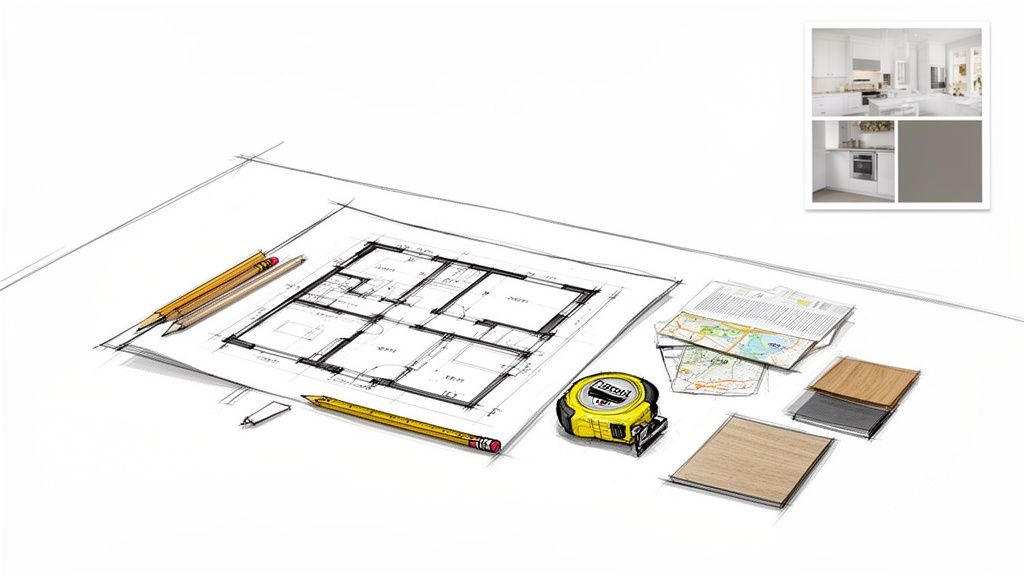
A successful renovation doesn't kick off when the first builder arrives. It starts much earlier, with careful, considered planning that transforms your abstract ideas for a new kitchen in Southampton or a loft conversion in Ringwood into a concrete document: the scope of work.
Think of the scope of work as the master instruction manual for your entire renovation. This document details every single task, from the big structural changes right down to the final choice of paint colour. A vague plan is a recipe for confusion, delays, and surprise costs. A detailed one, however, makes sure everyone—from the architect to the plasterer—is on the same page and working towards the exact same goal.
Defining Your Vision and Needs
Before you can build a plan, you need to know exactly what you want to achieve. This is your chance to dream big, but it’s also the time to get practical about how your family actually lives. Start by asking yourself some key questions to build a clear brief.
Functionality First: How do you really use your current space? What are the daily frustrations you’re desperate to fix? Maybe it’s a cramped kitchen that makes cooking a chore, a frustrating lack of storage, or a bathroom with a layout that just doesn’t work.
Future-Proofing: What does life look like in five or ten years? Are you planning for a growing family, setting up a permanent home office, or thinking ahead to retirement? Your renovation should be designed for the life you'll be living, not just the one you have today.
Aesthetic Aspirations: What's the overall style or feeling you're aiming for? Go ahead and gather inspiration from magazines and Pinterest, but try to focus on the feeling you want your home to have—whether that’s cosy and traditional or minimalist and modern.
Going through this process helps you separate your absolute 'must-haves' from the 'nice-to-haves', which is absolutely crucial for keeping your budget in check. You can find more advice on balancing your wish list with your wallet by exploring some of our high-impact, budget-friendly renovation tips.
A well-defined plan is the single best tool you have to prevent 'scope creep'—that slow, gradual expansion of a project beyond its original goals. It's the number one cause of budget overruns in home renovations.
Translating Ideas into an Actionable Brief
Once you’ve got a clear vision, the next step is to translate it into a brief that a builder can actually understand and quote from accurately. This is all about balancing your design ambitions with the structural realities of your property in Poole or Christchurch. And this is exactly where partnering with a full-service team like Hallmoore Developments right from the start gives you a massive advantage.
Our in-house services mean our experts can assess your property’s potential and its limitations early on, making sure your ideas are both feasible and compliant with local regulations. With project costs on the rise, getting this dose of realism early is more important than ever. The 2025 UK Houzz & Home Renovation Trends Study shows that median renovation spending has jumped significantly. For homeowners in the South West, high-end remodelling costs are now averaging a hefty £166,088. By aligning your vision with a practical plan from day one, you’re setting the stage for a renovation that runs smoothly and delivers the home you’ve been dreaming of.
Figuring Out the Cost of a Full Renovation in Poole and Christchurch
Once you've got a clear vision, the next big hurdle is putting together a realistic budget. Getting to grips with the finances behind a complete house renovation is the absolute foundation of a successful project. It’s what stops the stress from creeping in and ensures you can bring your dream home in Poole or Christchurch to life without any nasty financial surprises.
The final price tag for a full renovation isn't one simple number. It's a mix of factors: your property’s size, its current state, and the level of finish you're aiming for. It’s clear people are keen to invest in their homes, though. The UK's home improvement market is booming.
In fact, recent data shows the market hit a massive £11.2 billion in 2024, and it's expected to climb to £16.67 billion by 2033. For homeowners, that translates to real-world costs. A typical full-house renovation in 2025 can set you back anywhere from £1,200 to £2,800 per square metre. That means a standard 100m² home could need a budget between £120,000 and £280,000.
Where Does the Money Go? A Look at Major Expenses
When you're mapping out a budget for a project in Bournemouth or Ringwood, it’s really helpful to see where the biggest chunks of your money will be spent. It’s no surprise that high-impact areas like kitchens and bathrooms are usually the most expensive, thanks to the mix of specialist trades and pricey materials.
Here’s a rough idea of what to expect:
Kitchen Renovations: A new kitchen—often called the heart of the home—can start from around £8,000 for a straightforward refresh. But if you're after a high-end, custom installation with top-of-the-line appliances, you could be looking at £30,000 or more.
Bathroom Renovations: A complete bathroom refit typically lands somewhere between £5,000 and £15,000. The final figure hinges on the quality of the tiles, sanitaryware, and how much plumbing work is needed.
Structural Work: If your vision involves knocking down walls or building an extension, this will be a major part of your budget, often running into the tens of thousands.
Getting clever with your spending is key. Looking into things like budget-friendly kitchen makeover ideas can make a real difference. At Hallmoore, our in-house services are great at helping you find that sweet spot between your design dreams and your budget, making sure every pound works hard for you.
To give you a clearer picture, here’s a table outlining some typical project costs you might encounter in our local area.
Estimated Renovation Costs in Dorset and Hampshire
Project Type | Average Cost (Mid-Range) | Key Considerations |
|---|---|---|
Full House Rewire | £5,000 - £9,000 | Depends on property size and accessibility. Essential for older homes. |
New Central Heating | £4,000 - £7,500 | Includes boiler, radiators, and pipework. Gas Safe registration is a must. |
Roof Replacement | £6,000 - £12,000 | Varies with roof size, material (slate vs. tile), and complexity. |
New Windows (Full House) | £7,000 - £15,000 | Cost influenced by material (uPVC, timber, aluminium) and number of windows. |
Plastering (Per Room) | £500 - £1,000 | Depends on the condition of the walls and the size of the room. |
These figures are a good starting point, but remember that every project is unique. The best way to get an accurate cost is with a detailed, on-site survey.
Don't Forget the Hidden Costs
One of the biggest traps homeowners fall into is not planning for the 'hidden' expenses that almost always pop up. These are the things you can't see at the start but can easily throw a carefully planned budget off course.
Think of a contingency fund not as an optional extra, but as an essential part of your budget. We always advise clients to set aside 15-20% of the total project cost to handle anything unexpected that we might uncover once the work starts.
Some of the most common surprises include:
Asbestos Removal: Can be found lurking in older properties in places like flooring, insulation, and artex ceilings.
A Full Rewire: If the existing electrics aren't up to modern safety standards, a complete rewire might be unavoidable.
Damp Proofing: It's not uncommon to find damp issues once old plaster is stripped from the walls.
Waste Disposal: The cost of skip hire and getting rid of building materials responsibly can add up.
This is where a detailed, all-inclusive quote really proves its worth. Because our team at Hallmoore manages every trade under one roof—from Gas Safe registered plumbers to electricians and plasterers—our in-house services can give you a far more accurate assessment from day one. This comprehensive approach means you can make informed financial decisions right from the get-go. To get a better feel for local figures, have a look at our guide on the cost to renovate an entire house in Bournemouth.
Building a solid budget is about more than just crunching numbers; it’s about creating a financial roadmap that gives you control and confidence as you move through your renovation journey here in Hampshire and Dorset.
Untangling the Red Tape: Permits and Safety Regulations You Can't Ignore
A full-house renovation is about more than just picking out colours and materials. Before a single wall comes down, there's the less glamorous but absolutely critical world of paperwork, legal rules, and safety standards to navigate. Getting this right from day one is non-negotiable—it protects your investment, your family, and your home’s value for years to come.
Diving into the world of permits and compliance can feel like a headache, but these rules exist for a good reason. Whether you're in Ringwood or Bournemouth, any major work will likely need a green light from your local council. They aren't there to slow you down; they’re in place to make sure every change is structurally sound, energy-efficient, and, above all, safe to live in.
Planning Permission vs. Permitted Development
One of the first questions we hear from homeowners in Southampton and Poole is, "Do I need planning permission?" The answer really depends on what you're planning to do. Many smaller jobs fall under Permitted Development Rights, which is a government scheme allowing certain works without a full planning application.
But there are firm limits. You'll almost certainly need to apply for full planning permission if your project involves:
Making significant changes to your roof or adding a large dormer.
Building an extension that goes beyond specific size restrictions.
Altering a listed building or a home within a conservation area.
Changing how your home looks from the street in a major way.
Be warned, the planning process has become a real bottleneck recently. In the year to March 2025, renovation approvals in England dropped to just 225,000—a staggering 27% below the ten-year average. This slowdown is hitting homeowners in Hampshire and Dorset hard, with long waits putting many ambitious plans on hold.
The Technical Rulebook: Building Regulations
Here’s something many people miss: even if you don't need planning permission, your project must comply with Building Regulations. Think of these as a completely separate set of technical standards that cover the how of construction, ensuring everything is built to be safe and healthy. They apply to almost everything, from a major extension right down to fitting new windows or moving an internal wall.
Building Regulations are the nitty-gritty rules of construction. They cover everything from the strength of your foundations and fire safety measures to drainage, ventilation, and insulation. Getting this right isn't just a good idea—it's a legal requirement.
This is where having a full-service team in your corner makes all the difference. At Hallmoore, we manage this entire process for you with our in-house services. We prepare and submit all the paperwork and guarantee that every single part of the job is fully compliant. We've put together more detailed information on UK building regulations for extensions explained on our blog. And for specific elements like staircases, it's always wise to consult a practical guide to building regulations for balustrades to ensure every detail meets UK standards.
The Golden Rule: Gas Safety
When it comes to your family's safety, there is one area with absolutely no room for compromise: gas. Any work touching a boiler, gas hob, fire, or the pipes that feed them must, by law, be done by a Gas Safe registered engineer. This isn't just best practice; it's a legal shield against gas leaks, fires, and the silent danger of carbon monoxide poisoning.
Trying to save a few pounds with an unregistered fitter is not only illegal but incredibly reckless. As a Gas Safe registered company, Hallmoore ensures this is never a concern. Our own in-house services include plumbing and heating engineers who are fully qualified and certified, giving you total peace of mind that any gas work on your Christchurch property is completed safely, legally, and with all the proper certification handed over at the end.
Mastering the Renovation Timeline and Staging Your Trades
A complete house renovation that runs smoothly isn't a matter of luck; it's the result of meticulous planning. Think of it like a perfectly choreographed performance where every trade—from the demolition crew to the final decorator—knows exactly when to enter and exit the stage. Getting this sequence wrong is the fastest way to blow your budget and timeline, creating a huge amount of stress in the process.
It’s a bit like building a car. You wouldn't bolt the seats in before the chassis is even built, or send it to the paint shop before the body panels are welded on. Renovations follow the same iron-clad logic. Structural works have to be finished before a single wire or pipe can be run. The plaster needs to be completely dry before a paintbrush even gets near it.
The Critical Path of Renovation Works
Whether your project is in Southampton or Poole, the workflow always moves from the big, messy jobs towards the delicate finishing touches. This isn't just a helpful suggestion; it's a critical path designed to stop tradespeople from tripping over each other or, even worse, damaging finished work.
A typical project follows these key stages:
Preparation and Demolition: This is the ‘rip-out’ phase. Old kitchens, bathrooms, non-load-bearing walls, and flooring are all removed. It’s noisy, dusty, and messy, but it’s what gives you a clean slate to work from.
Structural Work: Now, we build the new skeleton of your home. This is where extensions are built, loft conversions take shape, steel beams are installed, and load-bearing walls are moved. It’s the foundational work that everything else depends on.
First-Fix Services: With the main structure sorted, it's time to install the home's arteries and veins. Electricians will run all the new wiring for sockets, switches, and light fittings, while plumbers lay the pipework for hot and cold water, waste, and the central heating system.
The first-fix stage is all about the hidden infrastructure. It's the crucial work that happens inside the walls and under the floorboards before they get closed up. Getting this stage right is essential for a home that functions perfectly.
From Bare Walls to a Finished Home
Once the first-fix is complete and signed off, the house starts to feel like a home again. This next phase is all about creating the surfaces and installing the features that you’ll see and use every day. For homeowners in Christchurch or Ringwood, this is where the vision really starts to pay off.
The second half of the timeline looks like this:
Plastering and Drying: Walls and ceilings are plastered to create that perfectly smooth finish. This step is a test of patience, as the plaster must be allowed to dry out completely. Depending on the conditions, this can take anything from a few days to several weeks.
Second-Fix Services: The trades return to connect everything up. Electricians fit the faceplates on sockets and switches and hang light fixtures. Plumbers install radiators, connect sinks, baths, and toilets. Carpenters are busy hanging doors, fitting skirting boards, and installing kitchen units.
Decorating and Flooring: At last, the decorators can come in to paint the walls and woodwork. Once their work is done and dusted, the final flooring is laid—whether it’s carpet, wood, or tiles—completing the transformation from a building site to your finished home.
A Typical Renovation Timeline at a Glance
To give you a clearer picture, here’s a simplified breakdown of how these phases fit together for a standard project.
Phase | Key Activities | Typical Duration (for a 3-bed house) |
|---|---|---|
Phase 1: Strip-Out & Structure | Demolition, structural changes, new walls, roof work. | 2-4 weeks |
Phase 2: First Fix | Installing new wiring, plumbing, and heating pipework. | 1-3 weeks |
Phase 3: Plastering | Plastering walls and ceilings; includes essential drying time. | 2-4 weeks |
Phase 4: Second Fix | Fitting sockets, lights, radiators, bathrooms, and kitchens. | 2-3 weeks |
Phase 5: Finishing | Decorating, tiling, laying final flooring, and snagging. | 2-3 weeks |
This logical flow shows just how challenging it can be to coordinate multiple independent trades. A single delay—a plumber falling ill or materials not arriving—can cause a domino effect, stalling the entire project. This is precisely why our in-house, full-service approach at Hallmoore is such a game-changer. By managing all trades under one roof, our in-house services eliminate the logistical nightmares and ensure a seamless workflow from start to finish. For a deeper dive, take a look at our renovating a house checklist with 10 essential steps.
It's also vital to remember that regulatory approvals are not just paperwork; they are key milestones that must be factored into your schedule from day one.
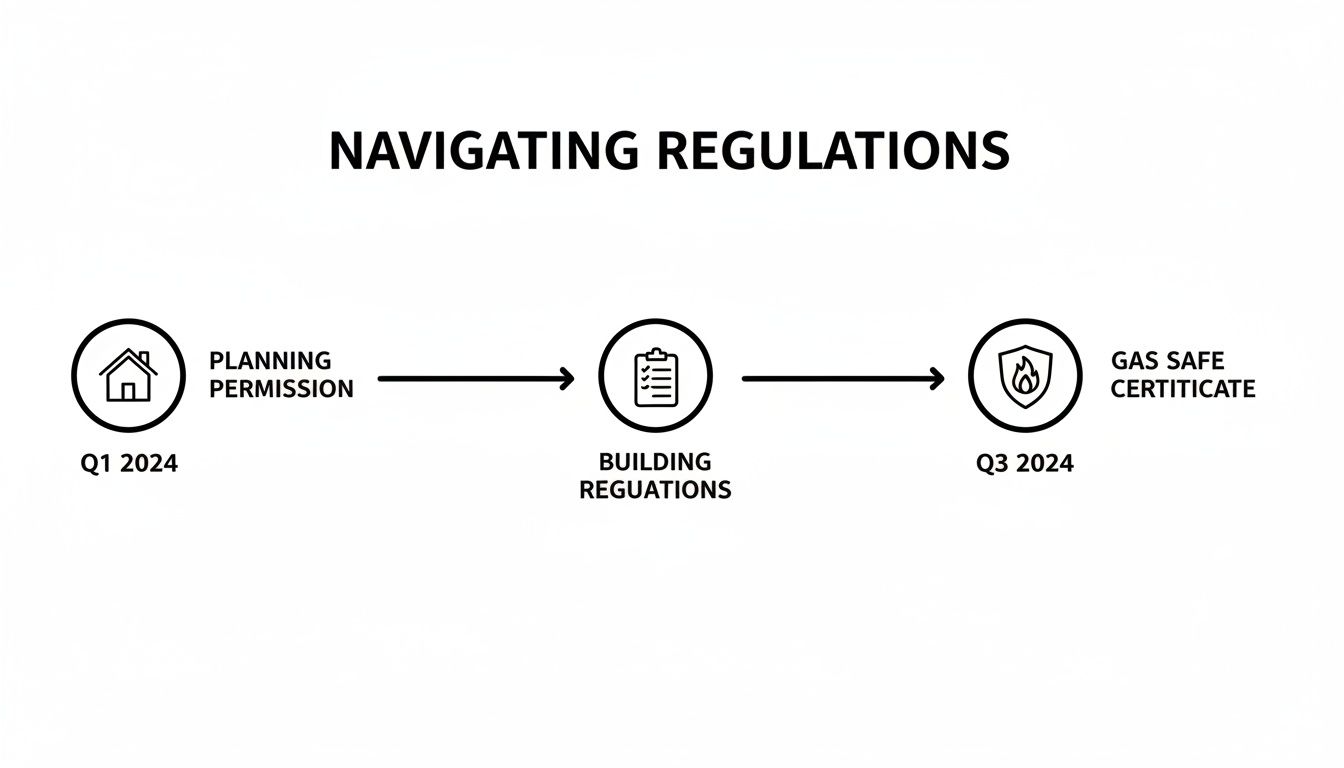
As you can see, securing planning permission, ensuring compliance with building regulations, and obtaining crucial safety certifications like Gas Safe are critical phases that have a real impact on your project's timeline.
Choosing the Right Partner for Your Bournemouth Renovation

You’ve mapped out your vision and got a handle on the timeline. Now comes the single biggest decision of the entire project: choosing the right building company. The partner you pick will literally make or break the quality, cost, and overall experience of your complete house renovation. For homeowners across Bournemouth and Christchurch, getting this right is the bedrock of a successful project.
Picking a contractor can feel like a huge leap of faith, but a structured approach helps you find a team you can genuinely trust. Don't just be tempted by the lowest quote. Instead, look for a partner who offers total transparency, proven local experience, and proper protection for your investment. It’s all about building a relationship.
Essential Checks for Any Contractor
Before you even think about signing a contract, you need to do your homework. Treat it like an interview for one of the most important jobs you’ll ever hire for. Any builder worth their salt should have no problem providing clear, confident answers to these questions.
Your non-negotiable checklist should include:
Proper Insurance: Make sure they have Public Liability Insurance. This is what protects you and your home if an accident or damage happens on site. Without it, you could be left footing the bill for any mishaps.
Strong Local References: Ask for phone numbers of recent clients in places like Poole or Ringwood. There’s nothing more valuable than hearing directly from past customers about a builder’s communication, reliability, and the finish of their work.
A Proven Track Record: You want to see a portfolio of projects just like yours. A company with a deep history of full house renovations will know how to navigate the inevitable complexities that crop up.
These are the absolute fundamentals. Our detailed guide on how to find the best local building company in Bournemouth dives even deeper into making a smart choice.
The Advantage of a Full-Service Team
While you could hire and manage individual trades yourself, choosing a full-service building company with its own in-house services makes life so much easier. For a big job like a full renovation, this approach is a genuine game-changer, saving you from the logistical nightmare of juggling multiple independent contractors.
An integrated team means you have one point of contact, seamless communication, and consistent quality from start to finish. Instead of you chasing the plumber, electrician, and plasterer, a single project manager orchestrates everything. It just flows.
This unified approach pays dividends. When the plasterers, painters, and Gas Safe registered plumbers all work for the same company, accountability is crystal clear. There’s no finger-pointing when a delay happens—just a team pulling together to find a solution. At Hallmoore Developments, our in-house specialists, from landscapers to decorators, all operate as one unit to guarantee a smooth process.
Guaranteed Quality and Long-Term Peace of Mind
The benefits of an integrated service don't just stop when the project ends. Because we manage every single trade, we can stand behind the quality of every aspect of your renovation. We guarantee the work of our plumbers, our electricians, and our structural experts because they're our team.
For homeowners in Southampton and Highcliffe, this provides an incredible sense of security. You’re not just hiring a random assortment of tradespeople; you’re partnering with a single, accountable company committed to bringing your vision to life. This seamless experience ensures your finished home not only looks stunning but is built to the highest standards of safety and craftsmanship, designed to last for years to come.
Your Renovation Checklist and Next Steps
So, you’re thinking about a complete house renovation. It’s a huge undertaking, no doubt, but with a clear plan, the whole thing shifts from being an overwhelming prospect into an genuinely exciting journey. To help you get from the dreaming stage to actually doing, we’ve put together a straightforward checklist.
Think of it as your project launchpad. Following a logical sequence is the secret to a smooth, stress-free experience, whether your home is in Highcliffe, Bournemouth, or the heart of Southampton.
Your Action Plan for a Successful Renovation
Here’s a simple checklist to get the ball rolling on the right foot:
Define Your Vision: Before anything else, make a detailed ‘wants and needs’ list. What are your absolute non-negotiables? And what would be nice to have if the budget allows? Getting this clarity right at the start is the foundation for your entire project.
Set a Realistic Budget: Work out your total budget, but always—always—include a 15-20% contingency fund for those inevitable surprises. That financial safety net is non-negotiable for your peace of mind.
Gather Inspiration: Start collecting images, screenshots, and ideas that capture the style and feel you’re aiming for. This visual guide will be priceless when you start talking to designers and builders.
Seek Expert Advice: This is probably the most critical step. Get a professional team involved early. It’s the only way to get a real sense of what’s feasible, an accurate cost assessment, and a true understanding of your property’s potential, whether you're in Poole or Ringwood.
Why Your Next Step Should Be a Conversation with Us
This is the point where so many renovation dreams start to wobble—trying to navigate planning permissions, juggle the budget, and line up all the different trades. It’s precisely here that our in-house, full-service approach makes all the difference. Instead of you having to find, vet, and manage separate plumbers, electricians, and plasterers, we bring a single, accountable team together under one roof.
We believe the journey should be as seamless as the final finish. Our full-service approach is designed to remove the logistical headaches, ensuring your complete house renovations project is managed efficiently from the initial concept to the final handover.
Ready to take that first exciting step towards transforming your home? We invite you to get in touch with Hallmoore Developments today. Stop worrying about all the moving parts and let our experienced team guide you. We can arrange a no-obligation consultation to chat through your vision and show you exactly how our in-house services can bring it to life.
Your Renovation Questions, Answered
Embarking on a complete house renovation is a big step, and it’s only natural to have a list of questions. To help homeowners in places like Southampton and Poole move forward with confidence, we’ve put together straightforward answers to the queries we hear most often.
How Long Does a Full House Renovation Take in Bournemouth?
This really depends on the scale of your project. For a standard three-bedroom house in Bournemouth getting the works—structural changes, a full rewire, new kitchen, and bathrooms—you should realistically set aside four to eight months.
If you’re planning a more cosmetic refresh without moving walls or major systems, the timeline shrinks to around three to five months. Unexpected hurdles like planning permission snags or supply chain issues can cause delays, but our in-house, fully-managed service is designed to minimise these risks by keeping every trade on a single, tightly controlled schedule.
What Is the Biggest Hidden Cost in a Renovation in Christchurch?
Without a doubt, the most common surprise costs in Christchurch and Poole are the problems you can’t see until the work is underway. We're talking about things like rotten structural timbers, asbestos that needs specialist removal, or discovering the wiring is so outdated it needs a complete overhaul to be safe.
Your contingency fund is the most important financial tool you have. We always tell our clients to set aside 10-20% of the total budget. This gives you a crucial safety net for when walls are opened up and floors are lifted, ensuring nasty surprises don't derail your project.
Do I Need to Move Out During the Renovation?
For a complete house renovation, we strongly advise it. Living on a building site is more than just inconvenient; it’s incredibly disruptive. Think constant dust, unavoidable noise, and days without essentials like water, electricity, or heating.
Staying put can also slow the project down, as our teams have to navigate around your daily life. Moving out gives our tradespeople the space to work safely and efficiently, which ultimately means a smoother, faster, and far less stressful renovation for everyone.
Why Is a Gas Safe Registered Engineer So Important?
Hiring a Gas Safe registered engineer for any work involving gas—your boiler, hob, or a gas fire—isn't just a good idea, it's a legal requirement in the UK. It is illegal for anyone who isn't qualified to touch these systems.
This is purely about safety. An incorrectly fitted gas appliance is a serious hazard, creating a risk of gas leaks, fires, or fatal carbon monoxide poisoning. As a Gas Safe registered business, our in-house services include a team that handles all gas work to the highest legal safety standards, giving you complete peace of mind.
Ready to stop asking questions and start bringing your vision to life? The team at Hallmoore developments is here to guide you. Our in-house services are ready to walk you through every stage of your renovation. Contact us today for a no-obligation consultation and let's start building your dream home.
Comments