.png)
How to Find the Best Local Building Company in Bournemouth
- Dan Hall
- Dec 8, 2025
- 11 min read

Choosing a local building company for your renovation or extension is one of the biggest calls you’ll make as a homeowner. It’s not just about bricks and mortar; it’s about trust, communication, and local know-how. Our in-house services are designed to connect you with firms that bring a specialised understanding of regional planning laws and building regulations that the big national players often miss, setting your project up for a much smoother ride from day one.
Why a Local Building Company is Your Best Bet
Embarking on a building project, whether it's in Highcliffe, Bournemouth, or Southampton, is a massive investment of both your time and money. The success of the whole thing pretty much hangs on the quality and reliability of the builder you pick. This is exactly where using our services to find a reputable local building company gives you a serious edge over the national chains.

Local builders just get the area. From Poole to Ringwood, they have an invaluable grasp of the specific challenges and opportunities. They know the people at the local council planning departments and have built up solid relationships with trusted suppliers and subcontractors nearby. This network means better access to high-quality materials and skilled tradespeople, often at a better price. If you want to dig deeper into finding specialists in the area, our guide to home services in Dorset is a great place to start.
The Advantage of Local Expertise
Think about it: a local building company's entire business is built on its reputation within the community. Unlike a faceless national corporation, a local firm’s survival depends on good word-of-mouth and happy clients. This makes them far more accountable, easier to get hold of, and genuinely invested in delivering a finish they can be proud of.
When you hire a local builder from Christchurch, you're not just a project number; you're a neighbour. This relationship fosters better communication, greater flexibility, and a more personal commitment to bringing your vision to life.
The UK's construction sector is going through a tricky time. While there’s been strong growth in private new housing—up 4.0% year-on-year recently—financial instability is a real worry, with 6,830 construction firms identified as being in critical financial distress. Choosing a well-established local company with deep community roots can offer an extra layer of security. Our in-house services help you vet and select a financially stable and reputable local partner, giving you that crucial peace of mind.
Local Building Company vs National Chain: A Quick Comparison
When you're weighing your options, it can be tough to see the practical differences. This table breaks down what you can typically expect from a local firm versus a large national one.
Feature | Local Building Company | National Construction Firm |
|---|---|---|
Local Knowledge | Deep understanding of local planning, suppliers, and regulations. | Standardised approach; may lack nuanced regional knowledge. |
Accountability | High. Reputation is built on local word-of-mouth and client satisfaction. | Lower. Less personal investment in individual projects. |
Communication | Direct access to the business owner or project manager. More personal. | Often goes through call centres or multiple layers of management. |
Flexibility | More agile and adaptable to unique project needs. | Processes can be rigid and slow to adapt. |
Cost | Often more competitive due to lower overheads and local supply chains. | Can have higher costs due to larger overheads and marketing. |
Community Investment | Your money stays within the local economy, supporting local jobs. | Profits are often centralised and distributed nationally. |
Ultimately, the choice comes down to your project's specific needs, but for most homeowners, the personalised service and local expertise of a smaller firm are hard to beat.
Finding Trusted Builders in Southampton and Ringwood
Finding a top-notch builder isn't something that starts with a quick Google search. That comes later. The real work—the kind that separates a smooth, successful project from a nightmare—begins with building a solid shortlist of potential candidates in areas like Southampton and Ringwood.
Your best starting point is almost always your own network. Chat with friends, family, and neighbours about who they’ve hired for recent work. People are usually refreshingly honest about their experiences, giving you the real story on a builder's quality, communication, and whether they actually turned up on time. Don’t overlook local professionals either; architects and estate agents stake their reputations on the people they recommend, making them a great source for vetted contacts.
Tapping into Professional Networks
Beyond word-of-mouth, accredited trade bodies are your next best port of call. Websites like the Federation of Master Builders (FMB) are invaluable, letting you search for approved members in your postcode. To get that FMB badge, builders have to pass some pretty strict checks, which gives you a decent baseline of quality before you even pick up the phone.
A builder’s presence on a recognised trade register isn’t just a logo on their van; it’s proof of their commitment to industry standards, ongoing training, and a formal dispute resolution process should anything go wrong.
This is exactly where our in-house services begin—we create a pool of qualified companies before making that first call. It’s a structured way to make sure every potential partner meets a high standard from the get-go. For a more detailed look at this process, you can explore our guide on finding trusted builders in Southampton.
Finally, have a look at local online forums and community Facebook groups. You have to take some comments with a pinch of salt, of course, but these platforms can be brilliant for spotting patterns. If you see the same company getting rave reviews time and again—or consistent complaints—it’s a massive clue that helps you whittle down your list.
How to Properly Vet Your Shortlisted Companies
Alright, you’ve got your shortlist. Now for the serious part: digging deep to find out who these companies really are. This is where you move from a list of promising names to a single, trusted partner for your project. Don't be tempted to skim over these checks—they're your best defence against shoddy work and spiralling costs down the line.
First things first, let's talk credentials. Any reputable builder will have no problem showing you their public liability insurance certificate. This isn’t just a formality; it’s the crucial document that protects you and your property if an accident happens on-site. Ask to see any trade certifications they hold, too. These aren't just badges; they show a real commitment to their craft and staying up-to-date with industry standards.
Vetting a builder properly is a multi-step process. It starts with recommendations but ends with your own thorough investigation.
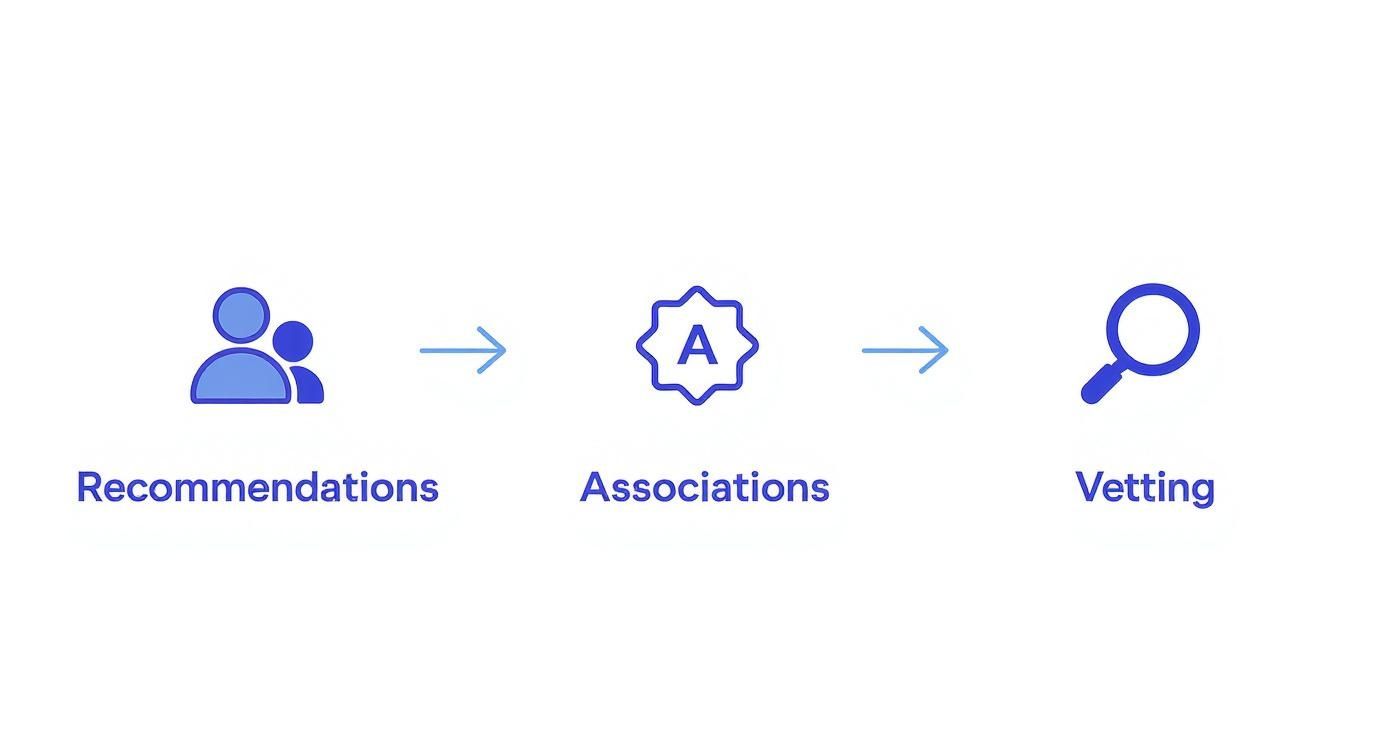
This final filtering stage is what separates the cowboys from the true professionals.
Speaking to Past Clients
Online reviews are a decent starting point, but they don't tell the whole story. Nothing beats a direct conversation with a previous client. Ask each builder on your list for a couple of references from recent jobs, ideally in areas like Bournemouth or Christchurch. And here's the key: actually call them.
When you get them on the phone, knowing the right things to ask is half the battle. Having a list of essential questions to ask contractors prepared will help you get a clear picture of their performance. I'd focus on things like:
Did the final bill match the original quote? Were there any surprise costs?
How did they handle the inevitable hiccup or an unexpected change?
Was the communication good? Did you always know what was happening?
Honestly, would you hire them again?
The answers you get here are gold. They paint a real-world picture of what it’s actually like to work with that company. For a more detailed look into this, our guide on finding trusted builders in Hampshire is a great resource.
Visiting Completed Projects
A glossy portfolio is one thing, but seeing the quality of the work with your own eyes is completely different. If you can, ask to visit one or two completed projects. It’s your chance to really scrutinise the finish—from the crispness of the plastering to the neatness of the brickwork. It’s an invaluable step that our in-house services always encourage clients to take.
A builder who is genuinely proud of their work will be eager to show it off. If they seem hesitant or make excuses when you ask to see a finished job, that’s a massive red flag. Don't ignore it.
Decoding Quotes and Finalising Your Contract
Getting quotes back from a few local building companies is one of the most exciting parts of the process. This is the moment your project starts to feel tangible, moving from an idea to a plan with real numbers attached. But, comparing bids from different builders in Poole or Christchurch takes a sharp eye.
It's almost never a case of just picking the lowest price. In fact, an unusually cheap quote should set off alarm bells, not bring a sigh of relief. It often hints at corners being cut, poor-quality materials being used, or a fundamental misunderstanding of what the job actually entails.
A professional, trustworthy builder will provide a professional, detailed quote. It should be fully itemised, breaking down every single element of the job. This level of transparency is your best defence against nasty surprises and hidden costs down the line. Our in-house services insist on this for our clients, ensuring every quote is comprehensive and fair before they move forward.
What a Solid Quote Must Include
To compare apples with apples, you need to make sure every quote clearly lays out the costs for labour, materials, and any provisional sums for items you haven’t picked out yet (like kitchen worktops or bathroom tiles). A vague quote is a one-way ticket to blowing your budget.
Make sure each quote you receive has a clear breakdown that includes:
Labour Costs: A straightforward outline of the rates and estimated hours for all the different tradespeople involved.
Materials: Specifics on the brands and quality of materials they plan to use. Don't accept "timber" – is it treated pine or oak?
Waste Removal: Confirmation that skips and proper disposal of all site waste are factored into the price.
Provisional Sums: Realistic allowances for fixtures and fittings. A £500 allowance for a full bathroom suite, for example, is probably not realistic.
Exclusions: A crystal-clear statement of what is not included in their price. This is just as important as what is.
Getting to grips with these details is vital for keeping your finances in check. For a deeper dive into budgeting, our article on the cost to renovate an entire house in Bournemouth has some really practical guidance.
Securing Your Project with a Strong Contract
Once you've settled on your preferred local building company, the last crucial step before any tools are picked up is signing a contract. Never, ever proceed on a handshake or verbal agreement alone. A well-written contract protects both you and the builder, establishing clear expectations right from day one.
Your contract is the single most important document in your building project. It should be a fair, legally sound agreement that outlines every critical detail, from payment schedules to completion dates and dispute resolution procedures.
This document needs to spell out the agreed scope of work, a schedule of payments tied to specific project milestones, a realistic timeline, and clear terms for how any changes or unforeseen problems will be handled. Our in-house services ensure our clients have a robust contract in place; it provides total clarity and is the best way to protect their investment.
Keeping Your Project Running Smoothly from Start to Finish
Once the ink is dry on the contract, the real partnership with your local building company begins. Nurturing a clear, productive relationship throughout your project, whether it's in Highcliffe or Bournemouth, is the bedrock of success. This phase is all about collaboration, communication, and careful management.
The first thing to do is establish crystal-clear channels for communication. Agree on a single point of contact on the builder's team and set a regular schedule for progress meetings—weekly works well for most projects. These check-ins are your best tool for discussing what’s been done, what’s coming up next, and tackling any questions before they snowball into problems.
This proactive approach is more important than ever. The UK construction industry is booming, projected to grow from USD 256.6 billion to USD 388.6 billion by 2034, with new orders already jumping by 15.8% in the first quarter of this year. This means the best builders are incredibly busy, making good communication absolutely essential to keep your project on the front burner.
Managing Changes and Expectations
Even the most meticulously planned projects can hit a snag. It could be an unforeseen structural issue hiding in a wall, or you might simply change your mind about a layout. The key is to handle these situations calmly and methodically. It's crucial to document every single change in writing. This creates a "change order" that details the new work, its cost, and any knock-on effect on the timeline.
This simple, formal process prevents misunderstandings down the line and protects both you and your builder from disputes. Once you’ve picked your team, a detailed plan is your map to success, and a solid ultimate renovating a house checklist can be a lifesaver for keeping everything organised.
Don't ever rely on verbal agreements for changes, no matter how small they seem at the time. A clear paper trail is your best friend for keeping the project on budget and on schedule.
Our project oversight services are designed to handle these very details for you. From running the meetings to documenting any changes, we make sure your build in Christchurch or Poole runs as smoothly as possible. For more tips on getting organised, have a look at our guide on the essential steps for renovating a house.
Your Top Questions Answered About Hiring a Local Builder
When you start the journey of hiring a local building company, a few key questions always pop up. It's perfectly normal. Getting straight answers is the only way to move forward with confidence, whether your project is in Highcliffe, Bournemouth, or anywhere in between.
Let’s tackle some of the most common queries we hear from homeowners just like you.
How Many Quotes Should I Really Get?
This is probably the number one question we get asked, and for good reason. Our advice is always the same: get at least three detailed, written quotes.
This isn't just about hunting for the cheapest price. Getting multiple quotes gives you an essential benchmark for what the job should realistically cost in your local area, from Southampton to Ringwood. It quickly highlights if one quote is unusually high or worryingly low.
Estimates vs. Fixed-Price Quotes: What’s the Big Deal?
Another major point of confusion is the difference between an "estimate" and a "fixed-price quote." They sound similar, but they are worlds apart. An estimate is just a ballpark figure – a guess – and it can easily change, putting your budget at serious risk.
A fixed-price quote, on the other hand, is a solid commitment. The builder is agreeing to complete the specified work for that exact price. No wiggle room, no nasty surprises.
For your own financial security and peace of mind, always, always insist on a detailed, fixed-price quote. It's the single best way to protect yourself from unexpected costs down the line.
Make sure this document is properly itemised, so you can see a full breakdown of where your money is going. Our in-house services can review any quote you receive to make sure it’s transparent, fair, and free of hidden charges.
What Happens If We Disagree During the Project?
It’s a valid concern – what do you do if a dispute arises with your builder mid-project? The first step is always calm, direct communication. Pull out your signed contract and refer back to the terms you both agreed upon. It’s also a smart move to put your concerns in writing (an email is perfect) to create a clear paper trail.
If a simple conversation doesn’t fix things, check if your builder is a member of a trade association. Many offer a dispute resolution service to help mediate. Ultimately, a robust contract is your strongest ally in any disagreement. Our in-house services help you get that contract right from the very beginning, so you have a clear framework to fall back on if you ever need it.
For expert guidance on your renovation or extension in Poole or Christchurch, you can count on the experienced team at Hallmoore developments. Our in-house services are designed to support you at every stage, ensuring a smooth process from the first quote to the final handover. Visit us online to discuss your project today.
Comments