.png)
Boiler: boiler making loud banging noise? Causes and Quick Fixes for Homes in Highcliffe, Bournemouth, and Southampton
- Dan Hall
- Jan 17
- 16 min read

That sudden, loud BANG from your boiler isn't just an annoyance—it's your heating system's way of telling you something is seriously wrong. Whether you're in Highcliffe, Bournemouth, or anywhere on the South Coast, ignoring these sounds can lead to bigger problems, from soaring energy bills to a complete breakdown when you least expect it.
Getting to the root of the noise quickly is key to keeping your home safe, warm, and running efficiently. At Hallmoore Developments, our Gas Safe engineers are always ready to see to your needs.
Understanding Your Boiler's Distress Signals in Highcliffe
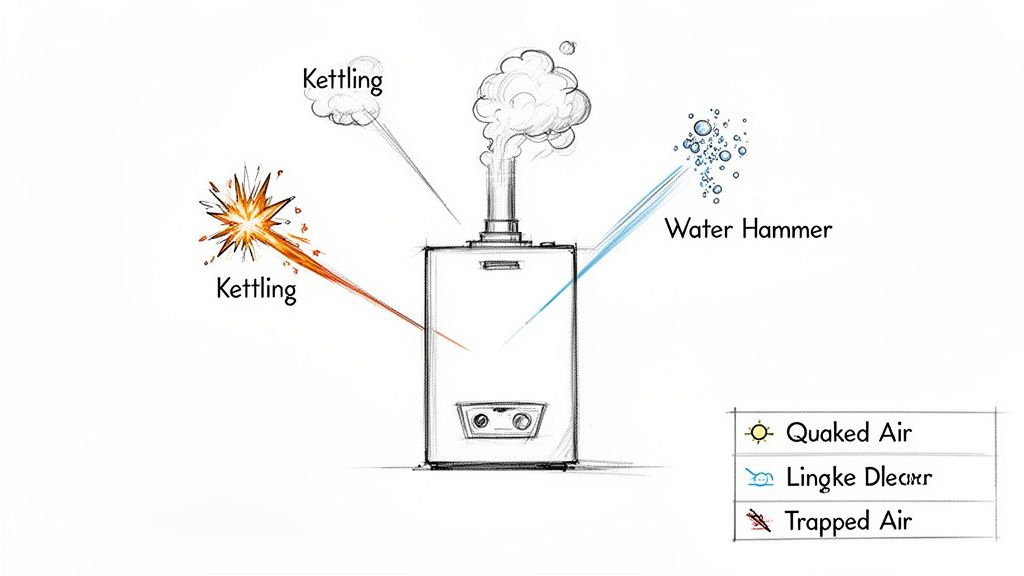
Think of that jarring bang or clatter as a distress signal. Homeowners often get used to the hums and clicks of their central heating, but a loud, unusual noise is a clear sign of stress inside the system. It’s not a random occurrence; each sound tells a story.
A rhythmic, rumbling sound points to a very different issue than a single, sharp bang when the heating clicks off. Learning to distinguish between them is the first step in diagnosing the problem and preventing a minor fault from turning into a major, costly repair. The best way to see to this is by calling one of our in-house service engineers.
Common Causes Behind the Banging
While some noises are a simple fix, others are a red flag for serious issues that need a professional eye immediately. Here are the most common culprits we see out in the field.
Kettling: This is far and away the most frequent cause, especially in hard water areas like Dorset. Limescale and sludge build up on the boiler's heat exchanger, causing tiny pockets of water to overheat, flash into steam, and collapse. The result is a rumbling, banging sound just like a boiling kettle.
Water Hammer: A sudden, sharp bang that echoes through your pipes. This happens when the flow of water is abruptly stopped or forced to change direction, sending a powerful shockwave through the pipework. It's often triggered by a fast-closing valve or an issue with the pump.
Trapped Air: Pockets of air, or airlocks, can get stuck in your radiators or pipework, creating blockages. As the pump struggles to push water past these pockets, it can cause gurgling, banging, and cold spots on your radiators.
"A loud bang from your boiler is its way of shouting for help. It’s a direct result of pressure, heat, or flow problems that are forcing components to work outside their normal limits. Listening to these sounds and acting on them is the best way to avoid a no-heat emergency. Our in-house service is here to see to these issues."
To help you figure out what's going on, we've put together a quick guide. This is perfect for residents in Poole and Ringwood trying to gauge the urgency of the situation. These sounds are universal warnings, whether you have a conventional unit or are just learning about what a combi boiler system is.
Quick Guide to Boiler Banging Noises
This simple table breaks down the noises, their likely causes, and what you should do next.
Type of Noise | Likely Cause | Urgency Level & Action |
|---|---|---|
Rhythmic Banging or Rumbling | Kettling due to limescale or sludge buildup on the heat exchanger. | High. Turn off the boiler and call our in-house service. Continued use can crack the heat exchanger. |
Single, Loud Bang (often at shutdown) | Water Hammer caused by a fast-closing valve or high water pressure. | Medium. Check system pressure. If normal, schedule a professional inspection with our team to prevent pipe strain. |
Gurgling and Occasional Banging | Airlock or trapped air in the system or radiators. | Low. You can try bleeding your radiators. If the noise persists, it may indicate a deeper circulation issue our team can see to. |
At the end of the day, a noisy boiler is an unhappy and inefficient one. Every bang and gurgle represents wasted energy and puts strain on the entire system. Don't wait for the problem to escalate.
At Hallmoore Developments, our Gas Safe registered engineers are ready to diagnose the issue properly, restore peace and quiet, and get your heating back to its best.
Uncovering Kettling and System Sludge Buildup
If your boiler is making a loud banging noise that sounds like a kettle boiling over, you're not just imagining it. This is a classic symptom of kettling, and it's particularly common in homes across hard water areas like Poole and Southampton. While the name might sound harmless, that noise is actually a serious distress signal from inside your boiler.
So, what’s actually happening? Kettling is triggered when the boiler's heat exchanger—the part that does the heavy lifting of heating your water—gets clogged up with mineral deposits or system sludge. This gunk forms an insulating layer, stopping heat from transferring into the water properly.
The result is a nasty chain reaction. The metal of the heat exchanger gets dangerously hot, flash-boiling small pockets of trapped water into steam. These steam bubbles then move into cooler water, where they collapse violently back into liquid. That sudden collapse creates the distinct and often alarming banging sound you're hearing echo through your pipes.
The Double Threat: Limescale and Sludge
Two main culprits are behind this insulating mess inside your boiler’s most vital component. Knowing what they are helps explain why a professional fix from our in-house service isn't just a suggestion—it's essential.
Limescale: Here in Hampshire and Dorset, our water is hard, meaning it’s full of minerals like calcium and magnesium. When heated, these minerals form a hard, crusty scale that bakes onto hot surfaces.
System Sludge: This is the black, magnetic gunk made from tiny rust particles that have flaked off the inside of your radiators and pipes. Over years, this iron oxide sludge circulates around and sticks to the heat exchanger, adding to the blockage.
This buildup forces your boiler to work much harder to heat your home, which means lower efficiency and higher energy bills. More critically, the constant overheating puts immense stress on the heat exchanger.
A Poole homeowner recently learned this the hard way. They ignored a persistent kettling noise for months, assuming it was just "an old boiler sound." During a cold snap, the boiler failed completely. Our engineer discovered the heat exchanger had developed a hairline crack due to the intense thermal stress, a costly repair that could have been avoided with a timely system flush from our in-house service.
Why Kettling Demands Professional Attention
Ignoring kettling is a gamble. The statistics are pretty stark: recent data suggests over 70% of boiler breakdowns in southern England are linked to limescale and sludge. What’s more, untreated kettling leads to heat exchanger failures in 60% of cases within 18 months, a repair that can cost homeowners an average of £1,200.
This isn't a DIY job. A boiler making a loud banging noise from kettling needs a deep clean that only a qualified Gas Safe engineer should tackle. Here at Hallmoore Developments, we use our in-house service's specialised equipment for a power flush, a process that pumps cleaning chemicals through your entire central heating system at high velocity.
This powerful flush dislodges and removes years of sludge and scale, restoring proper flow and letting the heat exchanger work as it should. A power flush doesn’t just stop the banging; it genuinely improves your system's performance. You can read more on how to improve your home's plumbing efficiency today in our other guide.
By acting fast, you protect your boiler, cut your energy bills, and finally get some peace and quiet back in your home.
Sorting Out Water Hammer and Boiler Pressure Problems
While kettling gives you that low, persistent rumble, a single, sharp BANG often points to a completely different culprit: water hammer. This is essentially a hydraulic shockwave that shoots through your pipework when the water flowing through your central heating system is forced to stop or change direction too quickly.
Think of it as the plumbing equivalent of a car slamming on its brakes. That sudden jolt can be triggered by a few things, like a motorised valve snapping shut too fast or an issue with the circulation pump.
However, one of the most common causes we see in homes across Ringwood and Southampton is simply incorrect boiler pressure. Your boiler is a sealed system, and it's designed to operate within a very specific pressure range. When that balance is off, all sorts of strange things can happen, and a boiler making a loud banging noise is one of the most startling.
A Quick and Safe DIY Check: Your Boiler's Pressure Gauge
This is one of the few checks you can safely do yourself. Have a look at the front of your boiler for a small, circular dial—the pressure gauge. It’s your window into the system’s health and usually has green and red zones marked on it to make things clear.
For most boilers, the sweet spot when the heating is cold is between 1 and 2 bar. The green zone on the gauge is your guide for this safe operating range.
Pressure Too Low (below 1 bar): If that needle has dropped below 1 bar (often into a red zone), it means there isn't enough water in the system for the pump to do its job properly. This can cause the boiler to lock out for safety or lead to banging sounds as the pump struggles.
Pressure Too High (above 2.5 bar): When the needle creeps up past 2.5 bar and into the upper red zone, it's putting a huge amount of strain on every single component, from simple pipe joints right through to the heat exchanger. This is a classic trigger for water hammer and can easily lead to leaks or even component failure down the line.
Incorrect boiler pressure isn't a rare problem. An Energy Saving Trust survey highlighted that a huge number of UK households are running boilers outside of their optimal pressure settings. This doesn't just cause scary noises; it can also lead to higher energy bills, sometimes adding over £150 to a home's annual costs.
Why You Can’t Ignore Incorrect Boiler Pressure
Leaving your boiler pressure unchecked is asking for trouble. Low pressure means an inefficient system that might just shut down on you. But high pressure? That’s far more serious.
Consistently high pressure can weaken seals and joints, cause the pressure relief valve to drip constantly, and, in a worst-case scenario, lead to a catastrophic failure of a major component.
While low pressure can sometimes be a simple fix, it's often a tell-tale sign of a hidden leak somewhere in the system. We've got a guide on how to fix low water pressure that covers some basic troubleshooting, but if you find yourself topping it up repeatedly, you need our in-house service to see to it.
If you check your gauge and the pressure is too high, do not attempt to reduce it yourself by bleeding radiators unless you've been guided by a professional. This can introduce air into the system or, worse, mask a more serious underlying issue like a failed expansion vessel.
When you hear that distinct bang and see an abnormal reading on your pressure gauge, it’s a clear signal to stop and call for expert help. A Gas Safe registered engineer from Hallmoore Developments can safely get to the root of the problem, whether it's a simple re-pressurisation, a faulty valve, or something more complex. We’ll get the system properly balanced, silencing the noise and protecting your boiler from any further strain.
Is It a Faulty Pump or an Airlock Causing the Racket?
If it’s not kettling or a pressure problem, a boiler making a loud banging noise often points directly to a circulation issue. Think of it as a blockage in the system's arteries. The two most common culprits are a failing central heating pump or stubborn pockets of trapped air, otherwise known as airlocks. Both will disrupt the smooth flow of hot water and create their own brand of disruptive clatter.
Your central heating pump is the heart of the system, tirelessly pushing hot water from the boiler to every radiator and back again. When it starts to wear out, its ability to shift that water grinds to a halt. This sluggish flow can cause pockets of water to overheat in the boiler, creating a banging sound very similar to kettling. Alternatively, the pump itself might be the source of the noise, with worn-out bearings creating a mechanical clanking as they struggle to turn.
The Telltale Signs of an Airlock
An airlock is just a bubble of air trapped in your pipework or radiators, but it's a bubble big enough to act like a dam, blocking or severely restricting the water flow. The pump has to work much harder to force water past it, which is where the gurgling, banging, and uneven heating comes from.
The classic symptom? A radiator that’s hot at the bottom but stone cold at the top. This is a dead giveaway. The hot water simply can't get past the air pocket to fill the rest of the radiator.
Uneven Heat: Have you noticed some radiators in your Christchurch home are barely warm while others are blasting out heat? That kind of inconsistency is a huge red flag for a circulation problem.
Cold Spots: Specifically, run your hand over the top of a radiator. If it feels cool to the touch while the bottom is warm, you've almost certainly got trapped air.
Gurgling Sounds: You might hear strange gurgling or whooshing noises from the pipes or radiators themselves. That’s the sound of water fighting its way past the blockage.
How Sludge Makes Everything Worse
Circulation problems are often supercharged by the presence of system sludge. This is the black, metallic gunk that builds up in systems over the years, clogging pipes and jamming up pumps. A recent national survey by the HHIC revealed that a huge percentage of UK homes with systems over 10 years old are affected by sludge, which can cause violent banging as the boiler overworks to compensate.
In areas like Hampshire with chalky soils, this sludge can actually form up to 30% faster. It’s no surprise that national breakdown stats show untreated sludge doubles the frequency of boiler repairs.
"Airlocks and pump issues are classic circulation faults. The banging you hear is the system physically struggling against a blockage. While bleeding a radiator is a good first step, if the noise returns, it’s a clear sign the problem runs deeper than a small air bubble. Let our in-house service see to it."
If you’ve found radiators with cold tops, the first thing to try is bleeding them. It’s a simple, safe DIY job that releases the trapped air and lets the hot water flow freely again. We’ve put together a simple walkthrough right here: how to bleed a radiator in Bournemouth for a warmer home.
But what if you bleed the radiators and the banging noise comes back? That’s a strong sign that the root cause is more serious. It could be a failing pump, a massive airlock deep in the pipework, or a severe blockage from sludge that simple bleeding won't fix. These issues need professional diagnostic tools to pinpoint. At this stage, it’s time to call a Gas Safe registered engineer from Hallmoore Developments to get to the bottom of it and get your heating running quietly and efficiently again, whether you’re in Poole or Ringwood.
Your Action Plan: When to DIY and When to Call an Expert
That sudden, loud banging from the boiler is enough to make anyone jump. It's an unnerving sound that immediately raises the question: "What do I do now?" While your first instinct might be to try and fix it yourself, it's vital to know where the DIY line ends and where a professional absolutely must take over. This guide will help you make a smart, safe decision for your home in Bournemouth, Southampton, or anywhere in between.
Let's be clear: attempting to fix complex boiler issues without the right training isn't just a risk to your heating system; it's a serious safety hazard. Anything involving the boiler's internal casing, the gas supply, or a suspected case of kettling is strictly a job for a qualified Gas Safe engineer. The potential dangers of an incorrect repair far outweigh any savings you might make. Let our in-house service see to it.
Safe DIY Checks You Can Do Right Now
Before you pick up the phone, there are a few simple and perfectly safe checks you can perform. Sometimes, these small steps can resolve minor issues or, at the very least, arm you with useful information to give the engineer when they arrive.
Check the Boiler Pressure: Find the pressure gauge on the front of your boiler. When the system is cold, the needle should be sitting comfortably in the green zone, which is usually between 1 and 2 bar. If it's dropped below this, low pressure could be the culprit behind the noise.
Bleed Your Radiators: Are the tops of your radiators cold while the bottoms are warm? That’s a classic sign of trapped air. Bleeding them can often resolve an airlock, sort out the circulation, and silence the banging.
A Quick Visual Inspection: Have a look around the boiler and the nearby pipes. Can you see any obvious drips or signs of a leak? Don't touch anything, but a quick visual scan can often spot a clear problem.
These are really the only steps a homeowner should take. If you’ve tried these and the noise persists, or you’re just not comfortable doing them, it’s time to call in a professional from our in-house service.
This quick decision tree can help you visualise the next step.
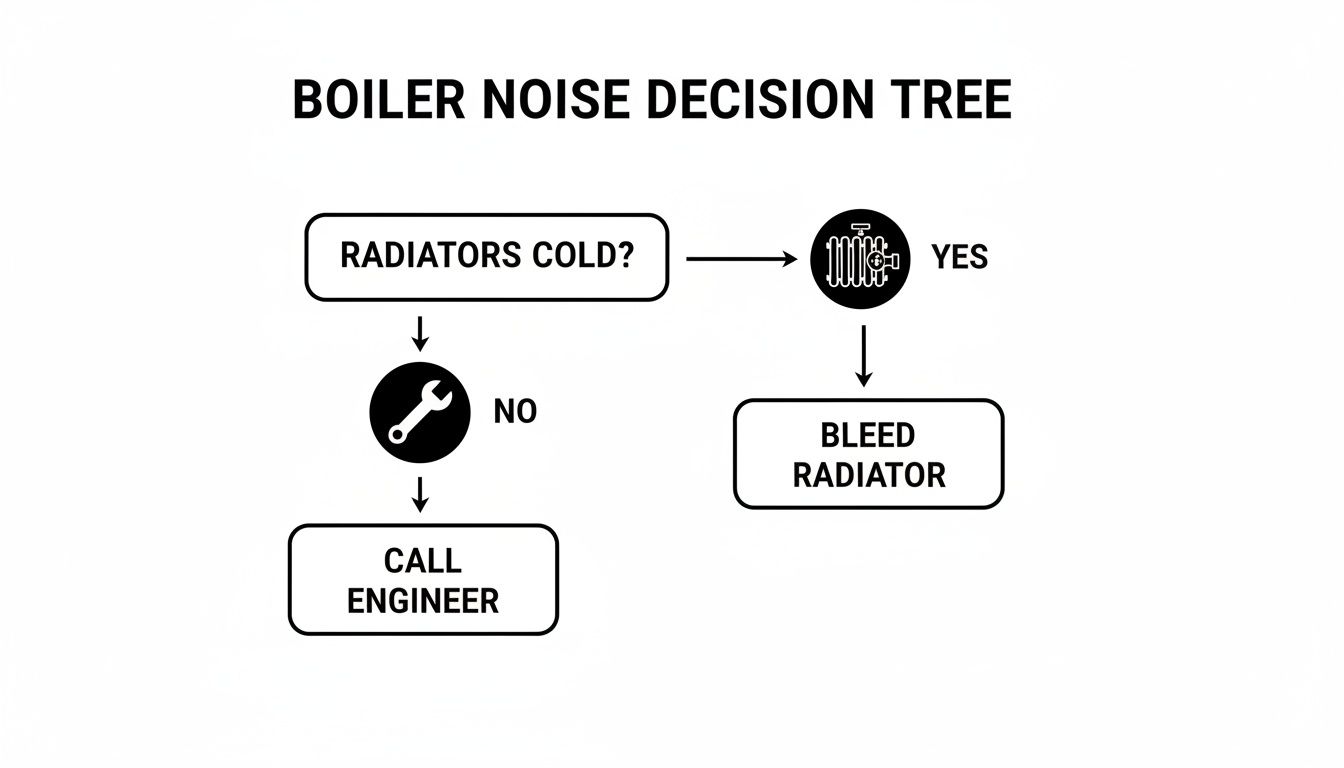
The key takeaway is straightforward: if your radiators are cold, bleeding them is a good first step. But if they're hot and the boiler is still making a racket, the problem is deeper inside the system and needs an expert eye.
When You Absolutely Must Call a Gas Safe Engineer
If your boiler is making a loud banging noise and those simple checks haven't sorted it, you need to call a professional. No exceptions. Certain situations are non-negotiable and demand immediate expert attention to keep your family safe.
A key part of managing your heating system involves prevention. Understanding the benefits of regular HVAC servicing can help you avoid these sudden bangs and clanks. Consistent maintenance catches underlying issues long before they become loud, expensive emergencies.
Ignoring a persistent banging noise is a real gamble. A seemingly minor issue like sludge buildup can eventually lead to a cracked heat exchanger—a repair that can cost hundreds, if not thousands, of pounds. In contrast, a diagnostic visit from an engineer is a small price to pay for safety and peace of mind. The best defence? Regular maintenance, like our dedicated boiler service, which prevents these noises from ever starting. Let our in-house service see to it.
The Cost of Waiting vs. The Value of a Professional Diagnosis
It's tempting to cross your fingers and hope the noise just stops on its own. But the longer you wait, the higher the potential repair bill. A noisy boiler is an inefficient boiler, meaning it's already costing you more on your energy bills every single day it runs.
This quick table helps clarify which tasks are safe for you to check and when it's time to get a professional involved.
DIY Checks vs. Professional Boiler Repairs
Symptom / Check | Safe for DIY? | When to Call Hallmoore Developments |
|---|---|---|
Checking Boiler Pressure | Yes | Immediately if pressure is too high (over 2.5 bar) or repeatedly drops after topping up. |
Bleeding Radiators | Yes | If bleeding radiators doesn't stop the noise or if the problem quickly returns. Our in-house service can see to this. |
Noise from Inside the Casing | No | Immediately. Never remove the boiler cover. This is a job for a Gas Safe engineer only. |
Suspected Kettling Noise | No | Immediately. Kettling puts severe stress on the heat exchanger and requires a professional system flush. |
Water Leaks from the Boiler Unit | No | Immediately. Turn off the boiler and your water supply if possible. This indicates a serious internal fault. |
For any urgent issues, our team at Hallmoore Developments offers a 24/7 emergency call-out service for homeowners in Christchurch, Poole, and Ringwood. Our Gas Safe registered engineers are equipped to diagnose that banging noise quickly and safely, getting your heating back to reliable, quiet operation without delay. Don't risk your safety or a costly breakdown—call the experts.
Got Questions About Your Noisy Boiler?
After running through the likely culprits behind a noisy boiler, you probably still have a few questions on your mind. That's perfectly normal. To help clear things up, we’ve put together some quick, straightforward answers to the most common queries we get from homeowners across Bournemouth, Christchurch, and the surrounding areas.
Think of this as a final sanity check to help you decide on your next steps with confidence.
Is a Boiler Making a Loud Banging Noise Dangerous?
In a word, yes. It certainly can be. While the sound itself isn’t going to cause any harm, what it’s signalling is the real problem. A loud bang is your boiler’s way of shouting that something is wrong, often related to excessive pressure or pockets of intense, localised heat.
These conditions put a massive strain on the boiler's internal parts. If you ignore it, that strain can lead to a complete breakdown, a burst component causing serious water damage, or worse, a compromise in the boiler's safety mechanisms. It’s crucial to treat that banging as a serious warning sign and get a Gas Safe registered engineer—like our team in Highcliffe—to take a look. Catching it early can prevent a minor hiccup from turning into a major disaster.
How Much Will It Cost to Fix a Banging Boiler in Bournemouth?
This is the big question, and the honest answer is: it depends entirely on what’s causing the bang. The cost can vary quite a bit. For instance, a simple fix like re-pressurising the system or bleeding a few radiators during a standard call-out might only set you back £80-£150. This is the best-case scenario for homeowners in Christchurch.
However, more stubborn problems will naturally cost more to sort out. Our in-house service will provide a clear quote.
Tricky Airlocks: If an airlock is trapped deep in the pipework, it takes more time and effort to clear than just bleeding a radiator, so the cost will reflect that.
System Power Flush: If the banging is down to kettling caused by years of sludge and limescale build-up, the only real fix is a full system power flush. You can typically expect this to cost between £400-£600.
Replacing Parts: This is where costs can climb. Swapping out a major component like a worn-out pump or a failing heat exchanger is the most significant repair, ranging anywhere from £300 to over £1,200, depending on your boiler's make and model.
At Hallmoore Developments, we don’t do guesswork. Our engineers will get to the bottom of the noise and give you a clear, itemised quote before we pick up a single tool. We want our clients in Poole and the surrounding areas to know exactly what to expect, with no hidden surprises.
This transparent approach means you can make an informed decision without feeling pressured.
Can I Prevent My Boiler from Making Banging Noises?
Absolutely. When it comes to boilers, prevention is always better (and cheaper!) than a cure. The single most effective thing you can do to avoid a boiler making a loud banging noise is to book an annual boiler service with a qualified Gas Safe engineer from our in-house service team.
During a service, the engineer inspects system pressure, cleans out critical components, and spots potential issues before they start making a racket. It's a bit like an MOT for your heating system.
If you live in a hard water area like we have here in Dorset and Hampshire, installing a magnetic system filter is another brilliant preventative move. This handy device is fitted onto your pipework and acts like a magnet, catching all the metallic sludge and debris before it can settle in your heat exchanger and cause kettling. Our teams in Ringwood and Southampton fit these all the time, and they make a huge difference. These simple, proactive steps are far less stressful and much more affordable than an emergency call-out.
Tired of the bangs, clanks, and rattles? Don't wait for a small noise to become a big, expensive problem. The expert team at Hallmoore Developments is on call 24/7 for fast, reliable boiler repairs across Dorset and Hampshire. Contact us today and let our in-house service see to the problem and bring some peace and quiet back to your home.
Comments