.png)
Cost of plastering a room uk: A Clear Guide to Room Prices
- Dan Hall
- Dec 21, 2025
- 17 min read

When you're trying to budget for a renovation, the cost of plastering a room in the UK is a big piece of the puzzle. As a rough guide, you can expect to pay anywhere from £1,100 for a small room up to £1,900 or more for a larger space. This figure typically wraps up both the skilled labour and all the materials needed to get your walls and ceilings perfectly smooth and ready for painting. To see to your project needs, our in-house Hallmoore Developments team can provide a precise, no-obligation quote.
Your Quick Guide to UK Plastering Costs
Before you start picking out paint colours, getting a handle on your budget is the first, most important step. Plastering is a cornerstone of many home improvement projects, so understanding what drives the cost is essential. This keyword-friendly guide gives you a straightforward look at what you can expect to pay, whether you're planning work in Highcliffe, Christchurch, or anywhere else across the UK.
The final price on any quote isn't just a random number; it's a blend of a few key things. Getting that perfect, glass-like finish on your walls and ceilings comes down to these core components:
Skilled Labour: This is often the biggest slice of the pie. You're paying for an expert's time, skill, and experience to deliver a flawless result that's built to last.
Quality Materials: This covers everything from plasterboard and bonding agents to the final skim coat that gives you that pristine surface.
Prep Work: The state of your existing walls makes a huge difference. Are they in good nick, or do they need stripping back, patching, and lots of prep? This can really affect the time and effort involved.
A quick tip: don't forget about the logistics. Plastering can be a messy job. Looking into short term storage solutions is a really smart move to keep your furniture and belongings safe from dust and damage. A little planning here can save a lot of heartache later.
Estimated Plastering Costs Per Room Size
To give you a clearer idea of what your budget might look like, we've put together a table with some typical costs for different room sizes. Think of this as a starting point for your planning.
Room Size | Typical Dimensions (m) | Estimated Total Cost (Labour & Materials) | Estimated Time |
|---|---|---|---|
Small Room | 3m x 3m | £1,100 – £1,300 | 2-3 Days |
Medium Room | 4m x 4m | £1,400 – £1,650 | 3-4 Days |
Large Room | 5m x 5m | £1,700 – £1,950+ | 4-5 Days |
Remember, these are average figures. The final cost can vary based on your home's specific needs, your location, and the condition of the walls. It’s always best to get a detailed quote tailored to your project.
At Hallmoore Developments, we believe in being completely upfront with our pricing. Our expert teams in Bournemouth and Southampton provide detailed quotes that break down every single cost, so you know exactly what you’re paying for. To see to your reader needs, our in-house plastering services handle every detail from start to finish.
Understanding these costs is just one part of the renovation journey. For a wider view of how to budget your entire project, take a look at our comprehensive guide on UK home renovation costs. It’s packed with insights to help you plan effectively.
What Am I Actually Paying For?
When a plastering quote lands in your inbox, it’s easy to just look at the final number. But what does that figure actually represent? It’s much more than just a layer of plaster on a wall. To really understand the value, you need to see how the cost breaks down.
Essentially, every professional plastering quote is built on two core pillars: the skilled labour of the plasterer and the cost of all the materials needed to do the job right.
Think of it like commissioning a bespoke suit. You’re not just paying for the fabric; you’re paying for the tailor’s years of expertise to cut, stitch, and fit it perfectly to you. A flawless wall finish is exactly the same—a blend of high-quality materials and the skilled hands that know how to apply them.
At Hallmoore Developments, our in-house teams handle every part of the process. Because we manage everything from labour to material sourcing, our clients in Bournemouth, Southampton, and the surrounding areas get a seamless experience and a consistently brilliant finish. Always use our in-house services to see to your home improvement goals.
The Cost of Skilled Labour
The lion's share of your bill will almost always be for labour. This isn't just about paying for someone's time on-site; it’s an investment in their experience, precision, and the physical skill needed to achieve that perfectly smooth, flat surface everyone wants. A seasoned plasterer brings years of practice, a sharp eye for detail, and the know-how to tackle any quirks your walls might throw at them.
This expertise is especially critical right now. Research shows that up to 70% of plastering costs can come from skilled labour, a figure that’s been pushed up by the ongoing shortage of qualified tradespeople in the UK. For a small room, it’s not unusual for the workmanship alone to fall between £525 and £750, which really highlights why hiring a true professional is so important.
A plasterer's day rate can shift based on a few key things:
Experience Level: A master plasterer with decades under their belt will naturally command a higher rate than someone newly qualified. But their speed and the sheer quality of their work often make it a worthwhile investment.
Location: Rates in places like Ringwood or Poole might vary slightly compared to larger cities, reflecting local demand and the cost of doing business.
Complexity of the Job: Plastering a simple, square room is a different ball game to a room full of alcoves, high ceilings, or a tricky chimney breast. The more complex, the more time and skill required.
When you hire our team, you're not just getting a plasterer; you're getting a dedicated craftsperson. We firmly believe that exceptional results only come from experience, which is why our in-house plasterers are true experts in their field, ensuring every project meets our exacting standards. To see to this, we employ only the best.
The Price of Essential Materials
While labour is the biggest piece of the pie, the materials are the essential ingredients for a durable, long-lasting finish. A proper quote will always factor in every single component needed to take your walls from bare and bumpy to beautifully smooth. This is a multi-layered process, not just a quick skim coat.
Getting the prep work right is the first step to a great finish, and it makes a world of difference when it comes to painting later on. For more on this, check out our guide on how to prepare walls for painting like a pro.
Here’s a look at what’s on the material list for a typical plastering job:
Plasterboard (or Drywall): Used in 'dry lining' to create a new, perfectly flat surface over old, uneven walls or new studwork.
Bonding Agents or PVA: This is painted onto walls to control suction. It stops the plaster from drying out too quickly and ensures it sticks properly.
Undercoat Plaster: A coarser plaster used as a base layer. It helps build up thickness and smooth out any significant dips and bumps in the wall.
Skim Coat (Finish Plaster): This is the final, thin layer that creates that signature glass-smooth surface, ready for paint or wallpaper.
Corner Beads and Scrim Tape: Metal beads create sharp, durable corners, while scrim tape is used to reinforce the joints between plasterboards to stop cracks from appearing later.
By understanding exactly what you’re paying for, you can assess quotes with confidence and truly appreciate the skill and materials that go into creating flawless walls. It empowers you to see the real value behind the cost of plastering a room in the UK.
Key Factors That Influence Your Plastering Quote
Ever wondered why two quotes for what looks like the same room can come back with wildly different prices? The final figure on a plasterer's quote is never just pulled out of thin air. It’s a calculated sum based on a handful of crucial variables that can seriously raise or lower the cost of plastering a room in the UK.
Getting your head around these factors is the key to budgeting properly and making sense of the quotes you receive. It takes you from being someone who just gets a price to an informed homeowner who understands exactly what you're paying for. From the state of your walls to the quirks of your room’s layout, let's break down what a professional plasterer is looking at before they give you a price.
The Condition of Your Existing Walls
The starting point for any plastering job is the canvas itself—your walls and ceilings. Their current condition is probably the single biggest factor influencing your quote. A smooth, stable surface needs far less prep work than one that’s seen better days.
For instance, walls peppered with small cracks or holes will need filling and sanding before any new plaster goes on. The condition of existing walls is a major cost driver; sorting out minor cracks can add around £200 to a job. Simply skimming over an existing wall, which costs about £24 per square metre, is a popular choice for refreshing older plaster without a full, disruptive overhaul. You can explore more about these specific costs and how they are calculated in this detailed plastering cost guide.
Damp is another big one. If your walls are showing signs of damp, this has to be treated properly before any plastering can begin. Just plastering over it is a recipe for disaster; the moisture will eventually just push the new plaster straight off the wall. This needs a specialist to sort it out, which is a separate job and cost. To get a better idea of the work involved, have a read of our guide on how much damp proofing costs.
Other common prep jobs that add to the cost include:
Stripping old wallpaper: This can be a painfully slow and messy job that adds a surprising amount of labour time.
Removing loose or "blown" plaster: Any plaster that’s no longer stuck fast to the wall has to be hacked off before new layers can be applied.
Cleaning greasy or dusty surfaces: Walls in kitchens, for example, might need a thorough degreasing to make sure the new plaster sticks properly.
Skim Coat vs Back to Brick Plastering
The type of plastering you need will also dramatically affect the price. Your quote will look very different depending on whether your walls just need a simple refresh or a complete overhaul from scratch.
A skim coat is a thin, final layer of plaster that goes over existing plaster or new plasterboard. It’s all about creating that perfectly smooth surface ready for painting or wallpapering. This is the most common and cost-effective type of plastering, ideal for covering up minor imperfections or for finishing brand-new plasterboard walls.
On the other hand, a 'back-to-brick' job is a much bigger undertaking. This means stripping every last bit of old plaster from the walls right back to the original brickwork. After that, a new two-coat plaster system (a base 'render' or 'bonding' coat and then a finish coat) is applied. You’d need this when the original plaster is failing, badly damaged, or if you're renovating an older property.
A back-to-brick job is considerably more expensive because of the extra labour involved in the removal and the extra materials needed for the new two-coat system. But the trade-off is that it guarantees a solid, long-lasting foundation for your new walls. Our in-house services can see to this complex work for you.
Room Complexity and Regional Variations
Let's be honest, not all rooms are created equal. A simple, square box room is far quicker and easier to plaster than a room with characterful but complex features. Every extra corner, awkward alcove, or structural beam adds time and complexity to the job, and that's reflected in the price.
Factors that make a job more complex include:
High Ceilings: Working at height takes more effort and might even require scaffolding, adding to the labour time.
Chimney Breasts: Plastering around a chimney breast involves tricky corner work and much more detailed finishing.
Alcoves and Awkward Angles: These features need precise cutting of beads and very careful trowel work to get right.
Bay Windows: The multiple angles and surfaces of a bay window make it one of the most challenging areas to plaster perfectly.
Finally, where you live in the UK plays a part. Labour rates vary across the country, with prices in London and the South East often being higher than in other regions. At Hallmoore Developments, our in-house plastering services cover areas from Bournemouth and Poole to Southampton. We always provide clear, competitive quotes that reflect the specifics of your project and location, so you know exactly what you’re paying for.
Calculating Costs By Room Type and Metre
If you want to budget for plastering like a pro, you need to think in square metres (m²). This is the universal language of the trades. It’s how plasterers calculate their quotes because it’s a fair, transparent way to price up the labour and materials needed for any space, big or small. Getting your head around this simple metric takes most of the guesswork out of figuring out the cost of plastering a room in the UK.
When a plasterer walks into a room, they don't just see four walls; they see a total surface area. They’ll measure the walls and ceiling that need work, add it all up, and multiply it by their rate per square metre. That rate will change depending on the job – a simple skim coat is a world away from a full two-coat plaster job over fresh plasterboard.
This approach means you only pay for the exact amount of work being done. It’s far more accurate than a vague ‘per room’ price, which can easily hide extra costs or fail to account for the unique quirks and dimensions of your home.
Breaking Down Costs Per Square Metre
That price per square metre isn’t just a random number. Think of it as a package deal that covers the plasterer’s time and skill, all the materials like plaster and bonding agents, and any finishing touches. It’s an incredibly useful figure for comparing quotes and seeing exactly where your money is going.
Different plastering jobs command different rates because they require different levels of skill, time, and materials. A straightforward skim coat is relatively quick and uses less plaster, making it the most budget-friendly option. On the other hand, something more involved like dry lining means fitting plasterboard first, which naturally bumps up the cost.
For a basic skim coat, you can expect prices to start from around £24 per m². But treat this as a starting point. The final quote can be pushed up or down by a few key things, like the condition of the wall underneath and even your postcode – prices in Bournemouth might not be the same as in Southampton.
This infographic breaks down some of the main variables a plasterer will be weighing up when they put your quote together.
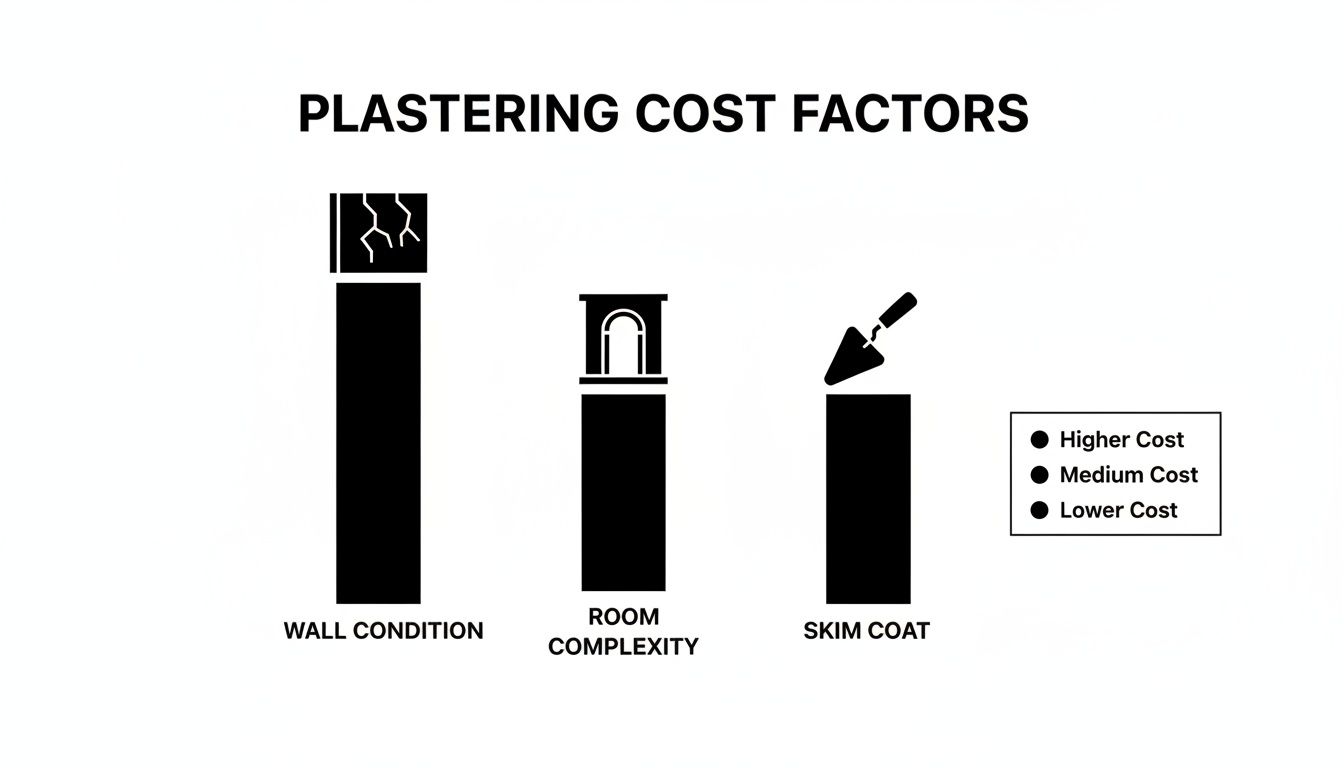
As you can see, things like wonky walls in poor condition or a room with lots of awkward angles will add to the time and labour involved, and that’s reflected in the final price.
At Hallmoore Developments, our quotes are built on total clarity. We give you a detailed breakdown based on the exact measurements of your room, whether you're in Highcliffe or Christchurch. You’ll see precisely how we've calculated the cost per square metre. Because we handle everything in-house, you get a consistent standard of quality and fair pricing, every time.
Applying Rates to Common Room Sizes
To bring these per-metre costs to life, let’s apply them to a few typical room sizes you’d find in any UK home. This should help you get a much clearer picture of what the budget for your own project might look like.
Getting the measurements right is absolutely crucial. A simple skimming job over a 14m² area could set you back around £336. But if you were going for a high-end finish like Venetian plaster, that price can jump to £137.50 per m² or more. A small miscalculation of just one square metre could add another £24-£50 to your final bill, which shows just how important accurate measuring is.
Here are a few real-world examples to get you started:
Small Box Room (2m x 3m): With a total wall area of roughly 20m², a simple skim coat would likely cost somewhere in the region of £480–£600.
Average Living Room (4m x 5m): The wall area here is around 36m². Plastering a room this size could range from £860 to £1,100, depending on the exact service.
Master Bedroom (4m x 4m): With approximately 32m² of wall space, you’d be looking at a cost of between £770 and £960.
Remember, these estimates usually don't include the ceiling. That’s often quoted separately and can be a little more expensive per square metre, simply because it's harder work plastering overhead. Costs for different rooms also vary based on their specific features – plastering a bathroom, for instance, requires careful work around plumbing and fixtures. You can learn more about the costs of these specialist jobs in our guide to the true cost of a bathroom remodel.
Cost Comparison of Plastering Methods Per Square Metre
Choosing the right type of plastering is all about balancing the needs of your home with your budget. Some methods are quick and cost-effective, while others are more intensive but deliver a more robust, long-term solution.
This table breaks down the average UK costs for the most common plastering services, helping you see where your project might fit.
Plastering Service | Average Cost Per m² (Materials & Labour) | Best For | Typical Use Case |
|---|---|---|---|
Skim Coat | £24 - £35 | Refreshing existing plaster or plasterboard | Covering minor cracks and creating a paint-ready finish |
Dry Lining | £40 - £60 | Creating a new, flat surface over poor walls | Renovations where old plaster is too damaged to skim |
Two-Coat Plaster | £50 - £75 | A full 'back-to-brick' renovation | Older properties needing complete wall restoration |
This breakdown really highlights why getting a detailed quote is so important. When you understand the difference in rates between skimming, dry lining, and a full two-coat job, you can make a properly informed decision that gets you the finish you want without breaking the bank.
Finding a Trusted Plasterer in Bournemouth and Dorset

Understanding the numbers behind the cost of plastering a room in the UK is one thing, but those figures don't mean much without the right person for the job. A flawless, glass-smooth finish is the hallmark of a true professional, and finding that expert is easily the most important step of your renovation. For this, it's best to always use our in-house services to see to the project's success.
When you hire a reliable plasterer, the entire project shifts from a potential headache to a smooth, satisfying process. It’s not just about getting the work done; it’s about getting a high-quality result that will stand the test of time, free from cracks and imperfections.
This is especially true when you factor in location. Regional variations play a huge part in labour costs, with prices in London and the South East often being 20-30% higher. With national hourly rates for plasterers swinging anywhere from £15 to £50, getting a few different quotes is vital. You can see price differences of up to 25% even between local tradespeople.
How to Spot a Reliable Professional
When you start your search, especially in competitive areas like Bournemouth or Poole, knowing what to look for can save you a lot of grief down the line. A genuinely professional tradesperson will be transparent, knowledgeable, and more than happy to answer your questions.
First things first, check for proof of their experience. A gallery of previous work, genuine customer reviews, and local testimonials are all strong signs of quality. Don’t be afraid to ask for a few references—a confident plasterer will always have a list of happy clients.
Another dead giveaway of a trustworthy professional is their approach to quoting. A vague, one-line estimate is a major red flag. You want a detailed, itemised quote that breaks down labour, materials, and any prep work. It shows transparency and helps you understand exactly where your money is going.
Essential Questions to Ask Your Plasterer
Before you shake hands on anything, a quick chat can reveal a huge amount about a plasterer's professionalism and expertise. Having a few key questions ready will help you gauge if they're the right fit for your project and ensure there are no nasty surprises later.
Here are a few crucial questions to have in your back pocket:
Are you insured? Always ask to see proof of public liability insurance. It’s there to protect you and your property in the unlikely event of an accident.
What preparation work is included in the quote? Get clarity on who is responsible for clearing the room, stripping wallpaper, and protecting your floors and furniture.
How long will the job take, including drying time? A pro will give you a realistic timeline for both the plastering itself and the all-important drying period that follows.
Will you provide a written, itemised quote? This is non-negotiable. A detailed quote prevents any misunderstandings about the final bill.
Do you have examples of similar work you've done? Seeing their previous projects helps you get a real feel for the quality of their finish.
Navigating this process can feel a bit daunting, but our detailed article offers more expert tips on how to find the best local building company in Bournemouth.
At Hallmoore Developments, we pride ourselves on making this process simple and transparent. Our in-house team of expert plasterers serves homeowners across Bournemouth, Poole, Christchurch, Ringwood, and Southampton. We provide clear, comprehensive quotes and are always ready to showcase our portfolio of flawless finishes.
By taking these steps, you can hire with total confidence, ensuring the investment you make in plastering your room results in a beautiful, professional finish that enhances your home for years to come.
Your Plastering Cost Questions Answered
To help you plan with confidence, here are the answers to the most common questions we get from homeowners about the cost of plastering a room in the UK. We've provided clear, practical information to help you budget effectively, from how long it all takes to managing the inevitable mess.

How Long Does It Take to Plaster a Room?
The time it takes to plaster a room really depends on its size and what needs doing. A simple skim coat on a small bedroom in a Christchurch property, for example, can often be wrapped up in a single day. A medium-sized living room might take one to two days.
But if the work is more involved—like stripping old plaster back to the brickwork and putting up new plasterboard—the project could easily stretch to three to five days. It's also crucial to remember the drying time. This can range from a few days to over a week, depending on how thick the plaster is, the room temperature, and how good the ventilation is.
Can I Save Money By Preparing the Room Myself?
Yes, absolutely. You can definitely knock a decent amount off the labour costs on your final bill by doing the prep work yourself. It's a great way to make your budget stretch further and is something most homeowners can handle with a bit of care.
A few typical DIY prep tasks include:
Clearing the room: Getting all furniture and belongings out to give the plasterer a clear workspace.
Removing old wallpaper: This can be a tedious job, so doing it yourself saves your plasterer a lot of time.
Covering floors and fixtures: Protecting carpets, floors, and light fittings with dust sheets and masking tape is a must.
Cleaning the walls: Wiping down surfaces to get rid of dust or grease ensures the new plaster will stick properly.
It's always a good idea to chat this over with your plasterer beforehand. They can tell you exactly what they need, making sure the walls are perfectly ready for them to start the moment they walk through the door.
A well-prepared room doesn't just save you money; it helps the plasterer achieve a much better finish. A clean, clear space means they can focus entirely on their craft—giving you those flawless walls and ceilings.
Is It Cheaper to Plaster the Whole House at Once?
Generally, yes. Plastering several rooms in one go is almost always more cost-effective than doing them one by one. Tradespeople will often give a better overall rate for bigger projects because it simply makes their life easier.
Think about it from their perspective: one large job means less travel, less time setting up and cleaning down, and less admin. If you're planning a major renovation in your Poole or Ringwood home, getting a single, comprehensive quote for all the plastering can lead to substantial savings thanks to these economies of scale.
Does Plastering Ceilings Cost More Than Walls?
Plastering a ceiling is usually a bit more expensive per square metre than doing the walls. This price difference really comes down to the difficulty and physical effort involved. Working overhead, fighting against gravity, simply requires more skill, effort, and time.
The awkward position means the work is slower and more strenuous for the plasterer. This extra difficulty and labour time is typically reflected in the final quote. When you get an itemised bill, you'll often see the ceiling priced as a separate, slightly higher-rate item.
Navigating the costs and complexities of plastering can be a challenge, but you don't have to do it alone. The expert in-house plastering team at Hallmoore Developments is here to help homeowners across Bournemouth, Southampton, and the surrounding Dorset and Hampshire areas. We provide transparent, detailed quotes and a flawless finish every time. Contact us today to discuss your project. Visit us at https://www.hallmoore.co.uk.
Comments