.png)
How to Fix Frozen Pipes A Practical Guide for Homeowners
- Dan Hall
- Jan 1
- 14 min read

That sinking feeling when you turn on a tap on a freezing morning and get… nothing. Or maybe just a pathetic trickle. It’s a classic sign that somewhere in your plumbing, water has turned to ice. Knowing how to fix frozen pipes starts with this crucial first step: finding the blockage. Acting fast is the difference between a simple thaw and a burst pipe disaster.
How to Identify and Locate a Frozen Pipe in Southampton
Before you can even think about applying heat, you need to play detective. A frozen pipe isn’t always going to announce itself with a big frosty patch. The clues can be subtle, but ignoring them is what turns a manageable job into a full-blown emergency.
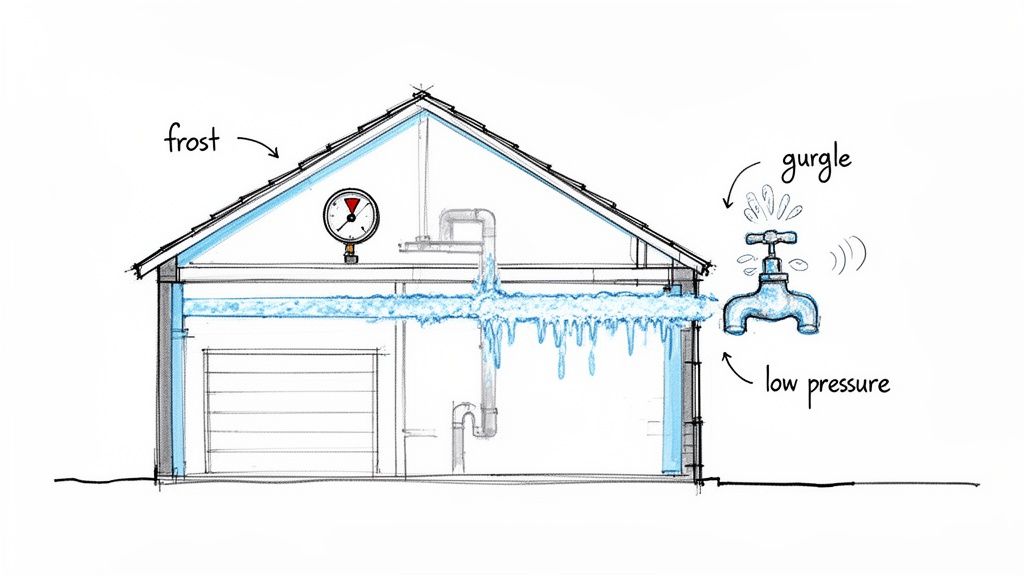
Often, the first thing you'll notice—besides no water—is a sudden, major drop in water pressure from one specific tap. Let's say your kitchen sink is running fine, but the upstairs bathroom tap is barely dripping. That tells you the ice blockage is almost certainly somewhere along the pipework feeding that bathroom. This localised pressure drop is a textbook symptom, and you can learn more about the general issue in our guide on how to fix low water pressure.
Look for Visual and Audible Clues
Now it’s time to use your eyes and ears. A quick physical inspection of any exposed pipework is the next logical move, especially in the colder parts of your house.
Here’s what you should be looking for:
Visible Frost or Condensation: Pipes in unheated spaces like garages or lofts might have a tell-tale layer of frost or be sweating with heavy condensation. This is a dead giveaway that the pipe's surface is at or below freezing.
Bulging Sections: This is the big one. As water freezes, it expands with incredible force. That pressure can cause the pipe, whether it’s copper or plastic, to bulge or deform. A visible bulge is a massive red flag—it means the pipe is under extreme stress and could burst at any moment.
Strange Noises: Listen closely. If you hear gurgling, hissing, or even banging sounds when you try to run a tap, it can mean water is struggling to force its way past a partial ice blockage.
A frozen pipe rarely thaws on its own before causing more trouble. Finding its exact location isn't just about identifying the problem; it’s about applying heat precisely where it's needed to prevent a burst.
Inspecting High-Risk Areas in Your Poole Home
Every house has its cold spots. In properties across Christchurch and Ringwood, these are usually areas with poor insulation, leaving pipework completely exposed to the elements.
Focus your search on these vulnerable locations first:
Uninsulated Lofts and Attics: Any pipes running through these spaces are prime targets for freezing.
Crawl Spaces and Basements: Cold air easily settles here, chilling pipes down to freezing point.
Exterior Walls: Pipes running inside or against outside walls are at high risk, especially on the colder, north-facing side of the house.
Garages and Sheds: If you have plumbing for a utility sink or washing machine in an unheated garage, that's a very likely suspect.
If you’ve checked all these areas and still can't find the frozen section, it’s probably hidden inside a wall or floor. This is where you need to stop. Trying to thaw a pipe you can't see is a recipe for disaster—you could easily cause a fire or damage your home's structure.
This is the point where our in-house services are essential. Our expert plumbers at Hallmoore Developments have thermal imaging cameras and other specialist tools to locate and fix hidden frozen pipes safely. Don't risk it; let our team see to the problem.
Your First Moves When You Discover a Frozen Pipe in Highcliffe
That sinking feeling when you turn on a tap and nothing comes out on a frosty morning is unmistakable. A frozen pipe is more than just an inconvenience; it's a ticking time bomb that could lead to a burst, causing thousands in water damage. But don't panic. A calm, methodical response can turn a potential disaster into a manageable problem.
Before you do anything else, you need to shut off your home’s main water supply. This is the single most important action you can take. It instantly stops more water from entering your system, meaning if the pipe does burst as it thaws, the leak will be limited to the water already in the pipes, not an endless flood from the mains.
Locate and Operate Your Main Stopcock
So, where is this all-important valve? For most homeowners in areas like Southampton and Poole, the main stopcock is usually under the kitchen sink, tucked away in a utility room, or maybe in a downstairs loo. In older properties, you might need to hunt for it in a cellar or even outside under a small metal cover on your path.
Once you’ve found it, turn the valve clockwise as far as it will go until it’s fully closed.
With the water off, the next job is to release the pressure building up inside the pipes. Go to the tap that you think is fed by the frozen pipe and open it fully. If it’s a mixer tap, make sure you open both the hot and cold sides. This gives the melting ice and trapped water an escape route, dramatically reducing the incredible pressure that causes pipes to rupture in the first place.
Your immediate priority is damage limitation. Shutting off the water and opening the tap are non-negotiable first steps that transform a potential disaster into a manageable problem. These actions prepare the pipe for a safe thawing process.
Finally, do a quick bit of damage control. Move any furniture, rugs, electronics, or sentimental items well away from the area around the frozen pipe. Lay down a few old towels or grab some buckets to catch any drips or spray that might occur as the pipe thaws. A few minutes of prep now can save you a world of heartache later.
If you can't find your stopcock, or if the situation just feels overwhelming, it’s time to call our in-house services. For urgent situations, you can find valuable advice on what to do while you wait for assistance in our guide about finding an emergency plumber near you in Bournemouth. The expert team at Hallmoore Developments is available 24/7 to handle these exact scenarios safely and efficiently.
Safe and Effective Pipe Thawing Methods in Bournemouth
Right, you’ve turned the water off and opened the taps. Now for the main event: tackling that stubborn ice blockage. The absolute key to thawing a frozen pipe is applying gentle, gradual heat. Hitting it with sudden, intense heat is a recipe for disaster—it can cause thermal shock, cracking the pipe and turning a minor inconvenience into a major flood.
First things first, and I can't stress this enough: never use an open flame. No blowtorches, no propane heaters, not even a candle. The fire risk is astronomical, and that kind of intense heat can damage the metal or even cause the trapped water to boil and burst the pipe with explosive force. It’s a dangerous shortcut that simply isn’t worth it.
Before you even think about applying heat, make sure you've followed these initial safety steps. They are non-negotiable.
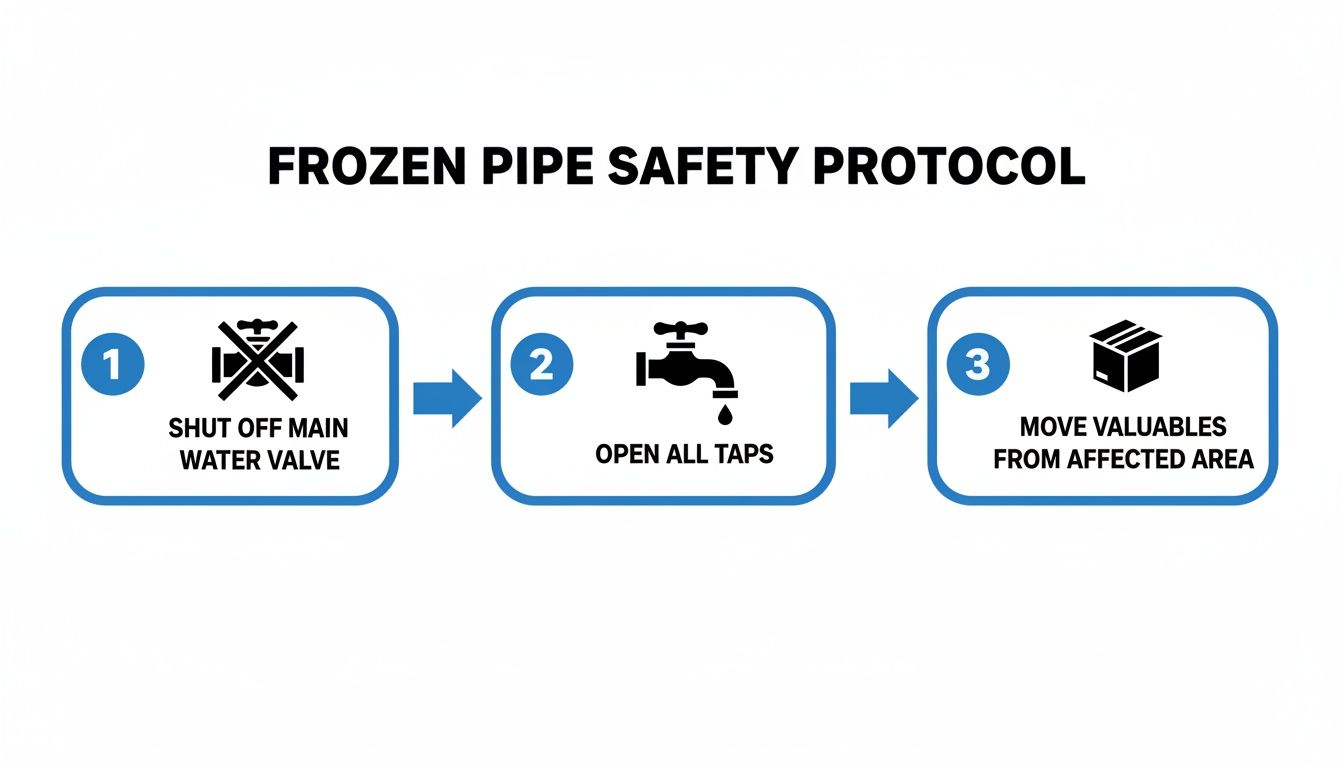
This quick protocol is all about damage limitation. Shutting off the water main and giving the melting ice an escape route prevents pressure from building up, which is the foundation for a safe thaw.
Gentle Heating Techniques You Can Actually Use
Forget the risky methods. The goal is to warm the pipe slowly and carefully, letting the ice melt from the outside in. Here are a few tried-and-tested techniques that work a treat:
Your Hairdryer: A standard hairdryer on a low or medium setting is probably your best friend here. Start at the end of the pipe closest to the open tap and slowly move back towards the blockage. This gives the melting water a clear path to drain away.
Hot Towels: A classic for a reason. Soak some old towels or rags in hot (not boiling) water, wring them out, and wrap them snugly around the frozen section. You'll need to keep replacing them as they cool down, but it’s an incredibly safe and gentle approach.
A Portable Heater: You can place a small electric space heater a few feet away from the pipe, pointed towards the frozen area. Just be absolutely certain it’s on a stable, dry surface and well away from any flammable materials. Never, ever leave a space heater running unattended.
The golden rule of thawing is simple: always start heating from the tap end and work your way towards the blockage. If you start in the middle, you’ll melt the ice, but it will be trapped between two frozen dams. The pressure will build up, and you’ll be right back where you started—with a potential burst pipe on your hands.
To make things clearer, here’s a quick rundown of what to do versus what to avoid.
Safe vs Unsafe Pipe Thawing Methods
Method | Safety Level | Risk Factor | Best For |
|---|---|---|---|
Hairdryer (Low Heat) | High | Low | Accessible copper or plastic pipes. |
Hot Towels | High | Very Low | Pipes in tight spaces or near flammable materials. |
Electric Space Heater | Medium | Medium | Warming a larger, uninsulated area like a cold utility room. |
Open Flames (Torch/Lighter) | DANGEROUS | EXTREME | Never use this method. High fire risk and pipe damage. |
Boiling Water | DANGEROUS | High | Never use this method. Risk of thermal shock and cracking. |
Ultimately, safe methods apply gentle, indirect heat, while unsafe methods are dangerously intense and unpredictable.
Knowing When to Stop and Call for Help in Christchurch
These DIY methods are perfect for pipes you can easily see and reach—under a sink, in an accessible basement, or along a utility room wall.
However, if the frozen pipe is tucked away inside a wall, hidden under floorboards, or located in a cramped crawl space on your Christchurch property, it’s time to put the tools down. Attempting to heat a pipe you can’t see is a serious fire hazard.
This is where a professional plumber is essential. The winter of 2022-2023 saw a massive 75% jump in burst pipe claims as people tried to cut back on heating costs. For more context on these rising figures, you can discover more insights about rising insurance claims on Zurich.co.uk.
If you’re unsure where the freeze is, can't access the pipe, or if your efforts aren't working, your safest bet is to call us. Our Hallmoore Developments plumbers are on call 24/7 across Highcliffe, Ringwood, and Southampton. Let our in-house service team see to the problem; we have specialist equipment to thaw pipes safely without damaging your home. For more general advice, you might find our The Ultimate Guide to Plumbing Tips & Techniques helpful.
What to Do When a Frozen Pipe Bursts
Even with the best prep, sometimes the sheer force of expanding ice is just too much for a pipe to handle. A burst pipe isn't just a leak; it's a full-blown emergency. But staying calm and acting fast can make a world of difference to the amount of damage your Ringwood home sustains.
First things first: stop the water. Your absolute priority is to find your main stopcock and shut it off. You’ll usually find it under the kitchen sink or perhaps in a utility room. Turn it clockwise as far as it will go. This single action is the most critical step you can take to prevent a localised problem from becoming a catastrophic flood.
With the water stopped, the next immediate danger is electricity. Head straight to your fuse box and switch off the main power. If you can’t do that, at the very least kill the circuits in the flooded part of the house. Water and electricity are a lethal mix, and your safety has to come first.
Containing the Initial Damage
Once the water and power are safely off, your mission shifts to damage control. Grab whatever you can to start containing the mess—buckets, old towels, pots, and pans are all fair game. Mop up any standing water and catch any remaining drips.
If you see a bulge forming in the ceiling below the leak, place a bucket directly underneath it. Then, carefully (and bravely!) pierce a small hole in the centre of the bulge. This allows the water to drain in a controlled way, preventing the whole ceiling from collapsing under the weight.
As soon as the immediate crisis is under control, get your phone out and start documenting everything. Take clear photos and videos of the burst pipe, the water damage, and any affected belongings. This proof will be absolutely essential when it comes to your insurance claim.
After you've managed the initial chaos, the next hurdle is often securing a fair water damage claim settlement from your provider. Having solid photographic evidence makes this process infinitely smoother.
Why Professional Help Is Non-Negotiable
Let's be clear: this is not a DIY job. A burst pipe needs an immediate, professional response to prevent long-term structural damage, rot, and mould. For homeowners across Christchurch, Bournemouth, and the surrounding areas, this is the moment to call our 24/7 emergency service at Hallmoore Developments.
Our expert in-house service team is equipped to see to the entire aftermath, which is more complex than just fixing the pipe.
Pipe Replacement: We’ll properly cut out the damaged section and fit a secure, new piece of pipework that's built to last.
Water Extraction: Forget towels. We use industrial-grade pumps and vacuums to pull water out of carpets, floorboards, and even wall cavities.
Drying and Dehumidifying: This is crucial. We deploy powerful dehumidifiers to draw every last bit of moisture from your home’s structure, which is the only way to truly prevent mould from taking hold.
The danger of hidden moisture left behind is huge. Research from Aviva shows that 6% of British homeowners have already experienced a burst pipe, yet a staggering 24% admit they don't plan to insure their pipes against this very risk.
Trying to patch a burst pipe yourself often leads to a temporary fix at best, and lingering dampness at worst. While some smaller jobs are manageable—and we have a practical DIY guide for leaky pipes for just that—a burst pipe is in another league. Don’t risk it. Make the call and let our team handle the emergency properly.
How to Prevent Frozen Pipes Next Winter
Dealing with a frozen pipe is a nightmare, but the best way to handle it is to make sure it never happens again. Taking a few proactive steps to winterise your home is far less disruptive and expensive than calling our in-house service for an emergency in the dead of winter. A bit of prep goes a long, long way.
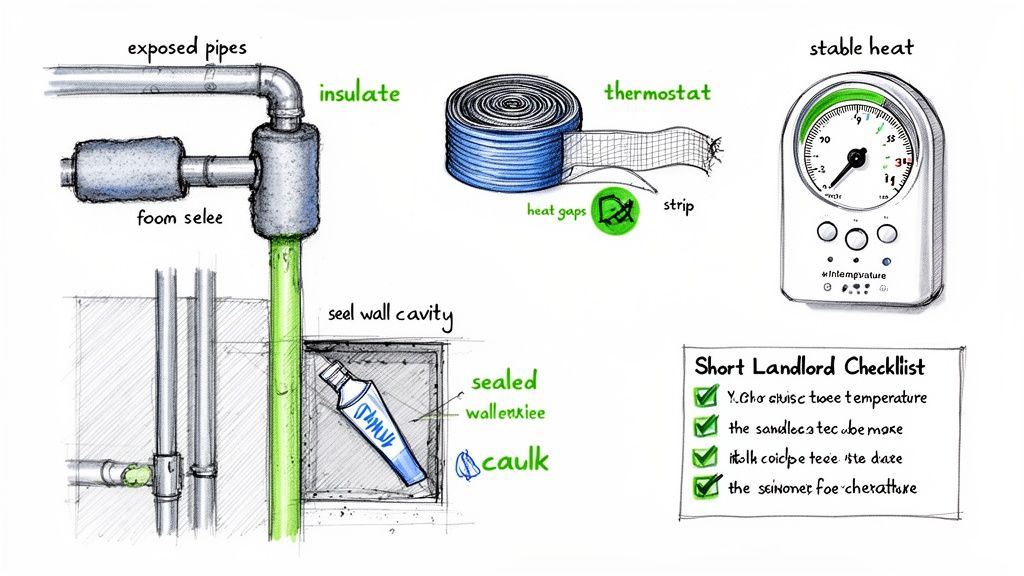
The single most effective thing you can do is insulate your pipes properly. Any pipework in unheated or poorly insulated parts of your Highcliffe home—think lofts, basements, garages, and along exterior walls—is incredibly vulnerable. An exposed pipe is a superhighway for the cold, sucking the heat right out of the water until it turns to solid ice.
Wrapping these pipes with foam insulation sleeves is a simple, cheap fix. You can get these from any DIY shop, and they’re easy to install. They create a thermal barrier that keeps the water just above freezing point. For pipes in the absolute coldest spots, thermostatically controlled heat tape or cable gives you an even higher level of protection.
Sealing Air Leaks and Maintaining Heat in Poole
Insulation is only half the battle. Cold air will find its way in through any crack or hole it can, directly chilling your plumbing. You need to hunt down and seal any gaps in your exterior walls, especially where utility pipes and cables enter your Poole property. A bit of caulk or expanding foam is all it takes to plug these gaps and stop those icy drafts dead in their tracks.
Keeping a consistent temperature inside is also vital. It’s tempting to turn the heating right down or off completely to save a few quid, but this can be a false economy. Setting your thermostat to a steady, low temperature (around 13-15°C) is crucial, especially during a severe cold snap or if you’re heading off on a winter holiday. That little bit of ambient warmth can be enough to stop a catastrophe. You can dig deeper into this topic in our article on the best heating systems for homes to save energy and money.
The financial argument for prevention is overwhelming. A small investment in insulation and sealing air leaks can prevent thousands of pounds in potential damage, protecting your property and giving you peace of mind when the temperature plummets.
Historical data shows that January and February are the peak months for burst pipe incidents in the UK, with insurance claims during this period being 51% higher than the rest of the year. When you consider the average cost to fix burst pipe damage can hit £9,300, taking preventative action is a no-brainer.
Annual Checklist for Landlords in Southampton
If you're a landlord or property manager in Southampton or Bournemouth, a pre-winter inspection is non-negotiable for protecting your investment. Getting to grips with expert tips on how to winterize plumbing is key to staying ahead of the game.
Here’s a simple checklist to run through every autumn:
Inspect and Insulate: Check all vulnerable pipes in lofts, garages, and crawl spaces. If you see any damaged insulation, replace it.
Drain Outdoor Taps: Disconnect every garden hose and make sure outdoor taps and the pipes leading to them are fully drained.
Service the Boiler: A well-maintained boiler isn't going to fail you during a cold spell, guaranteeing consistent heat.
Seal Gaps: Do a thorough walk-around of the property. Look for any new cracks or gaps that need sealing up.
Our team at Hallmoore Developments offers comprehensive winterisation services for properties of all sizes. Let our in-house experts take a look at your plumbing and heating systems before the cold really bites, making sure your home is ready for whatever winter decides to throw at it.
Common Questions About Frozen Pipes in Christchurch
Even when you know the basics, a plumbing emergency can throw up questions you hadn't thought of. It's one thing to have a plan, but another to feel confident when water isn't running from your taps. We've gathered a few of the most common queries our plumbers hear from homeowners across Christchurch, Bournemouth, and the surrounding areas.
How Long Does It Take for Pipes to Freeze?
Pipes usually start to feel the bite once the temperature outside drops below 0°C for a few hours. In those classic draughty spots common in older Poole properties—think lofts, garages, or exposed exterior walls—a pipe can freeze solid in as little as four to six hours of sustained cold.
It's not just about the thermometer reading, either. The type of pipe you have and its exposure to wind chill can dramatically speed things up. Copper freezes much faster than plastic, for instance.
Can I Pour Hot Water Down the Drain to Thaw It?
This is a really common myth, but it's an incredibly risky move. Pouring boiling water down a drain is almost useless because it’ll cool down long before it ever reaches the ice.
The real danger, though, is thermal shock. The sudden, extreme temperature change can easily crack the pipe, turning a simple freeze into a major leak. You could end up with a much bigger, more expensive problem than the one you started with. It's always best to stick to the gentle, external heating methods we mentioned earlier.
If you've got a blockage and you're not sure what's causing it, the safest bet is to let our in-house service team in Ringwood see to it with a proper assessment.
Should I Turn My Heating Off for a Winter Holiday?
Absolutely not. We strongly advise against turning your heating off completely when you go away during the colder months. Honestly, it's one of the top reasons our in-house service gets called out for burst pipes across Southampton. A totally cold house is a sitting duck when temperatures plummet.
Think of it this way: setting your thermostat to a low, steady temperature—around 12-14°C—is like buying cheap insurance. The small cost of keeping the heating ticking over is nothing compared to the thousands of pounds in water damage a burst pipe can cause.
What Should I Do If a Pipe Is Frozen Inside a Wall?
If you suspect a pipe is frozen somewhere you can't see it, like inside a wall cavity, this is not a DIY job. You can't safely apply heat to a pipe you can't get to, and trying to do so creates a serious fire risk or the potential for structural damage.
This is the exact moment you need to call in a professional.
Pick up the phone and call our 24/7 emergency service. At Hallmoore Developments, our expert plumbers have specialised gear like thermal imaging cameras to pinpoint the frozen section and thaw it safely, with minimal disruption to your Highcliffe home. Let our in-house service see to the issue; trying to fix a hidden frozen pipe yourself is a gamble that just isn't worth taking.
When a pipe freezes or bursts, getting a fast, professional response is crucial to protecting your home from serious damage. For immediate, reliable help in Bournemouth, Southampton, and the wider area, you can trust the experts at Hallmoore developments. Our Gas Safe-registered team is on call 24/7 for any plumbing emergency. Contact us today for a transparent quote and expert service.
Comments