.png)
How to Stop a Radiator Leak: A Fast Fix Guide for Your Highcliffe Home
- Dan Hall
- Jan 16
- 13 min read

That sinking feeling when you spot a tell-tale puddle spreading from the base of your radiator is something no homeowner wants to see. But panic isn’t part of the toolkit.
For anyone in Bournemouth, Poole, or Christchurch, knowing how to react quickly can be the difference between a minor fix and a major disaster. A small drip, left unchecked, can quickly lead to warped floorboards, crumbling plaster, and the dreaded bloom of mould. It turns a simple plumbing issue into a costly and disruptive repair project.
The key is swift, decisive action. This guide will walk you through exactly what to do to stop a radiator leak.
Our in-house service's will cover how to pinpoint the source of the leak, the immediate steps to contain the water, and the crucial decision: is this a DIY job, or is it time to call in the professionals?
As you sort out the immediate problem, it’s also a good time to check your home insurance policy. You can get a better sense of what might be covered by understanding your water damage coverage.
When to Call in a Professional
Let’s be honest, while some small drips from a valve can be tightened up yourself, many radiator leaks need an expert eye to guarantee a safe and permanent fix. Trying to tackle a more complex problem without the right experience can easily make things much, much worse.
For persistent leaks, any signs of corrosion, or if you're just not confident, calling a professional is always the smartest move. It ensures the repair is done right and gives an expert a chance to check the overall health of your heating system, potentially spotting other issues before they start.
If you’re feeling out of your depth, our team is on hand across the Southampton and Highcliffe area. We offer a full range of plumbing services and our 24/7 emergency service means our in-house service's can be there day or night to stop the leak and handle any resulting damage.
Pinpointing the Source of the Leak
Before you can stop a radiator leak, you need to play detective. The exact spot where the water is dripping from is your biggest clue—it tells you what's gone wrong and what you’ll need to fix it.
Whether you're in Ringwood or Christchurch, a methodical approach takes the stress out of the diagnosis.
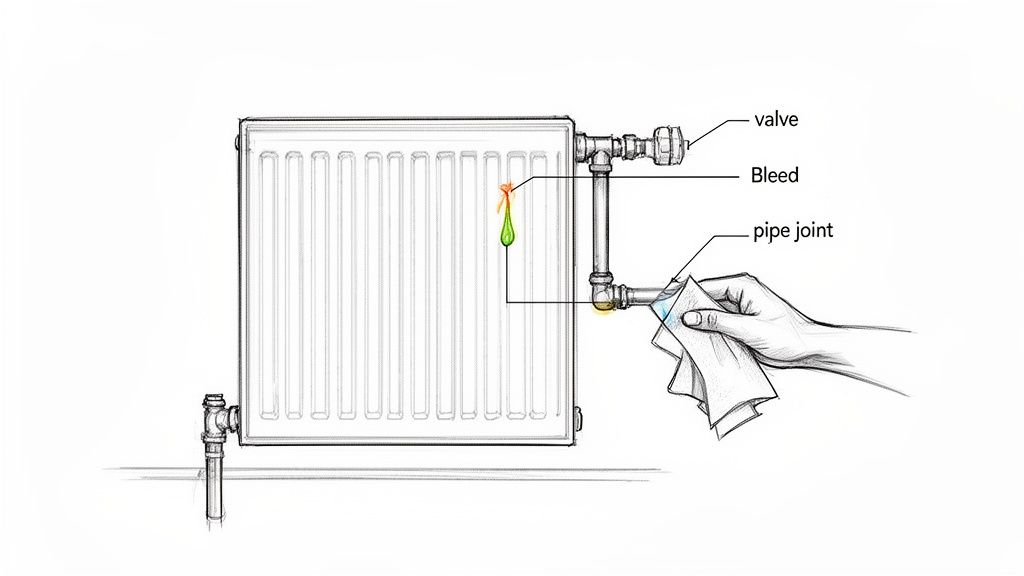
First things first, the radiator needs to be completely dry. Grab a few old towels or some kitchen roll and give the entire unit a thorough wipe-down. Pay close attention to the valves, pipes, and the body of the radiator itself. Any leftover moisture will just confuse things, so take a minute to get it bone dry.
Once it's dry, lay a clean, dry piece of kitchen roll or a light-coloured towel on the floor right under the radiator. Now, it's a waiting game. This simple trick makes even the tiniest drip stand out, helping you trace it back to its source.
Common Leak Locations
So, where's the water coming from? Is it weeping from one of the big nuts that connect the radiator to the pipework? Or maybe seeping from the small pin on the valve head? It could even be a minuscule hole on the main body of the radiator. Each location points to a different problem.
Radiator Valve: This is the usual suspect. Leaks can spring from the valve body, the spindle (the bit you turn), or the large nut connecting the valve to the radiator or the pipe.
Pipe Connection (Coupling): The joint where the copper pipe feeds into the valve can loosen over time, leading to a slow but persistent drip.
Radiator Body: Keep an eye out for any signs of weeping or tiny rust spots on the radiator panels. This often signals a pinhole leak, usually caused by internal corrosion or sludge build-up.
Bleed Point: That small square nut at the top of the radiator can sometimes leak if it wasn't tightened properly after bleeding, or if its internal seal has worn out.
Getting a handle on the different types of common plumbing leaks can give you a better idea of what you’re up against. If the leak seems to be coming from the pipes rather than the radiator itself, our guide on how to fix leaky pipes has some helpful advice.
Sorting this out early isn't just about preventing a puddle on your floor; it's about saving money. In the UK, radiator leaks are a frequent household headache, with typical repair costs falling between £70 and £180 for standard fixes. Putting it off can lead to serious water damage, an issue that affects up to 20% of UK homes every winter, turning a simple repair into a much bigger, costlier problem.
Once you’re sure where the leak is coming from, you can figure out your next move. A loose valve nut is often a straightforward fix you can do yourself. A pinhole leak in the radiator body, however, almost always needs a professional—and our in-house team is ready to help.
Time to Act: Your First Steps to Contain the Water
The moment you spot a leak, the clock is ticking. Your absolute priority is damage control. Getting the water flow stopped and cleaning up the spillage is crucial to stop moisture from seeping into floors, plaster, and skirting boards—which can cause much bigger headaches down the line for homeowners in Highcliffe and the surrounding areas.
First things first, you need to isolate the leaking radiator from the rest of your central heating system. This cuts off its water supply and stops the leak at its source. Don't worry, this won’t affect the rest of your heating; it just takes the problem radiator out of action for now.
How to Isolate a Leaking Radiator
To get the situation under control, you’ll need to shut the two valves located at either end of the radiator.
Shut Off the Thermostatic Radiator Valve (TRV): This is the larger valve, usually plastic, with numbers on it (typically 1-5). Turn the dial clockwise as far as it will go, until it reaches the '0' or off position. This stops hot water from flowing into the radiator.
Close the Lockshield Valve: On the other side of the radiator, you'll find the lockshield valve, which is usually protected by a plastic cap. Gently pop this cap off. Underneath, you’ll see a small metal spindle. Using an adjustable spanner or a pair of pliers, turn this spindle clockwise until it stops turning.
Pro Tip: As you turn the lockshield valve, count how many full or partial turns it takes to close it completely. Jot this number down. It'll save you a lot of hassle later when it comes to re-balancing your system.
Once both valves are fully closed, the radiator is officially isolated. Grab some old towels and a bucket or washing-up bowl to catch any remaining drips. This simple step is vital for protecting your floor.
Quick Fixes for Minor Drips (Temporary Measures Only!)
While isolating the radiator is the main objective, a couple of quick fixes can help manage a slow drip while you wait for a permanent repair. Think of these as stop-gap solutions, not long-term fixes.
If you can see water weeping from the large nut that connects the valve to the radiator body (known as the valve coupling), you might be able to stop it with a gentle tweak. Take an adjustable spanner and give the nut a very slight clockwise turn—no more than a quarter-turn. Be careful here, as overtightening can crush the internal olive and make the leak far worse.
Another common culprit is the valve spindle—the little pin that the TRV head presses down on. If you see water coming from here, you can often create a temporary seal with PTFE tape. Once the radiator is isolated, unscrew the TRV head, dry the area, and wrap a few layers of PTFE tape tightly around the base of the spindle before putting the head back on.
You might also come across radiator leak sealant products. These are liquids you pour into your heating system, designed to circulate and patch tiny pinhole leaks from the inside. Be warned: these should be a last resort. They can sometimes cause blockages in your boiler or pipework and are no substitute for a proper, professional repair.
These steps are designed to get you out of immediate trouble. For a permanent solution and total peace of mind, especially for residents in Bournemouth or Poole, our in-house service's team at Hallmoore Developments is always on hand to provide a professional, lasting repair.
DIY Fix or Call in the Pros?
You’ve got the leak under control for now, which is a great first step. But the drips have stopped, it's time to think about a permanent fix. This is where you need to be honest with yourself: is this a job you can handle, or is it time to call in a professional? Knowing your limits is just as important as knowing how to use a spanner.
If you're a confident DIYer in Bournemouth with a decent toolkit, some radiator repairs are well within your reach. A leaky valve, for instance, is a classic home-fix. Armed with a new valve, a couple of adjustable spanners, and some PTFE tape, you can definitely tackle a worn-out valve body or a leaky spindle yourself. It’s a satisfying job to get done.
But not all leaks are that straightforward. If you spot a tiny pinhole weeping water from the main body of the radiator, or see heavy rust and corrosion around the pipe connections, that’s a different story. These aren't just simple fixes; they're warning signs of a much bigger problem brewing inside your central heating system.
When to Put the Tools Down
Trying to patch a pinhole leak with some epoxy putty is a bit like putting a plaster on a broken leg. It might cover the problem for a short while, but it won’t fix the underlying cause. Nine times out of ten, that cause is internal corrosion from system sludge—a gritty, black sludge of rust and debris that's been building up for years. This sludge doesn't just eat away at your radiators; it clogs up the whole system and hammers your boiler's efficiency.
To help you decide whether it's a DIY job for a Saturday morning or a job for our professional in-house service's in Poole, here’s a quick rundown:
Leaking Valve Nut: Sometimes, a gentle quarter-turn with a spanner is all it takes. If it keeps weeping, replacing the valve is a manageable DIY task for most.
Leaking Spindle: You can wrap PTFE tape around the pin for a temporary fix, but the real solution is a new valve. Again, this is often a good DIY project.
Pinhole Leak on the Radiator: Don't even think about a DIY repair. This is a red flag. The radiator is rotten from the inside out and needs replacing by a professional.
Corroded Pipe Connections: This points to a long-term problem. It might mean replacing sections of pipework, which is a job best left to a qualified plumber.
Tackling a pinhole leak yourself is a false economy. You might stop one drip, but the sludge that caused it is still circulating, silently damaging every other radiator and pipe in your home. You're just waiting for the next leak to appear.
This flowchart gives you a clear visual of those first crucial steps.
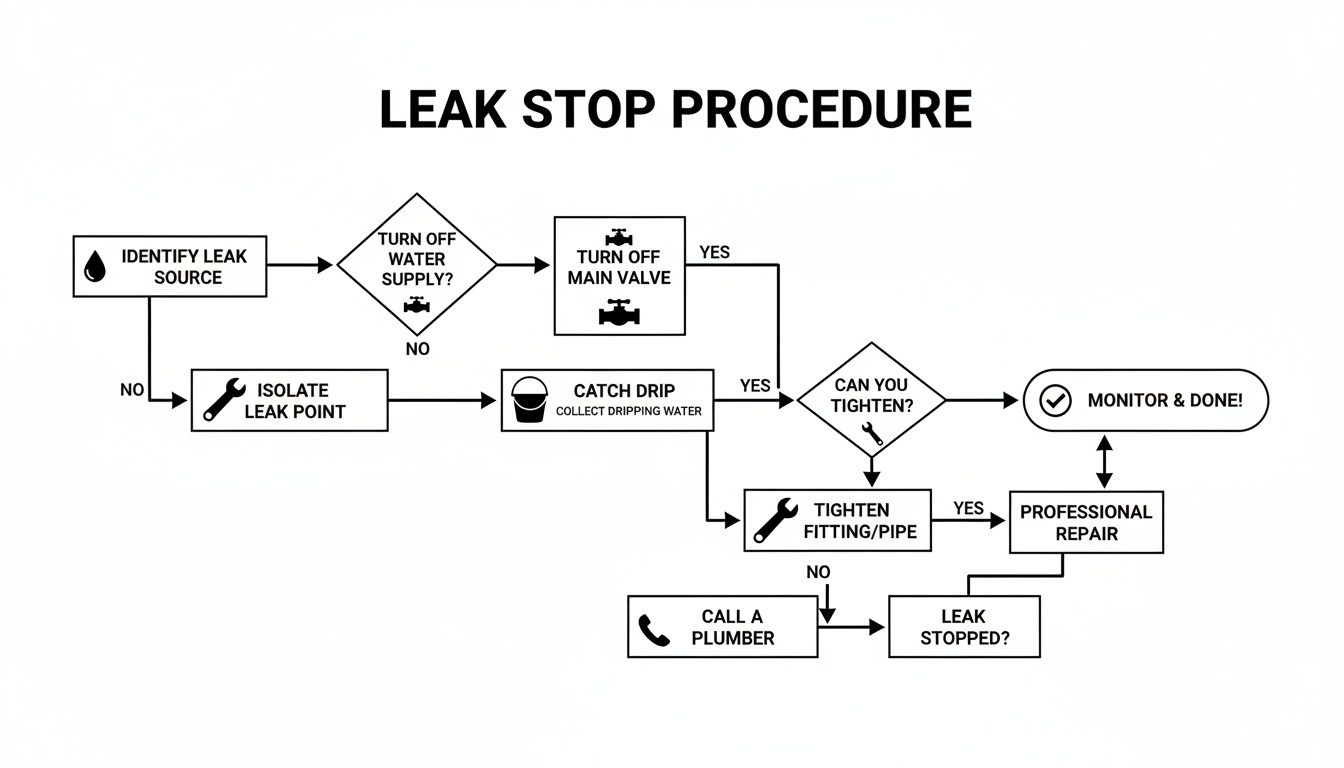
As you can see, after containing the leak, it's all about a proper assessment. A simple tighten might work, but often it leads to a bigger decision about repair or replacement.
To make things even clearer, let's compare some common scenarios.
DIY vs Professional Radiator Leak Repair
Deciding whether to grab your tools or your phone can be tricky. This table breaks down common leak scenarios to help you make the safest and most effective choice.
Leak Scenario | Recommended Action | DIY Feasibility | Key Consideration |
|---|---|---|---|
Dripping from a Valve Nut | Tighten the gland nut or repack with PTFE tape. | High | This is a very common and low-risk fix. Just be careful not to overtighten and crack the valve. |
Leak from the Valve Body | Isolate the radiator and replace the entire valve. | Medium | Feasible with the right tools and confidence in draining the system partially. Getting a watertight seal is crucial. |
Weeping from the Spindle | Temporary fix with tape, but permanent fix is valve replacement. | Medium | Same as replacing the valve body. A good entry-level plumbing task if you're prepared. |
Pinhole Leak on Radiator Panel | Call a professional immediately for radiator replacement. | Very Low | This indicates internal corrosion. A patch is not a fix, and the radiator is structurally compromised. |
Leak from Corroded Pipes | Professional plumber needed to assess and replace pipework. | Very Low | Cutting and soldering copper pipes requires skill and specialised tools. A botched job can cause major flooding. |
Ultimately, while small drips from valves are often manageable, issues with the radiator body or the pipes themselves are clear signs that you're out of DIY territory.
The Real Value of Calling a Pro in Southampton
When you’re dealing with something like system sludge, getting a professional is non-negotiable. Our Gas Safe registered engineers at Hallmoore don’t just swap out the leaky radiator and leave. We diagnose the health of your entire system. A service like a power flush is vital for blasting out the sludge that caused the leak, protecting all the other radiators and pipework in your home from the same fate.
Let’s talk numbers. A professional radiator replacement in the UK can cost anywhere from £150 to £900, with a typical job landing around £350. It's an investment that pays off, especially when you consider that an estimated 25% of pre-2000 homes in Hampshire suffer from repeated patch-ups on failing systems. A basic swap might be £150-£300, but a more thorough job that includes sludge removal can be £200-£450. Given that sludge affects around 35% of heating systems, it’s a cost worth factoring in.
Calling in our professional in-house service's gives you safety, a long-term solution, and complete peace of mind. For a better understanding of the benefits, have a read of our article on why to choose professional plumbing services in Highcliffe. Our team is ready to deliver a permanent fix that keeps your home warm and dry for years to come.
Knowing When to Call for Emergency Help
Knowing your limits is probably the most important skill in any DIY home repair. While you can often manage a small drip from a radiator, there are definite red flags that signal you’re out of your depth. It’s time to stop what you’re doing and call a professional.
Recognising these signs is crucial. It’s what stops a minor annoyance from turning into a major, floor-ruining disaster.
Sometimes, the leak isn’t even coming from the radiator itself. It might be the boiler or the pipework connected to it. If you see water dripping directly from your boiler unit or notice heavy corrosion on the pipes leading into it, that’s a serious problem. Trying to fix this yourself isn't just risky; it’s genuinely dangerous.
Identifying Clear Emergency Situations
Certain symptoms are non-negotiable. They mean you need to pick up the phone and call an engineer, no questions asked.
Unusual Smells: If you notice a sweet, almost sickly smell along with the leak, that’s likely antifreeze from the system inhibitor. Much more seriously, any smell of gas or a burning odour points to a hazardous fault with your boiler. Don't hesitate.
Multiple Radiators Failing: One leaky radiator is a nuisance. But if several start leaking at once or just stop getting hot, it points to a much bigger problem. This could be a system-wide pressure issue or a major blockage that a simple DIY fix will never solve.
Rapid Water Damage: A slow drip is one thing; a steady flow is another entirely. If water is actively pooling, spreading across the floor, or dripping through the ceiling below, you need an emergency call-out right away.
Never underestimate a radiator leak that comes with other system-wide problems. What looks like a simple drip could be the first sign of a failing pump or a critical pressure drop in your boiler. These are issues that can lead to catastrophic failure if you ignore them.
Your Local Emergency Plumbers in Highcliffe and Southampton
Attempting to work on complex plumbing or any gas appliance without the right qualifications is illegal and incredibly unsafe. Only Gas Safe registered engineers are legally allowed to work on boilers and gas central heating systems in the UK. For residents in Southampton, Christchurch, and Highcliffe, knowing who to call can make all the difference when things go wrong.
Our in-house service's at Hallmoore Developments provides a 24/7 emergency service for exactly these situations. When you call us, a qualified, Gas Safe engineer will be at your door, ready to safely diagnose and fix the root cause of the problem.
We manage everything, from sorting the initial plumbing emergency to repairing any water damage that’s occurred, offering a complete, stress-free solution. If you're ever in doubt, it’s always better to get an expert in. For more guidance, have a look at our advice on when you might need an emergency plumber near you in Bournemouth.
Looking After Your Radiators to Prevent Future Leaks
Honestly, the best way to stop a radiator leak is to make sure it never gets the chance to start. A bit of proactive maintenance is far less hassle—and a lot cheaper—than discovering a puddle spreading across your floorboards. For homeowners anywhere from Highcliffe to Bournemouth and across Southampton, a few simple habits can keep your heating system happy and efficient all winter.
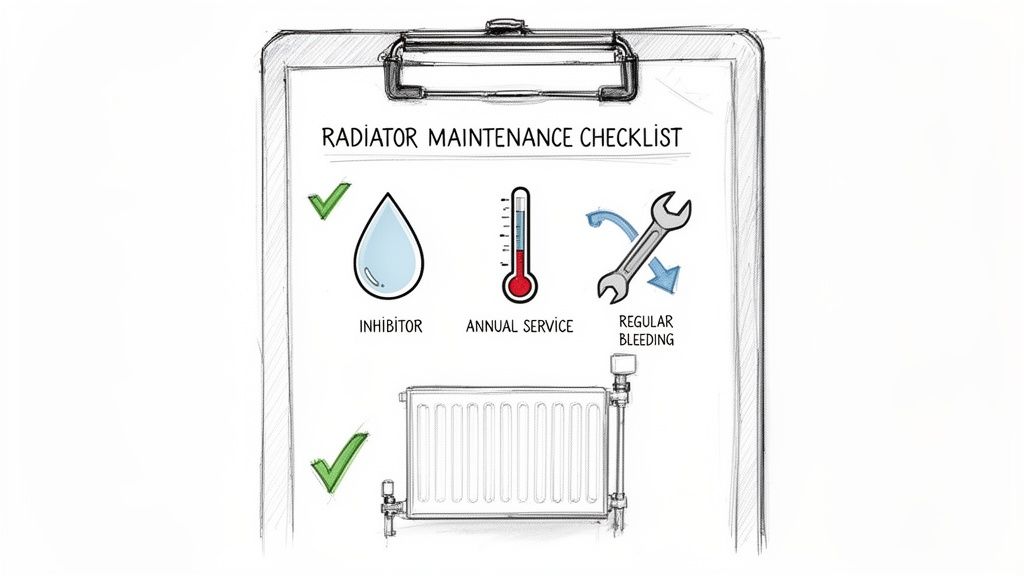
This isn't just about dodging a mess. It’s about being smart with your property. A well-cared-for heating system is one you can rely on when you need it most.
Your Essential Maintenance Checklist
Getting into a routine with your central heating is key. Think of it as a yearly MOT for your home. You don’t need to be a plumbing guru for the basics, but knowing what to check—and when to call in our in-house service's—makes all the difference.
Here are the most effective things you can do:
Book an Annual Boiler Service: This is the big one. A yearly inspection from a Gas Safe registered engineer is the single most important bit of maintenance you can do. Our engineers in Poole and Ringwood don't just look at the boiler; they assess the entire system, checking pressure levels, spotting early signs of corrosion, and making sure valves are in good nick.
Bleed Your Radiators Regularly: Trapped air does more than just cause annoying cold spots at the top of your radiator; it speeds up internal corrosion. Letting that air out every few months keeps things running quietly and efficiently. If you’re not sure how, our guide on how to bleed a radiator in Bournemouth for a warmer home breaks it down into simple steps.
Keep an Eye on System Pressure: Your boiler will have a pressure gauge, usually with a green zone showing the ideal level (around 1-1.5 bar when the system is cold). If you notice the needle is constantly dropping, it’s a sure sign of a leak somewhere, even if it’s a tiny one you can’t see.
Top Up the Central Heating Inhibitor: This is a liquid chemical that gets added to your system to stop rust and sludge from building up inside. It’s this black gunk that often causes those infuriating pinhole leaks. The inhibitor levels should be checked and topped up as part of your annual service.
Why Proactive Care Makes a Real Difference
Spending a small amount of time on maintenance pays off big. Statistics show that proper preventative care can reduce the number of radiator leak incidents in the UK by as much as 50%. Those crucial annual boiler services by Gas Safe engineers catch around 80% of potential problems before they turn into emergencies.
In areas like Hampshire and Dorset, where a sudden freeze can make a small leak much worse, simply bleeding radiators every few months has been shown to prevent corrosion in 60% of cases. You can read more about these insights on TradeRadiators.com.
By being proactive, you’re tackling the root causes of most radiator leaks head-on: corrosion, pressure problems, and general wear and tear. Even just giving your valves and pipework a quick visual check every now and then can help you spot early warning signs, like weeping joints or paint blistering from hidden rust.
Stay on top of these simple tasks, and you’ll never have to frantically Google "how to stop radiator leak" again. It's all about maintaining a healthy, efficient heating system that you can count on, year after year.
If you're in Christchurch, Southampton, or anywhere in between and want to get your boiler serviced or have your system professionally checked, get in touch. The expert in-house service's team at Hallmoore developments is Gas Safe registered and ready to help keep your home warm and leak-free. Visit us at https://www.hallmoore.co.uk for all your plumbing and heating needs.
Comments