.png)
UK Cost to Replace Kitchen Cabinets
- Dan Hall
- Aug 6, 2025
- 13 min read

The cost to replace kitchen cabinets in the UK can start from as little as £800 for basic, off-the-shelf units, but can easily climb to £15,000 or more for a high-end, bespoke installation. The final figure on your quote will come down to a few key things: the materials you choose, the size of your kitchen, and whether you call in the professionals for fitting. Understanding the full cost to replace kitchen cabinets is crucial for budgeting your project correctly.
A Quick Guide to UK Kitchen Cabinet Costs
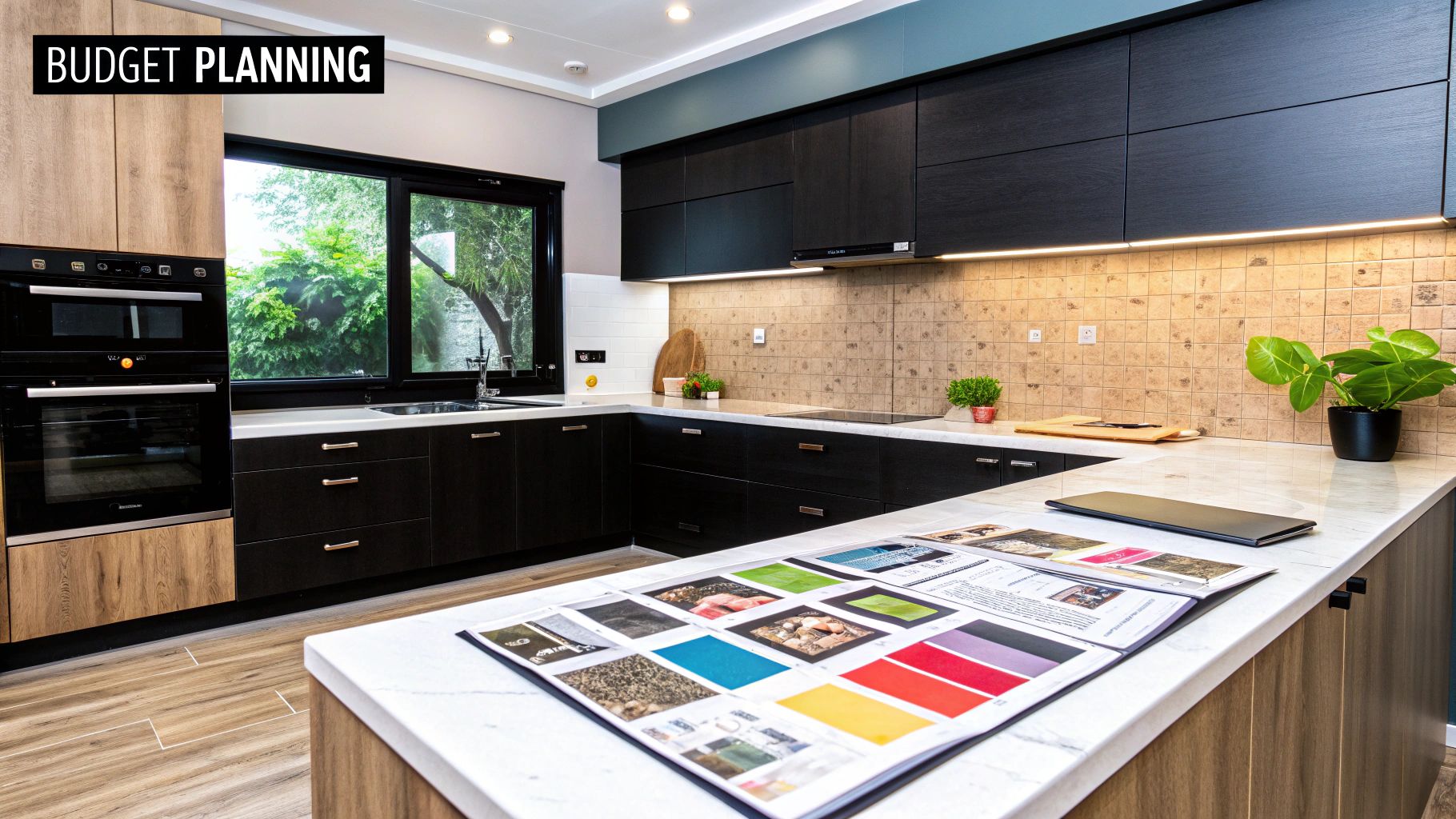
Getting a handle on the potential cost to replace kitchen cabinets is the first real step in any successful renovation. Think of it like buying a new car; you could go for a reliable, no-frills model or a luxury vehicle loaded with every optional extra. Both will do the job, but the experience and the price tag are worlds apart.
It’s the same story with kitchen cabinets. They come in a massive spectrum of price points, materials, and styles. From simple stock units you can pick up at major retailers to handcrafted, custom-made designs, every choice you make will directly shape your budget and the overall cost to replace kitchen cabinets.
Estimated Kitchen Cabinet Replacement Costs in the UK
To give you a clearer picture and help you set a realistic budget, it’s useful to see what different approaches might cost. The table below breaks down the typical price ranges you can expect for common cabinet projects, including both supply and installation, giving you a better idea of the cost to replace kitchen cabinets.
Estimated Kitchen Cabinet Replacement Costs in the UK
Project Scope | Estimated Cost Range (Supply & Fit) | Typical Timescale |
|---|---|---|
Replacing Doors Only | £450 – £2,000 | 1–3 Days |
Standard Stock Cabinets | £2,500 – £6,000 | 3–5 Days |
Mid-Range Semi-Custom Cabinets | £5,000 – £12,000 | 4–7 Days |
High-End Bespoke Cabinets | £10,000 – £25,000+ | 1–3 Weeks |
Of course, it's important to treat these numbers as a guide. Your final cost to replace kitchen cabinets will depend on the specific materials, the complexity of your kitchen’s layout, and labour rates in your area. For a more granular look, check out our guide on the UK average cost of kitchen installation.
It should come as no surprise that cabinets are often the single biggest expense in a kitchen remodel. In fact, they can eat up nearly half of the total budget for a full-scale renovation.
While a complete kitchen overhaul in the UK can set you back anywhere from £5,000 to over £25,000, the cabinets themselves represent a huge slice of that pie. For instance, standard stock cabinets might cost between £800 and £5,000 for the units alone, but opting for fully bespoke cabinetry can easily push that figure towards £15,000 and beyond, significantly impacting the final cost to replace kitchen cabinets.
What Really Drives Your Cabinet Replacement Cost

Trying to understand the total cost to replace kitchen cabinets can feel like hitting a moving target. It’s not one single figure but a blend of different expenses that all add up. The final bill ultimately boils down to three main factors: the materials you choose, the labour needed to fit them, and the complexity of your design.
Think of these as the core pillars holding up your entire project budget. Each one carries a lot of weight, and a decision in one area can easily send ripples across the others. Getting a handle on these from the start is the key to managing the cost to replace kitchen cabinets smoothly.
The Materials Your Cabinets Are Made From
The biggest piece of the cost puzzle, without a doubt, is the material you choose for your cabinets. This decision goes way beyond looks; it has a huge impact on durability, how much maintenance is needed, and, of course, the price. It's a bit like comparing a silk shirt to a cotton one – both do the job, but their quality and cost are worlds apart.
Particleboard & MDF: These are your go-to budget-friendly options, usually wrapped in laminate or vinyl. They’re fantastic for getting that sleek, modern look without breaking the bank, but they are more vulnerable to water damage and general wear and tear over the years.
Plywood: This is a brilliant middle-of-the-road choice. Plywood is much stronger and more resistant to moisture than particleboard, giving you a really solid foundation for your kitchen without the premium price tag of solid wood.
Solid Wood: At the top end, you have solid woods like oak, maple, or cherry. They offer incredible longevity and a classic, timeless appeal that can genuinely add value to your home. As you'd expect, this premium quality comes with a much higher cost.
The Cost of Professional Labour
Unless you're a very confident and experienced DIYer, you'll need to account for professional labour costs. This is where prices can really vary, depending on where you live, the fitter's experience, and just how much work is involved. This labour is a significant part of the cost to replace kitchen cabinets.
Fitting isn't just about screwing boxes to a wall. It’s a precision job.
A skilled installer makes sure every door hangs perfectly, all the units are dead level, and everything is securely fixed for the long haul. Paying for that expertise now often means saving a bundle on repairs later on.
Your labour bill can also grow if other tradespeople need to get involved. For example, if your new layout means moving the sink, you'll need a plumber. Want some fancy under-cabinet lighting? You'll need an electrician. These related jobs are a crucial part of the budget, which we cover in more detail in our complete guide to UK home renovation costs.
How Design Complexity Impacts the Price
Finally, the kitchen's design itself has a massive say in the final price. A simple, straight run of standard-sized cabinets will always be more affordable than a complex layout full of custom sizes, corner units, and fancy features. Every "extra" you add increases both the material and labour costs, raising the total cost to replace kitchen cabinets.
Here are a few common design choices that can push the price up:
Custom Sizes: If your kitchen has quirky dimensions or awkward corners, you might need custom-made cabinets. These are significantly more expensive than standard, off-the-shelf units.
Internal Fittings: Those clever storage solutions we all love – like pull-out larders, rotating corner carousels, or integrated bin systems – are fantastic for functionality, but they each add to the overall cost.
Finishing Touches: Details like decorative cornices, pelmets, and custom end panels are what give a kitchen that high-end, polished look. However, they require more material and more skilled labour to fit perfectly.
How Cabinet Materials and Styles Shape Your Budget
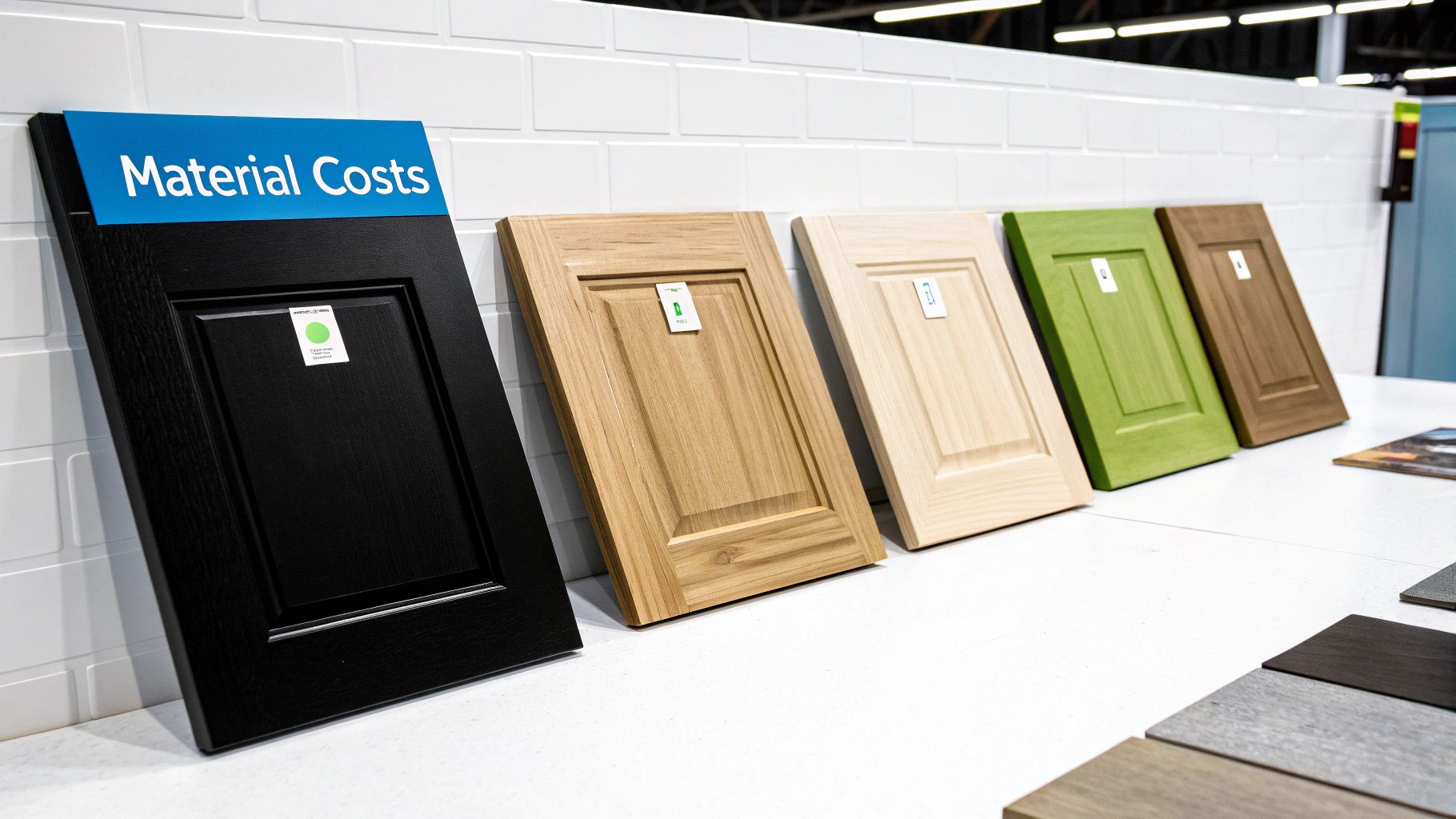
When you're working out the cost to replace kitchen cabinets, the cabinets themselves are the single biggest factor on the bill. The materials and style you land on do more than just set the visual tone for your kitchen; they form the very foundation of your budget, influencing everything from the manufacturing cost right through to long-term durability.
Think of it like buying a suit. An off-the-peg suit is affordable and gets the job done, but a bespoke one, tailored from premium fabric, will fit you like a glove and last for years to come—though it naturally comes with a higher price tag. This is exactly how it works with kitchen cabinetry. Every material offers its own unique balance of price, performance, and aesthetic.
Comparing Popular Cabinet Materials
Your choice of material is where your budget is truly made or broken. Less expensive options can give you a stylish, modern finish even on a tight budget, whereas premium materials are a long-term investment in pure quality and resilience. Let's break down the most common options you'll come across when calculating the cost to replace kitchen cabinets.
Vinyl-Wrapped MDF (Medium-Density Fibreboard): This is the undisputed champion for budget-conscious homeowners. MDF gives you a perfectly smooth, stable core that’s ideal for vinyl wrapping. This means you get a massive range of colours and finishes, including some very convincing wood grains. The trade-off? It’s more susceptible to heat and moisture damage over the years.
Plywood: A fantastic middle-ground option. Plywood is built from multiple layers of wood veneer, which makes it significantly stronger and more resistant to water than MDF. It provides a really robust structure for your kitchen without the hefty price tag of solid wood, making it an incredibly popular and reliable choice.
Solid Wood: This is the pinnacle of quality. Solid woods like oak, maple, or walnut offer unmatched durability and a timeless beauty that never goes out of fashion. A solid wood kitchen is a genuine investment that can add significant value to your home, but it also carries the highest material cost.
How Cabinet Style Influences Cost
Beyond the core material, the actual style of the cabinet doors plays a huge part in the manufacturing cost. It's simple, really: more complex designs need more material, more intricate machinery, and more time to get right. All of that is reflected in the final price you pay.
The style of your cabinet door is more than a design choice; it's a budget decision. Intricate designs like in-frame or Shaker doors require more precise craftsmanship and material than simple flat-panel doors, directly impacting the manufacturing cost.
Here’s a quick look at how common styles stack up in terms of price:
Flat-Panel (Slab) Doors: These are your most affordable option. Made from a single, solid piece of material, they are simple and quick to manufacture, giving you that clean, minimalist look.
Shaker-Style Doors: Known for their classic five-piece construction with a recessed centre panel, Shaker doors are phenomenally popular. That extra bit of complexity makes them more expensive than flat-panel doors, but they still offer fantastic value.
In-Frame Doors: In this traditional style, the door sits neatly inside a frame that's fixed to the cabinet front. This technique demands exceptional precision and more material, placing it firmly at the highest end of the price spectrum.
Choosing Between a Full Replacement and Refacing
When you start planning a kitchen upgrade, one of the first big decisions you'll face is whether to go for a full cabinet replacement or a simpler reface. This choice will have a massive impact on the final cost to replace your kitchen cabinets.
The answer really comes down to the state of your existing cabinet carcasses (the boxes). If they're structurally sound and you're happy with the general layout, refacing is a brilliant, budget-friendly alternative.
Think of it like this: a full replacement is like rebuilding a car's engine from the ground up, while refacing is like giving it a fantastic new paint job and stylish wheels. One is a complete mechanical overhaul; the other transforms the look for a fraction of the cost and hassle. If your cabinet boxes are solid, simply replacing the doors and drawer fronts can deliver a stunning new look and save you thousands.
This image breaks down the key differences in labour, time, and cost between a full replacement and just installing new doors and fronts.

As you can see, focusing on just the doors and fronts dramatically cuts down on both the time and the overall labour bill for the project.
Understanding Refacing Costs
Refacing is much more than just a lick of paint. It involves fitting brand-new doors, drawer fronts, and often new hardware like handles and hinges. This gives you the feel of a brand-new kitchen without the disruption and cost of a complete rip-out.
The cost for this approach is impressively low compared to a full replacement. In the UK, the price to replace just the kitchen cabinet doors depends on the door size, material, and local labour rates. For example, a standard cupboard door might cost around £131, including new hinges, handles, and professional fitting.
Larger doors or more complex drawer units can cost more, with a set of drawers averaging up to £259 due to the extra fitting time involved. You can get a deeper dive into these prices and what they cover in this detailed cost guide on checkatrade.com.
Deciding between these two paths comes down to a simple cost-benefit analysis. Is the underlying structure of your kitchen worth saving? If the answer is yes, refacing offers the most impactful visual upgrade for your investment.
To help you weigh up your options, let's put both methods side-by-side and look at the key differences in cost, time, and disruption to your home.
Full Replacement vs Cabinet Refacing: A Cost and Effort Comparison
Deciding between a full cabinet replacement and a simple reface can be tough. The right choice depends on your budget, timeline, and the condition of your existing kitchen. This table compares the key differences to help you decide on the best approach for managing the cost to replace kitchen cabinets.
Factor | Full Cabinet Replacement | Cabinet Refacing (Doors/Drawers Only) |
|---|---|---|
Average Cost | £2,500 – £25,000+ | £450 – £2,000 |
Project Timeline | 4 days – 3 weeks | 1–3 days |
Disruption | High (kitchen is unusable for days) | Low (minimal disruption to daily life) |
Best For | Outdated layouts or damaged cabinets | Sound cabinet boxes with a good layout |
Ultimately, a full replacement is necessary when your cabinet boxes are damaged or you want to completely change your kitchen's layout. However, if your cabinets are in good shape, refacing offers a fast, affordable, and transformative alternative with far less disruption.
Decoding Labour Costs and Finding a Great Fitter
While the cost of your shiny new units is a big slice of the budget, it's the labour that often catches people off guard. Getting a handle on what goes into a professional installation is the secret to managing the total cost to replace kitchen cabinets and dodging those surprise bills down the line.
A good kitchen fitter does so much more than just hang boxes on a wall. Their work is a blend of precision, on-the-spot problem-solving, and the know-how to get every single component perfectly level, secure, and lined up. That expertise is what transforms a pile of boxes into a professional, solid kitchen that will stand the test of time.
What a Professional Fitter's Quote Should Cover
When you get a quote, it should be more than just a single figure scrawled on a piece of paper. A detailed, itemised estimate is the hallmark of a true professional. It shows you exactly where your money is going and heads off any potential misunderstandings later on.
A proper quote for the cost to replace kitchen cabinets should break down the job into clear stages:
Removal of Old Cabinets: Tearing out your existing units safely and efficiently.
Assembly of New Units: A significant time-eater, especially if you've bought flat-pack cabinets.
Installation of Carcasses & Doors: This is the core fitting work, making sure everything is level and plumb.
Fitting Worktops: Often a separate cost, particularly for materials like granite or quartz that require specialist cutting.
Waste Disposal: The cost to hire a skip and dispose of all the old kitchen materials correctly.
Think of professional fitting as an investment in quality. A poorly installed kitchen can mean wonky doors that never quite close, uneven worktops, and fixtures that fail long before they should. Fixing those issues later will always cost you more.
Uncovering Hidden Labour Costs
Beyond the main installation, a few other jobs can creep onto your labour bill. These are often small plumbing or electrical tasks that only become obvious once the old cabinets are gone. Chatting about these "what-ifs" with your fitter from the very beginning can save you from a nasty budget shock.
For instance, a full cabinet replacement is a much bigger job than just swapping the doors. The average price to replace kitchen cabinet doors, including labour, might be around £450 for up to five doors. A full replacement, however, involves much higher costs for both materials and the installation itself. A typical installation can take two to three days, depending on the size and complexity of your kitchen, with the final bill shaped by your chosen materials and local labour rates. You can dig into these expenditure details on MyJobQuote.co.uk for a clearer picture.
Before you hire anyone, always check they have public liability insurance and don't be shy about asking to see photos or even visit their previous projects. Getting at least three detailed quotes is your best strategy for understanding what a fair price for quality work looks like in your area.
Smart Ways to Save on Your New Kitchen Cabinets
Knowing what drives the cost to replace kitchen cabinets is one thing, but figuring out how to actually lower the final bill is where you can really make your budget stretch. With a few clever decisions, it’s entirely possible to get that high-end look you’re after without the painful price tag.
The single biggest money-saver? Go for standard-sized, off-the-shelf cabinets from major retailers. These are mass-produced, which makes them dramatically cheaper than semi-custom or fully bespoke options. You might trade a little design flexibility, but the cost difference is often huge.
Strategic Choices for a Smaller Bill
If you're happy to get your hands dirty, you can also trim the labour costs. Taking on the demolition of the old kitchen yourself is a popular task for handy homeowners. Just make sure you know what you’re doing to avoid damaging walls or utilities – a professional repair bill would wipe out your savings in an instant.
Another smart move is to think carefully about when you buy and when you build:
Seasonal Sales: Retailers love a good sale. Keep an eye out for major discounts on kitchens and appliances during events like the Boxing Day sales or around the late spring bank holidays.
Off-Peak Season: Good tradespeople are usually swamped in the summer and in the run-up to Christmas. If you can schedule your installation for a quieter time, like late winter or early autumn, you might find their quotes are more competitive.
It’s easy to get focused on cutting every possible cost, but a truly savvy approach is about making smart investments. Spending a little more on durable, quality materials now can save you a fortune on repairs and replacements down the line, giving you far better long-term value.
Finally, don’t lose sight of the bigger picture and your home’s overall worth. A well-designed, budget-friendly kitchen can have a surprisingly big impact on your property’s value. For more on this, check out our guide on how to maximise your home value with budget-friendly renovation tips.
Common Questions on Cabinet Replacement Costs
As you move closer to finalising your kitchen plans, it's completely normal for specific questions about the cost to replace kitchen cabinets to pop up. Getting clear answers to these final details is what gives you the confidence to move forward. Let’s tackle some of the most common queries we hear from homeowners.
How Much Should I Budget for New Kitchen Cabinets?
While there’s no single magic number, a solid rule of thumb is to set aside 30-35% of your total kitchen renovation budget just for the cabinets. This might sound like a lot, but it makes sense when you realise that cabinets are almost always the biggest single expense in any kitchen project.
So, if you're planning a £15,000 total kitchen renovation, you should expect to spend somewhere between £4,500 and £5,250 on the cabinets and their installation.
What Is the Cheapest Way to Get New-Looking Cabinets?
If your existing cabinet boxes (the carcasses) are still in good nick and you're happy with your kitchen's layout, refacing is by far the most budget-friendly option. This is where we replace all the doors and drawer fronts but leave the main cabinet structures in place. You get a massive visual upgrade for a fraction of the cost and disruption of a full replacement.
A full tear-out and replacement really only makes sense when your cabinets are structurally damaged or you're completely changing the layout. Otherwise, for a fresh look on a tighter budget, refacing or even a professional paint job offers fantastic value for money.
Is It Cheaper to Repair or Replace Cabinets?
For small, isolated problems like a broken hinge or a dodgy drawer runner, a simple repair will almost always be cheaper. It's a quick fix.
However, if you're dealing with widespread issues—think peeling laminate, water damage across several units, or multiple broken doors—the cost of all those individual repairs can add up surprisingly quickly. In those situations, a complete replacement often provides better long-term value and peace of mind than trying to manage a high repair cost.
Ready to transform your kitchen with confidence? The team at Hallmoore Developments has the expertise to guide you through every step, from design and material selection to flawless installation. We can help you understand the full cost to replace kitchen cabinets for your specific project. Contact us today to start planning your perfect kitchen.
Comments