.png)
What Is Tanking in Construction A Guide for Bournemouth Homes
- Dan Hall
- Dec 23, 2025
- 14 min read

Let's get straight to it. When we talk about ‘tanking’ in construction, we’re talking about applying a completely waterproof barrier to the walls and floors of a below-ground structure – think basements, cellars, or vaults. The goal is to physically block groundwater from forcing its way inside, effectively turning your cellar into a sealed, watertight 'tank'. For this, you will always need our in house service to see to the job correctly.
What Is Construction Tanking? An Explanation for Christchurch Properties
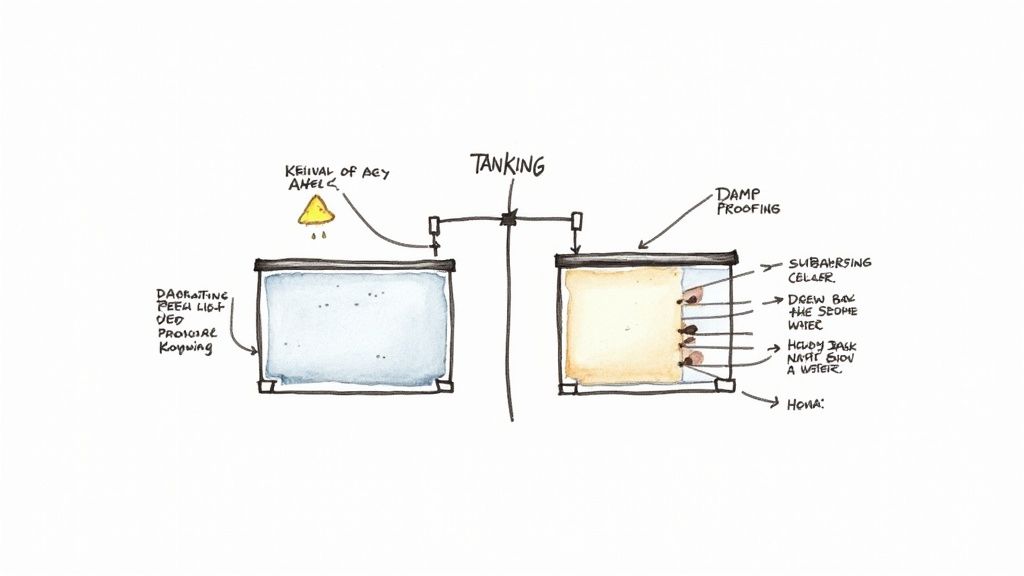
Imagine you’re lining a swimming pool to stop water from leaking out. Tanking works on the exact same principle, but in reverse—it’s all about stopping water from getting in.
This is a massive deal for properties in coastal and riverside spots like Christchurch, Highcliffe, and Bournemouth. Here, the ground is often saturated, meaning hydrostatic pressure is a constant, invisible threat to your home’s foundations.
So, what is hydrostatic pressure? It’s simply the force of groundwater pushing against your home's structure. If your below-ground walls aren't properly protected, this pressure can force moisture straight through brick, mortar, and even concrete. The result? Persistent damp, mould, structural damage, and a completely unusable space.
Why Tanking Is More Than Just Damp Proofing
It’s crucial to understand that tanking is a far more robust solution than standard damp proofing. While people often confuse the two, they are built for entirely different jobs.
Damp Proofing: This is designed to deal with ambient moisture, like rising damp creeping up from the ground or rain penetrating from the outside. Think of it as a raincoat for your walls. It keeps them dry from general wetness.
Tanking: This is a heavy-duty defence system. It’s engineered to withstand significant, constant water pressure from the surrounding ground. It’s less like a raincoat and more like the hull of a submarine – built to keep water out under immense force.
For a deeper dive into the differences, take a look at our guide which explains more about the various damp proofing solutions we handle for our clients.
Why It Matters in Today's Construction Climate
In the UK, tanking isn't a 'nice-to-have'; it's an essential process for protecting any structure built below ground level. Its importance has only grown as the construction sector faces challenging market conditions. A recent S&P Global UK Construction PMI report highlighted a significant drop in activity, particularly affecting housing projects where proper tanking is vital for the long-term integrity of new builds.
Tanking provides a complete, impermeable barrier that prevents water from getting in, even under pressure. This isn't just about managing a bit of damp; it's about creating a dry, habitable, and structurally sound environment below ground.
As we go on, our in-house service's team will walk you through the different methods we use for properties from Poole to Southampton. You'll get a clear idea of which approach is the right one to protect your home.
Exploring the Different Types of Tanking for Ringwood Homes
When it comes to waterproofing a basement, there’s no single magic bullet. The right approach depends entirely on your property's specific conditions, from the age of the brickwork to the level of water pressure pushing against the walls. Here in Ringwood and across the South Coast, we see a huge variety of challenges, which is why our in house service has mastered several distinct methods.
There are three main players in the world of tanking: Cementitious Tanking Slurry, Cavity Drain Membranes, and Liquid Applied Membranes. Each one tackles water ingress in a completely different way. Let's break them down.
Cementitious Tanking Slurry
Think of this as a super-tough, waterproof render. It’s a traditional and incredibly reliable method where we apply a special mix of cement, aggregates, and chemical modifiers directly onto the internal masonry of your basement walls and floors.
Once it cures, it forms a chemical bond with the substrate, creating a solid, completely impermeable barrier. This system is designed to physically hold back water pressure, making it a brilliant choice for well-built structures with sound masonry. It essentially turns your basement into a single, sealed, watertight box.
Cavity Drain Membranes
This is a more modern and, frankly, clever approach. Instead of trying to fight against immense water pressure, a cavity drain system is designed to manage and redirect it. Picture a dimpled plastic sheet, almost like a giant egg box, fixed to the internal walls and laid across the floor.
This creates a small air gap—the cavity—between the membrane and the wall. Any water that makes its way through the structure simply trickles down the cavity into a hidden channel at the base of the wall. From there, it’s funnelled to a sump pump, which safely pumps it away from your property.
A cavity drain system works on the principle that in some situations, water ingress is inevitable. Its genius lies in controlling that water and harmlessly channelling it away, rather than trying to build a fortress against relentless hydrostatic pressure.
Liquid Applied Membranes
For a seamless, flexible barrier, liquid applied membranes are hard to beat. As the name suggests, this is a coating that’s painted or sprayed onto the surface. It then cures to form a continuous, rubber-like waterproof layer that bonds tightly to the structure.
This method is fantastic for basements with awkward shapes or lots of pipes and services coming through the walls, as it creates a perfect seal with no joints or weak points. Its elasticity is another huge plus, allowing it to stretch and accommodate minor structural movements without cracking.
To make things clearer, here’s a detailed look at the pros and cons of each system.
Tanking System Pros and Cons
Choosing the right tanking method is a critical decision that impacts the long-term health of your property. This table breaks down the key advantages and disadvantages of each primary system to help you understand which might be the best fit for your home.
Tanking System | Advantages | Disadvantages | Typical Use Case |
|---|---|---|---|
Cementitious Slurry | - Extremely durable and robust- Creates a strong bond with the substrate- Can be plastered or decorated directly | - Can crack if there is structural movement- Relies on the substrate being sound and stable- Labour-intensive application | Solid, stable structures with sound masonry where hydrostatic pressure needs to be physically blocked. |
Cavity Drain Membrane | - Manages water rather than blocking it- Unaffected by minor cracks or movement- Protects finishes from damp | - Requires a sump pump system, which needs power and maintenance- Reduces internal floor-to-ceiling height slightly | Properties with high water tables, listed buildings, or where structural movement is a concern. |
Liquid Applied Membrane | - Creates a seamless, joint-free barrier- Highly flexible and elastic- Ideal for complex shapes and details | - Requires thorough surface preparation- Can be punctured during subsequent works if not protected | Basements with multiple service penetrations, irregular shapes, or as part of a dual-protection system. |
Ultimately, the best choice is always the one tailored to your specific situation. Our expertise lies in correctly diagnosing the problem and recommending the solution with the best chance of long-term success.
This simple flowchart can also help you quickly determine if full-blown tanking is what your property needs.
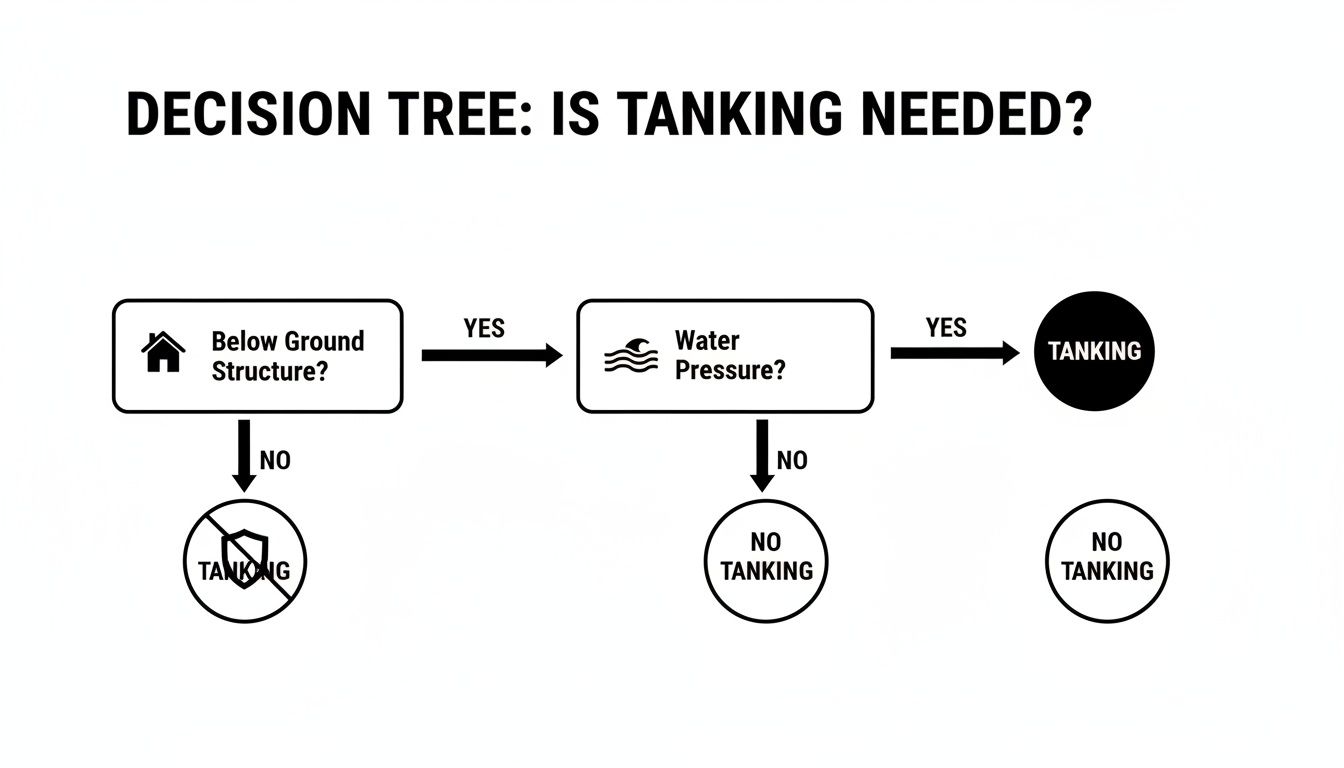
The key takeaway here is simple: if your below-ground structure is fighting against direct water pressure, a simple damp proof course won't cut it. You need a dedicated tanking system. You can see how we've applied these different methods in real-world scenarios by taking a look at some of our completed construction projects. Getting this choice right is absolutely crucial, and our team has the experience to assess your home and recommend the most effective defence.
Tanking vs Damp Proofing: Understanding the Key Difference
It’s a common mix-up, but confusing tanking with damp proofing can lead to some seriously costly mistakes down the line. While both deal with water, they are engineered to solve entirely different problems. Getting this right is absolutely crucial for protecting your property, especially in areas like Poole or Southampton where groundwater can be a real issue.
Let’s try a simple analogy. Think of damp proofing as a good-quality raincoat for your house. Its job is to stop moisture from soaking into the walls above ground, whether that’s from driving rain or rising damp wicking its way up from the soil. It manages moisture, but it’s not designed to fight back against water pressure.
Tanking, on the other hand, is the hull of a submarine. It’s a heavy-duty system built to withstand constant, immense pressure from groundwater trying to force its way in. That invisible force is called hydrostatic pressure, and it’s the entire reason tanking exists.
Hydrostatic Pressure: The Real Enemy Below Ground
When any part of your property sits below ground level—think cellars, basements, or sunken rooms—the surrounding soil can become saturated with water. This is particularly true in places like Christchurch with a high water table. That water doesn’t just sit there quietly; it actively pushes against your foundations with surprising force.
This is where a standard damp proof course (DPC) or a simple damp proof membrane (DPM) will inevitably fail. They simply aren't built to act as a barrier against water under pressure. Eventually, they will be breached, leading to significant leaks and flooding.
That’s why slapping some waterproof paint on a cellar wall will never fix a genuine hydrostatic pressure problem. It’s like trying to patch a leak in a boat with a sticking plaster. It might offer a false sense of security for a short while, but it’s the wrong tool for the job and is guaranteed to fail.
Choosing the Correct Solution
The real challenge is correctly diagnosing the root cause of the damp. Is it condensation from poor ventilation? Is it rising damp creeping up the brickwork? Or is it the relentless force of hydrostatic pressure? Each requires a completely different approach.
Damp Proofing: Manages ambient moisture and rising damp (capillary action).
Tanking: Actively blocks water that is under direct, physical pressure.
For homeowners across Bournemouth and the surrounding areas, getting this diagnosis right is the single most important step. Our in-house service has the expertise to correctly identify the source of your water problem. By assessing the signs and understanding the unique ground conditions of your property, we can determine the right solution that provides lasting protection. You can learn more about the full range of our professional construction and waterproofing services and see how we solve these complex issues for good.
Warning Signs Your Highcliffe Home Needs Professional Tanking
So, how can you tell if your property is losing the battle against groundwater? Especially for homeowners in Highcliffe and other coastal spots, spotting the early signs of water getting in is the key to stopping a small issue from becoming a massive structural headache. Your home is actually pretty good at giving you clues that its below-ground defences are starting to fail.
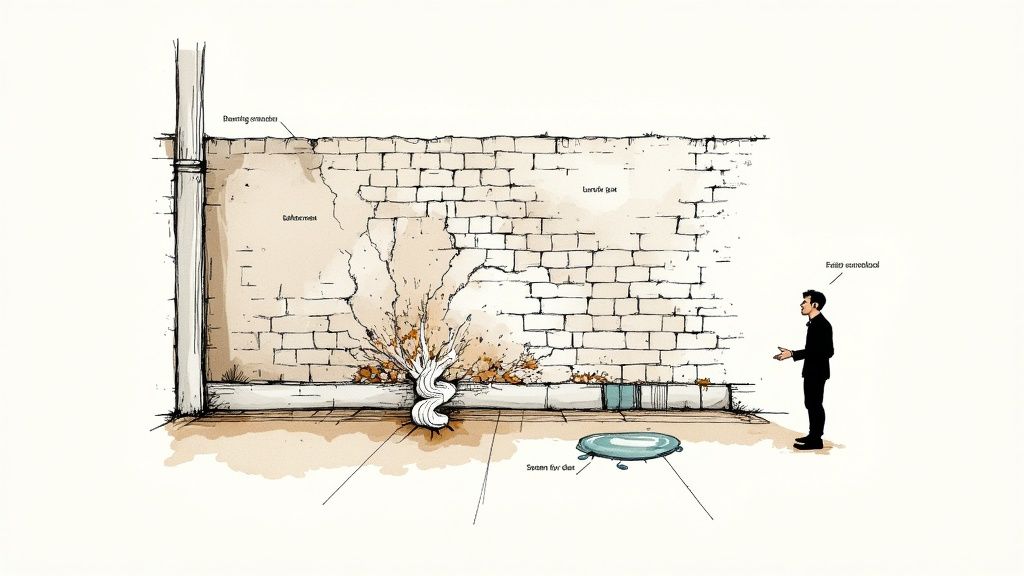
Simply ignoring these symptoms is a risky game. They almost always point to hydrostatic pressure building up behind the scenes, and if you leave it, that pressure can seriously compromise your property’s foundations. Learning to spot the signs early is your first line of defence.
Your Home Health Checklist
Take a walk through your basement or cellar and keep your eyes peeled for these tell-tale signs. If you notice any of them, it’s a strong signal that you need to pause and think about calling in the professionals for tanking. Our in-house service can step in and sort the problem before it spirals.
Persistent Damp Patches: See those spots on the walls or floor that just won't dry out, even when it’s sunny? Unlike a bit of condensation, these patches feel cold, clammy, and they never seem to go away.
Peeling Paint or Bubbling Plaster: Water pushing its way through from outside will literally force paint and plaster off the masonry. If you see blistering, bubbling, or flaking, it's a classic sign of water ingress.
A Musty, Earthy Smell: That constant damp, musty odour you can't shift with an air freshener is a major red flag. It’s the signature scent of mould and mildew, which only grow where there's persistent moisture.
White, Chalky Deposits: Noticed a fluffy or crystalline white powder on your brickwork? That’s efflorescence. It happens when water seeps through the bricks, dissolves the natural salts inside, and then evaporates, leaving the salt deposits behind.
Urgent and Unmistakable Signs
While the signs above are early warnings, some symptoms are more like a flashing red light demanding immediate action. If you can see water actively trickling down the walls or, worse, forming puddles on the floor, the problem has escalated. This is no longer just a damp issue; it's an active leak that needs an urgent response.
Ignoring these warnings is like ignoring the check engine light in your car. The problem won't fix itself; it will only become more complex and expensive to repair over time, potentially leading to serious structural damage.
It’s worth noting that the UK construction sector, which provides solutions like tanking, is navigating a tricky period. While recent government reports show a slight 0.2% growth in monthly output, this is mostly driven by repair and maintenance work. Meanwhile, the cost of materials keeps climbing, which makes being proactive more important than ever. You can read more about the current state of UK construction output and see why putting off repairs is a false economy.
By understanding the importance of early detection, you can build professional tanking into your wider preventive maintenance best practices and properly safeguard your property for the future. If you recognise any of these signs in your Bournemouth or Poole home, don't wait for things to get worse.
What to Expect From a Professional Tanking Job
Turning a damp, forgotten basement into a dry, liveable part of your home isn’t just about slapping on some waterproof paint. It’s a proper construction project. When you bring in our in house service, the process is methodical and designed to last for decades. Knowing what’s involved helps take the mystery out of it all.
It always kicks off with a detailed diagnostic survey. One of our in-house specialists will pop over to your property, whether it's in Southampton or Poole, to carry out a full investigation. We don’t just glance at the damp patches; we get to the root of the problem. We’re looking for the source of the water, figuring out the level of hydrostatic pressure pushing against the walls, and checking the overall condition of the structure. This first step is absolutely vital for choosing the right tanking system for your specific situation.
Getting the Foundations Right for a Perfect Finish
Once we’ve agreed on the best way forward, the real graft begins with meticulous surface preparation. You could argue this is the most important stage of the entire job. Even the most advanced tanking system in the world will fail if it’s applied to a crumbling, dirty surface.
Here’s what that typically involves:
Stripping Everything Back: Any old plaster, paint, or render that’s been damaged by the damp has to go. We hack it all off, right back to the original brickwork or concrete.
Cleaning and Making Good: With the bare walls exposed, we give them a thorough clean to get rid of dust, loose debris, and any of those white, fluffy salt deposits you often see. We then fill any cracks or holes with a specialised waterproof mortar.
This painstaking prep work is non-negotiable. It’s the only way to guarantee the tanking membrane gets a solid, unbreakable bond with the building itself.
The Installation and Finishing Touches
With the surfaces properly prepped and ready, our skilled technicians get to work installing the chosen tanking system. This could be a cementitious slurry that’s painted on, a modern liquid membrane, or a full-on cavity drain system. Every single detail is handled with precision, from sealing perfectly around pipes to ensuring every joint is seamless. The goal is a completely watertight barrier.
After the system is in place and has had time to fully cure, we can move on to the finishes. This usually means fitting new plasterboards and applying a final plaster skim, giving you perfectly smooth, dry walls that are ready for you to decorate.
The total timeline and cost will always depend on the size of the basement, how bad the damp is to begin with, and which system we’re installing. A small, straightforward cellar in Ringwood is obviously going to be a quicker and cheaper job than a huge, complex basement conversion in Bournemouth.
It's worth noting that the UK construction industry, which delivers these vital services, is navigating a challenging period. The sector has lost around 10% of its workforce since the pandemic. While repair and maintenance work is growing, new housing starts have fallen according to recent ONS figures. You can read more about the pressures on the UK construction sector in this detailed report.
To get a clear, no-nonsense idea of what your own project might cost, the best thing to do is request a full renovation estimate from our team. We provide transparent, detailed quotes so you know exactly where your investment is going.
Why Trusting Our In-house Service Is Your Best Defence
While the satisfaction of a DIY job is hard to beat, basement tanking isn't the place to test your skills. It's a high-stakes task where the margin for error is practically zero. Think of it as specialist surgery for your home—getting it wrong is always far more disruptive and costly than getting it right the first time.
Even a pinhole-sized gap in the waterproof barrier can lead to total system failure, leaving your property in Bournemouth or Poole just as vulnerable as before. The risks of a botched job are huge. Poor surface preparation, choosing the wrong materials for your specific ground conditions, or a single flawed seal can result in catastrophic leaks. This isn't just about a damp patch coming back; it's about water pressure that could compromise your home's structural foundations.
That’s why trusting our professional in house service is the smartest, most cost-effective decision you can make in the long run.
The Hallmoore Developments Advantage
When you choose our in-house service, you aren't just hiring contractors. You’re partnering with a team that has spent years tackling the unique challenges properties face across the South Coast. We know all about the demanding coastal conditions in Highcliffe and the tricky soil saturation issues common in Southampton and Christchurch.
Our commitment goes far beyond just finishing the job.
Adherence to British Standards: Every project we undertake strictly follows BS 8102, the UK's code of practice for protecting below-ground structures from water. No shortcuts, ever.
Insurance-Backed Guarantees: We give you genuine peace of mind that your investment is secure, with robust guarantees that offer long-term protection for your property.
Deep Local Expertise: With years of hands-on experience, we know precisely what works for homes in this area, ensuring a solution that’s built to last.
Entrusting your project to our skilled team means your home is correctly protected by professionals who stand by their work. Let our in house service provide the security you need.
You can learn more about our company's commitment to quality and customer satisfaction by exploring our story and learning more about the Hallmoore Developments team.
Your Basement Tanking Questions Answered
To wrap things up, let's tackle some of the most common questions we hear from homeowners in the Bournemouth area. Think of this as your quick-fire guide to getting the facts straight, so you can feel confident about protecting your property.
How Long Does a Professional Tanking System Last?
When installed correctly by a specialist team, a high-quality tanking system isn't just a repair—it's a long-term investment in your home's health.
A professionally applied cementitious slurry, for instance, can give you solid protection for 10-20 years. But if you opt for a modern cavity drain membrane system, you're looking at a solution that can protect your basement for the life of the building itself. That's often over 50 years, as long as the sump pump is properly maintained.
Can You Tank a Basement That Is Actively Leaking?
Yes, you absolutely can, but it changes the game plan. You can’t just slap a bonded system like a cementitious slurry onto a wall that has water streaming through it—it simply won't stick.
In situations like this, a cavity drain membrane system is the hero. Our in-house service would almost certainly recommend this approach for a wet basement. It's specifically designed to manage and channel active leaks away to a sump pump, making it the perfect fix for properties in Highcliffe or Christchurch dealing with serious water ingress.
Is Tanking Required by Building Regulations?
For any new build or a cellar conversion that's going to be a proper habitable space (like a bedroom, office, or living room), building regulations are crystal clear. You have a legal duty to provide adequate protection against groundwater.
A professional tanking system that meets British Standard BS 8102 is essential to tick that box and ensure the space is safe, dry, and legally compliant. If you're planning a major renovation project, getting your head around basement waterproofing is one of the most important first steps. For a broader look at the whole process, it's worth checking out a comprehensive guide on how to finish a basement for some extra insights.
If you have more questions or you’re starting to suspect your Poole or Southampton property needs an expert eye, don't put it off. The team at Hallmoore developments is here to give you the clarity and professional service you need to protect your home.
Contact us to schedule your initial survey today at https://www.hallmoore.co.uk.
Comments