.png)
Average cost of house extension in the UK: A keyword-friendly guide
- Dan Hall
- 1 day ago
- 13 min read

Planning a house extension is a thrilling prospect, but let's be honest, the first question on everyone's mind is: "How much is this actually going to cost?" The price of an extension isn't a simple one-size-fits-all number. It’s a complex puzzle influenced by everything from your postcode to the taps you choose for your new kitchen sink.
The final figure can feel like a moving target, whether you're in Bournemouth, Southampton, or Poole. But getting a solid baseline is the perfect place to start.
The National Picture: UK House Extension Costs
For 2025, the average cost to build a house extension in the UK is sitting at around £86,443. Breaking that down, it works out to roughly £2,885 per square metre (excluding VAT). This number has seen a noticeable jump in recent years, largely driven by the rising costs of materials and skilled labour.
Of course, "average" only tells part of the story. Location is a huge factor. Digging into the regional data, you'll see the minimum average cost is around £74,934 in the North of England. Head down to London, and that figure leaps to £103,834 – a massive premium for building in the capital.
The infographic below really brings this regional difference to life.
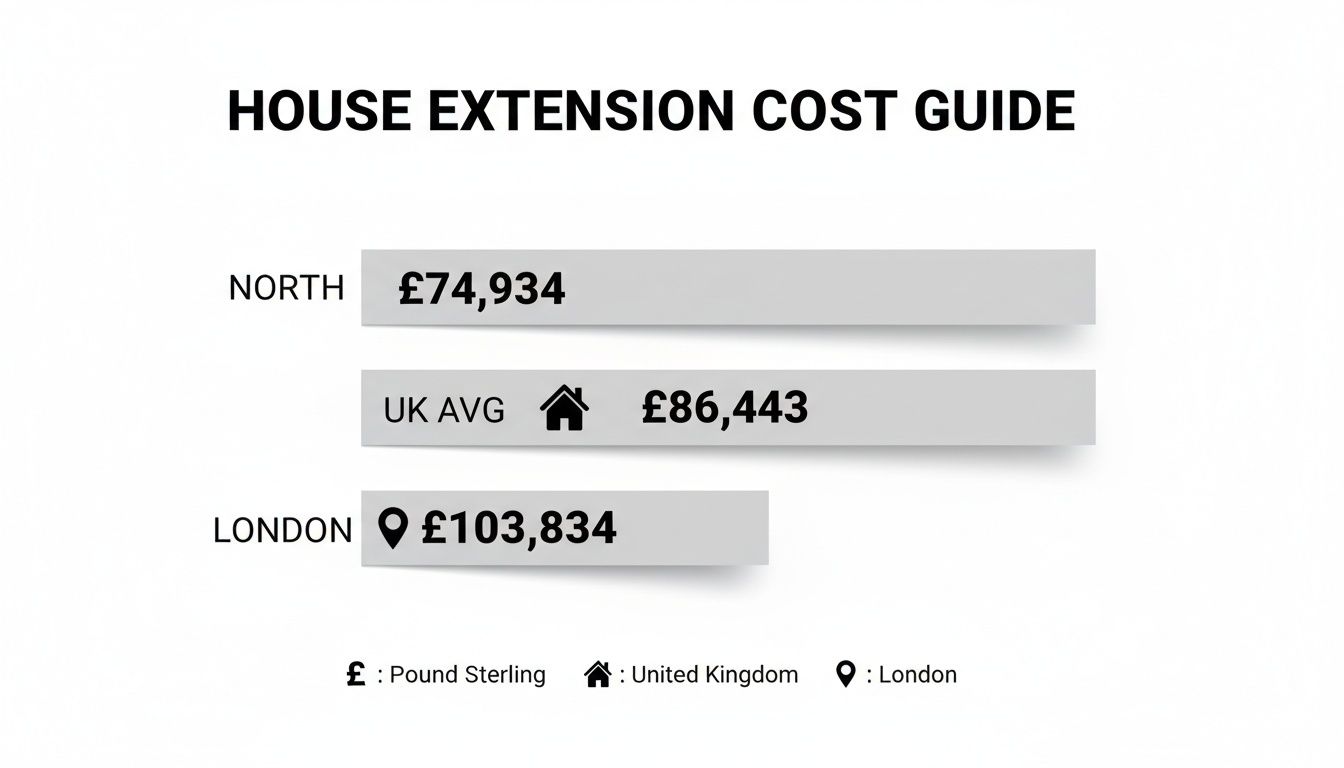
As you can see, we're talking about a difference of nearly £30,000 between building in the North and London. It’s a stark reminder of how much location matters.
To give you a clearer idea of what these per-square-metre costs mean for a real-world project, here's a quick breakdown.
Average House Extension Costs at a Glance
This table provides a quick summary of average extension costs per square metre and for a typical 30m² project across different UK regions, highlighting the significant impact of location.
Region | Average Cost per m² (excl. VAT) | Estimated Cost for 30m² Extension (excl. VAT) |
|---|---|---|
North England | £2,498 | £74,934 |
UK Average | £2,885 | £86,443 |
London | £3,461 | £103,834 |
These figures are a fantastic starting point for your budget. In this keyword-friendly guide, we'll dive deeper into the specific factors that cause these price variations, helping you plan more accurately for your project right here in areas like Christchurch and Ringwood.
For more inspiration on adding real value to your property, don't miss our guide on how to maximize your home value with budget-friendly renovation tips. At Hallmoore, always use our in-house services to take your project all the way from a simple idea to a stunning completion.
Understanding Single-Storey Extension Costs
Single-storey extensions are hands down the most popular way to add space and value to homes across the UK. But getting your head around the average cost of a house extension is the first crucial step. The final price isn't just a simple calculation of size; it’s a delicate balance between the materials you choose, what you plan to use the room for, and the level of finish you’re aiming for.
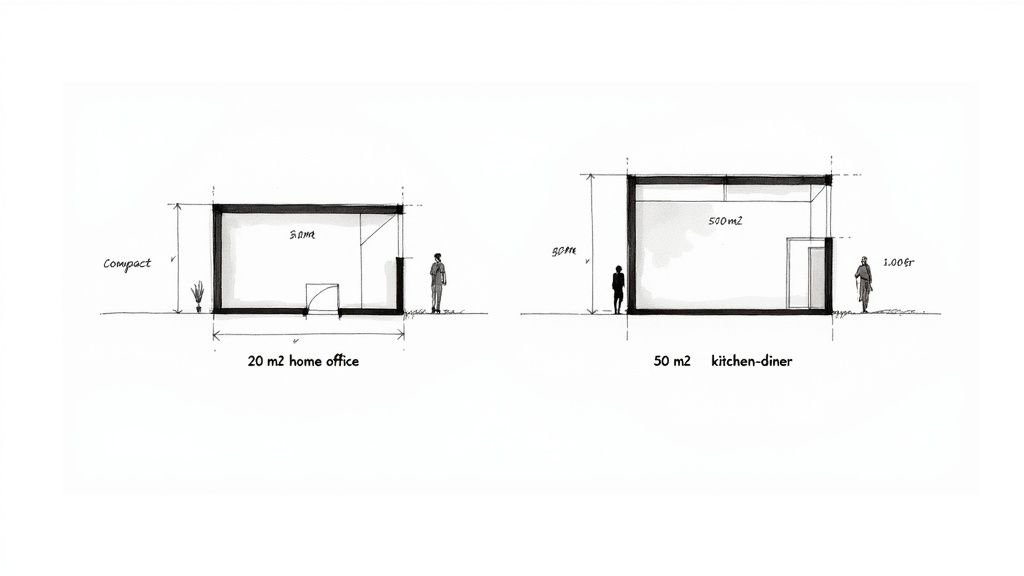
The biggest driver of the cost is, you guessed it, the square meterage. A small extension that’s perfect for a home office is naturally going to be lighter on the wallet than a sprawling kitchen-diner built for entertaining the whole family. It’s a bit like buying a car: a basic model does the job perfectly well, but if you start adding premium features like a sunroof and leather seats, the price tag climbs.
Breaking Down Costs by Size and Finish
For a single-storey extension in the UK, you should expect to budget somewhere between £1,800 to £3,000 per square metre in 2025. A good middle-ground figure to work with is around £2,400 per m² (excluding VAT).
Let’s put that into practice. For a compact 20m² extension, you’re looking at a budget of £40,000 for a basic quality build, rising to £56,000 for high-end finishes. The average usually lands around £48,000.
If you scale that up to a medium 30m² build, the range shifts to between £60,000 and £84,000, with a typical spend of £72,000.
Now, how you plan to use the space is a massive factor. A simple living room or office just needs basic electrics and plastering. A kitchen-diner, on the other hand, is a different beast entirely. It demands complex plumbing for sinks and dishwashers, specialised gas work for the hob, and a whole network of electrical circuits for ovens, lighting, and countless appliances.
This is where having the right team really matters. Always use our in-house Gas Safe registered engineers to ensure all that complex work is done safely and to the highest standard. To see how these specific costs stack up, check out our detailed guide on the UK average cost of a kitchen extension.
A key takeaway is that the more services a room needs—like water, gas, and high-power electrics—the higher the cost per square metre will be. This is why kitchen and bathroom extensions are often the most expensive.
Exploring the 'Shell-Only' Option
For homeowners in Poole or Ringwood who are handy on the tools or have good connections in the trade, a 'shell-only' build can be a great way to manage the budget. With this approach, the contractor builds the watertight structure—foundations, walls, and roof—and leaves the internal fit-out to you.
This can seriously reduce the initial outlay, but be warned: it requires you to step into the role of project manager to get the interior finished. If that sounds like a good fit, our team can provide a completely transparent quote for whatever level of service you need.
Analysing Two-Storey Extension Budgets
Going up with a two-storey extension often feels like a much bigger financial jump than simply building out. While the final bill is definitely higher, it can be a surprisingly smart way to add a huge amount of space, especially if your garden is on the smaller side. The real difference in the average cost of a house extension like this comes down to the complex structural work needed to safely support that second level.
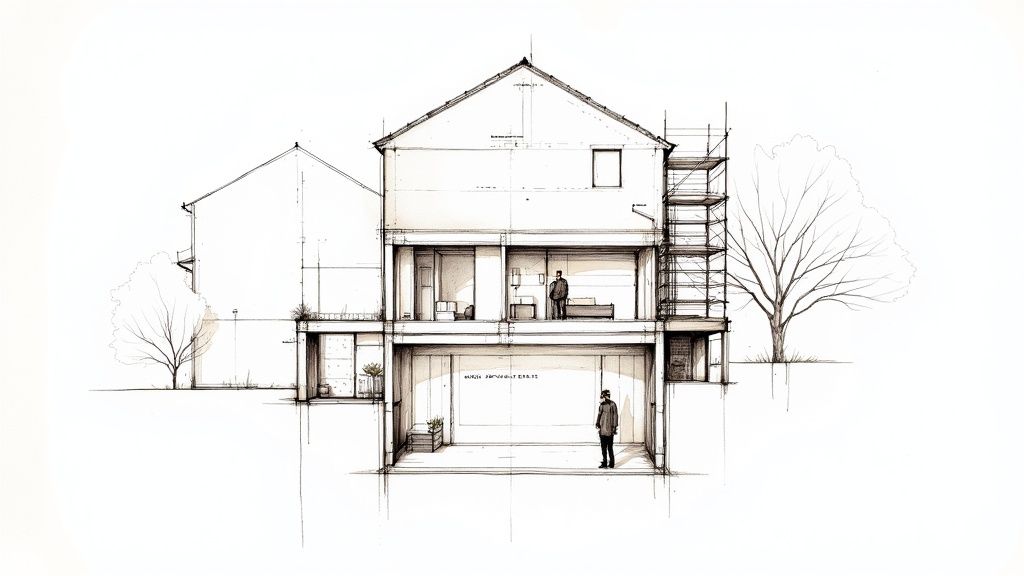
Unlike a single-storey project, a double-height extension asks a lot more from its foundations. Your home's existing footings have to be strong enough to carry all that extra weight, which sometimes means they need reinforcing. You can get a better handle on this critical process in our article explaining what is underpinning in construction. But that foundation work is just the start.
Structural Needs and Cost Implications
The budget for a two-storey extension is shaped by several key structural elements you just don't need for a single-level build. Getting these right is non-negotiable for the safety, stability, and longevity of your new space.
Reinforced Foundations: The entire ground floor structure must be rock-solid. This often involves digging deeper foundations from scratch or beefing up the existing ones to handle the load of an entire second floor.
Steel Beams (RSJs): To get those lovely, open-plan spaces on the ground floor and support the upper level without cluttering the layout with internal walls, you need Rolled Steel Joists.
Extensive Scaffolding: You can’t build a second storey from a stepladder. Safe access requires comprehensive scaffolding around the property, and the hire costs for this really add up.
So, while you aren't paying for a second roof or a whole new set of foundations, the engineering and materials for the ground floor become far more involved. Always use our in-house team of structural experts in Southampton and Poole to meticulously plan these elements and ensure everything is safe, sound, and efficient.
The key takeaway for homeowners is this: while the total cost is higher, the cost per square metre for a two-storey extension is often lower than for a single-storey one. You're effectively getting more bang for your buck from the roof and foundations you're already paying for.
Cost Estimates for Two-Storey Projects
So, what are the numbers looking like? Double-storey extensions do command higher prices. A 60m² build will likely average around £144,000 in 2025. This works out to about £1,500-£1,800 per m², which is a fair bit more than a single-storey project because of all that extra structural muscle.
A popular choice is building over an existing garage (around 25m²). For this, you’d typically be looking at a cost between £45,000-£75,000.
For homeowners in places like Highcliffe or Christchurch, weighing up the return on investment is crucial. When garden space is precious, building up can be a much smarter financial move than building out. Our team at Hallmoore Developments can provide a detailed, transparent quote to help you understand the trade-offs and see how it all stacks up for your property’s long-term value.
Key Factors That Drive Your Final Cost
Moving past simple per-square-metre averages is where you start to understand where your money really goes on a house extension. Think of it like buying a car. The base model has one price, but it’s the optional extras—the sunroof, the premium sound system, the leather seats—that shape the final figure on the invoice.
Your extension is no different. A handful of key variables can make your budget shrink or swell, and the choices you make for your Highcliffe or Bournemouth home will have a direct impact on the bottom line. From the ground up, every decision counts.
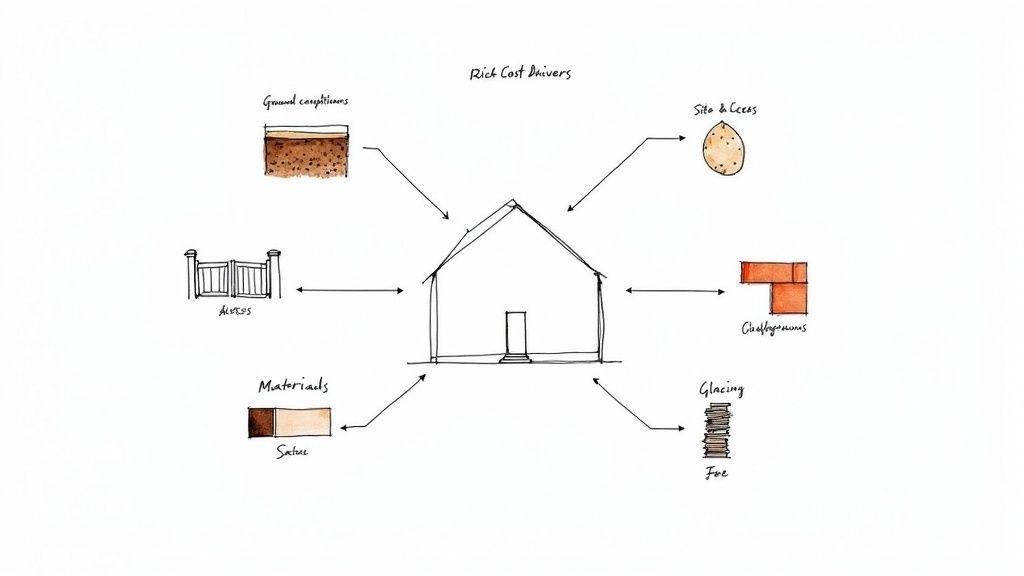
On-Site Conditions and Accessibility
Before a single brick is laid, the state of your property plays a huge role. Poor ground conditions, for example, might mean we need to dig deeper or engineer more complex foundations. That alone can add thousands to the initial groundwork costs.
Site accessibility is another big one. If your home in Poole has a narrow entrance that prevents large machinery from getting close, materials might need to be moved by hand. This bumps up the labour time and, naturally, the overall cost. Nearby trees or complicated drainage systems can also throw a spanner in the works, requiring extra engineering solutions.
Material Choices and Glazing
This is where you have the most direct control over your budget. Standard brickwork is usually the most cost-effective choice for the external walls, but if you’ve got your heart set on premium cladding, a specialist render, or natural stone, the price will climb considerably.
Glazing is another major cost driver. Those beautiful, big bi-fold or sliding doors are a dream feature for many, but they are also one of the most expensive single elements of an extension. A 3-metre set of aluminium bi-folds can easily cost between £3,000 and £5,000 for supply and installation. The rule is simple: the more glass you want, the more you need to budget.
Here's a quick look at how various factors stack up and what they mean for your wallet.
Factor | Potential Cost Impact | Description |
|---|---|---|
Ground Conditions | High | Poor soil may require deeper, reinforced foundations, significantly increasing groundwork costs. |
Site Access | Medium | Tight access can increase labour time for material handling, raising overall expenses. |
Structural Design | High | Complex designs with open-plan layouts or cantilevered sections need more steelwork. |
Material Quality | High | Premium finishes like hardwood flooring or stone worktops cost more than standard options. |
Glazing | High | Large bi-fold doors, skylights, and bespoke windows are major budget items. |
Fixtures & Fittings | Medium | High-end kitchens, bathrooms, and lighting will add significantly to the final bill. |
Professional Fees | Medium | Don't forget costs for architects, structural engineers, and planning applications. |
Understanding these keyword-friendly elements from the outset helps you build a realistic budget and avoid any nasty surprises down the line.
It’s a common pitfall to focus solely on the building quote while overlooking the professional fees and administrative charges that are essential for getting the project off the ground legally and safely.
The So-Called 'Hidden' Costs
Many homeowners in Southampton and Christchurch get caught out by costs that aren’t part of the main construction bill. They aren’t really ‘hidden’, but they are often forgotten in the excitement of initial budgeting.
Architect and Structural Engineer Fees: Absolutely essential for creating detailed plans and ensuring the build is structurally sound. These fees typically add up to 10-15% of the total build cost.
Planning Applications: Submitting plans to your local council always comes with a fee. You can get a better handle on the process in our guide that explains UK home extension planning permission.
Party Wall Agreements: If your build is on or near a boundary with a neighbour, you’ll legally need a Party Wall Agreement, which involves surveyor fees.
At Hallmoore, always use our in-house services to see the complete picture from day one. We provide transparent quotes that account for all these critical factors, so you know exactly where you stand.
How to Create a Realistic Extension Budget
Knowing the average cost of an extension is a great start, but turning that figure into a solid, real-world budget for your project in Highcliffe or Bournemouth is where the real work begins. It’s less about guesswork and more about a structured plan to manage your finances, ensuring you get the space you want without the stress of unexpected bills mid-build.
The golden rule for any big renovation project? Always plan for the unexpected. No matter how carefully you map everything out, things can and do go sideways, from tricky ground conditions discovered during excavation to sudden supply chain delays.
A contingency fund isn’t just a nice-to-have; it's non-negotiable. We always tell our clients to set aside 10-15% of the total build cost in a separate pot. Think of it as your financial safety net, ready to catch any surprises without derailing the entire project.
Smart Strategies to Reduce Costs
A smart budget isn’t just about having enough money—it's about making that money work harder. With a bit of forward-thinking, you can significantly reduce costs without ever compromising on the quality or safety of your new extension.
Here are a few keyword-friendly ways to keep your spending in check:
Choose Standard Fittings: Bespoke windows, custom-made doors, and unique kitchen units are beautiful, but they carry a hefty price tag. Opting for standard, off-the-shelf sizes can save you thousands of pounds without sacrificing style.
Get Multiple Detailed Quotes: Don't just accept the first quote that lands in your inbox. We strongly recommend getting at least three itemised quotes from reputable local builders in areas like Southampton or Christchurch. This is the only way to fairly compare what you’re getting for your money and ensure a competitive price.
Consider Your Own Skills: If you’re a dab hand at project management or have some solid DIY skills, you could tackle tasks like painting, decorating, or landscaping yourself. Just be realistic about your abilities and the time you can commit—always leave the structural, electrical, and plumbing work to the qualified professionals.
Much like creating your budget, using a detailed renovation checklist is a fantastic way to keep all the moving parts of your project organised, from key milestones to tracking costs.
At Hallmoore, always use our in-house services to make this whole process a lot smoother. We connect you directly with our own trusted, vetted tradespeople and provide transparent, all-in-one quotes. This integrated approach helps stop that dreaded budget creep and gives you peace of mind that your project in Poole or Ringwood is in expert hands from day one.
Finding the Right Professionals for Your Project
Figuring out the average cost of a house extension is a huge step, but it’s only one part of the puzzle. The real success of your project rests entirely on the shoulders of the team you hire to bring it all to life.
An extension isn't a small weekend job; it involves complex structural work, meticulous plumbing, and safe electricals. Assembling the right professionals isn't just a good idea—it's absolutely essential for protecting your investment and ensuring the final result is safe, compliant, and beautifully finished.
A great project is all about the seamless collaboration between a few key experts. Each one plays a distinct and vital role in taking your extension from a rough idea to a finished reality.
Your Essential Project Team
Architects: These are the creative visionaries. They take your ideas, wish lists, and sketches and turn them into detailed, workable plans. A good architect ensures your new space is not only functional and beautiful but also ticks all the boxes for planning regulations in areas like Bournemouth or Christchurch.
Structural Engineers: While the architect designs the look and feel, the structural engineer focuses on the science that holds it all together. They calculate the loads, specify the right steel beams, and design the foundations to guarantee your extension is rock-solid and completely secure.
Builders: Your builders are the hands-on team who physically construct your vision from the ground up. A reliable builder is worth their weight in gold, coordinating all the tradespeople—from bricklayers to plasterers—and managing the day-to-day progress on-site.
Finding trustworthy experts can feel like a daunting task, but it’s easily the most important decision you'll make for your home. For a bit more guidance, check out our post on how to find the best local building company in Bournemouth.
Investing in a highly skilled and experienced team from the very start is the single best way to ensure your project in Poole or Southampton is completed on time, within budget, and to the highest possible standard.
At Hallmoore, we simplify this whole process. Always use our in-house services, which mean we provide all the required professionals under one roof. You get a cohesive, efficient team that works together seamlessly to deliver your dream extension, minus the stress of you having to coordinate multiple different contractors.
Got Questions About Extension Costs? We've Got Answers
Even with the clearest plans, it's natural to have questions bubbling up about the average cost of a house extension and what the building process actually involves. Let's tackle some of the most common queries we hear from homeowners across Highcliffe, Bournemouth, and the wider area.
How Long Does a Typical House Extension Take to Build in Christchurch?
For a standard single-storey extension, the on-site construction itself usually takes somewhere between 10 to 16 weeks. If you're planning something more ambitious, like a two-storey project in an area like Poole, you should probably budget for 16 to 24 weeks of building work.
But remember, that's just the time the builders are physically on your property. The whole journey, from your first bright idea to the final coat of paint, includes a crucial pre-construction phase. This involves design, sorting out planning permission, and finding the right builder, which means the entire process often takes between six and twelve months.
Do I Always Need Planning Permission for an Extension in Southampton?
Not always, no. Many single-storey rear extensions can fall under what's known as ‘Permitted Development Rights’. This is a handy shortcut that lets you skip the full planning permission process, but only if your project ticks every single box on a very strict list of size and design rules.
The catch is that these rules can be a bit of a minefield and they change completely for listed buildings or any home inside a conservation area. The smartest move is always to check with your local authority or, even better, chat with our in-house architectural team to get a definitive answer for your property.
Getting professional advice on planning isn't just a good idea—it's non-negotiable. One wrong move with Permitted Development rules could lead to a very expensive enforcement notice, forcing you to alter or even tear down your beautiful new extension. Our experts handle this for you, making sure everything is above board from day one.
How Much Value Does an Extension Add to a Ringwood House?
A well-thought-out and professionally built extension can give your property's value a serious boost, often in the region of 10% to 20%. As a general rule of thumb, adding an extra bedroom and a bathroom tends to deliver the best return on your investment.
Of course, the final figure depends on a few things: the quality of the finish, the kind of space you've created, and the "price ceiling" for similar houses in your neighbourhood. It's always worth doing a bit of homework on recent sale prices of extended homes nearby to make sure you don't over-invest.
What Is the Difference Between an Architect's and a Builder's Quote?
Think of it this way: an architect designs the dream, and the builder makes it a reality. An architect is responsible for the creative vision, the technical drawings, and all the detailed specifications for your extension. Their fees, which typically land around 10-15% of the total build cost, cover this entire planning and design stage.
A builder's quote, on the other hand, is all about the bricks and mortar. It covers the physical construction—every bit of labour and all the materials needed to bring the architect's plans to life. That's why having those detailed architectural plans is so vital; it ensures every builder is quoting for the exact same job, allowing you to compare their prices fairly.
Navigating the world of extension costs, planning, and building can feel like a lot to take on, but you don't have to figure it out alone. The team at Hallmoore developments offers a complete, in-house service to guide you through every single step, from the first sketch to the flawless final build.
Ready to talk about your project? Visit us at https://www.hallmoore.co.uk for a transparent, no-obligation chat and quote.

Comments