.png)
What Is Skimming In Plastering? A Bournemouth Homeowner Guide
- Dan Hall
- Jan 12
- 9 min read

Let's talk about one of the most common jobs our in-house service team gets called out for in Hampshire and Dorset: skimming. You’ve probably heard the term, but what is skimming in plastering, really?
In simple terms, skimming is the art of applying a very thin, final layer of finish plaster to a wall or ceiling. It’s not about adding thickness or structure; it’s all about creating a flawless, glass-like finish that’s perfectly smooth and ready for a lick of paint or some new wallpaper. Our team can see to this for you, ensuring a professional result.
Uncovering The Basics Of Plaster Skimming
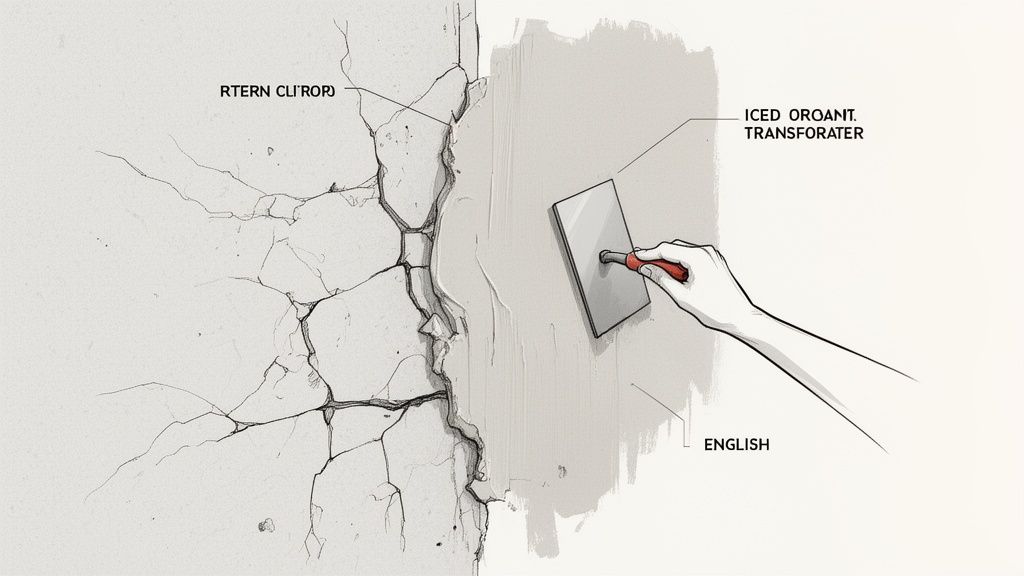
Think of a plaster skim, often called a "skim coat," as the final beautifying step for your walls. It’s the difference between a decent finish and a truly professional one, which is why our in-house services are so popular.
A good analogy is icing a cake. The skim coat is that final, smooth layer of icing that hides any little bumps or imperfections in the sponge beneath. It leaves you with a perfect canvas. Our in-house plastering experts are obsessed with getting this stage just right.
This technique is incredibly versatile, making it the go-to solution for many common issues we see in homes across Bournemouth, Christchurch, and the surrounding areas. Whether you're dealing with tired, cracked plaster in an older property or finishing off a new extension with fresh plasterboard, a skim coat delivers that seamless look everyone wants. Our team can see to any of these requirements.
Key Features Of A Skim Coat
Skimming is definitely a skilled job that takes years to master, but understanding its core features helps you know if it's the right choice for your project.
To break it down, here’s a quick overview of what a skim coat involves.
Skimming At A Glance
Attribute | Description |
|---|---|
Purpose | To create an exceptionally smooth surface on new plasterboard or over existing, imperfect walls. |
Thickness | Extremely thin, usually applied in two coats to a total thickness of just 2-3 mm. |
Application | Hand-applied with a trowel and float, requiring a high degree of skill and a steady hand. |
Use Cases | Covering old Artex, repairing minor cracks, finishing plasterboard, or refreshing dated plaster. |
Result | A flat, pristine surface that’s ideal for decorating. |
As you can see, it's all about precision. This method is a cornerstone of the UK plastering industry, which is valued at around £3.2 billion. Even with modern tools, manually applied systems like hand-trowelled skimming remain the top choice for high-quality domestic work. It really shows the value of traditional craftsmanship, something our in-house services pride themselves on.
A perfectly skimmed wall is the essential first step to a professional paint job. If you want to get the next stage right, check out our guide on how to prepare walls for painting like a pro.
Why Skimming Is The Secret To A Flawless Finish in UK Homes
When you're renovating a property, especially in areas like Poole and Christchurch, you'll hear the term 'skimming' a lot. But what is skimming in plastering? Think of it as the key to getting that high-end, smooth-as-glass finish on your walls. It’s the smart way to get the look of brand-new plaster without the mess, time, and expense of tearing everything back to the brick. It's the perfect middle ground between a simple touch-up and a full-scale plastering job that our team can see to.
If you own a character home in Highcliffe, for instance, skimming is a brilliant way to make years of hairline cracks and minor blemishes disappear, bringing old walls back to life. On the flip side, for a new extension in Southampton, a skim coat delivers that flawless, uniform surface that modern design demands. It’s all about giving your walls a fresh start, which has a knock-on effect that lifts the entire feel of a room.
For homeowners and landlords across Hampshire and Dorset, skimming is a game-changer. It’s a cost-effective way to refresh tired walls, boost a property's rental appeal, and breathe new life into existing plasterwork without the upheaval of a complete teardown. Our in-house services can help you achieve this.
Adding Real Value Across Hampshire and Dorset
Imagine you're getting a property ready for the busy Bournemouth rental market. A perfectly smooth, professionally skimmed finish makes a huge difference. It tells potential tenants that the home is well-maintained and can help you achieve a higher rent and fill vacancies faster. It's a small investment in presentation that genuinely pays off.
This kind of quality finish is a big deal in the UK's renovation scene, which is a massive market forecast to hit around £168.6 billion. The steady demand for skilled plasterers shows just how much homeowners value getting the details right. You can read more about the UK construction industry's strong refurbishment growth.
Ultimately, whether you're updating a single room in Ringwood or tackling a whole-house project, skimming is one of the most effective tools in a renovator's toolkit. It’s a practical and affordable route to a perfect finish. To see how this fits into your overall budget, have a look at our complete guide to UK home renovation costs. It will help you see the bigger picture of where this valuable service fits in.
How Professionals Skim A Wall To Perfection
Getting that perfectly smooth, glass-like wall finish isn’t a one-step job. It’s a careful process that blends meticulous prep work with a skilled hand. For homeowners across Southampton and Ringwood who ask how we get such flawless results, it really is a mix of old-school craftsmanship and modern know-how, which our in-house services specialise in.
The real work starts long before a bag of plaster is even opened. A truly perfect finish, whether you plan to paint or wallpaper, depends entirely on the prep. This means a thorough inspection and clean-up of the wall to make sure the new skim coat bonds perfectly. Our own guide on how to prepare walls for plastering dives deep into why this stage is so crucial.
This diagram shows the journey your walls go on when our professional in-house team gives them a skim.
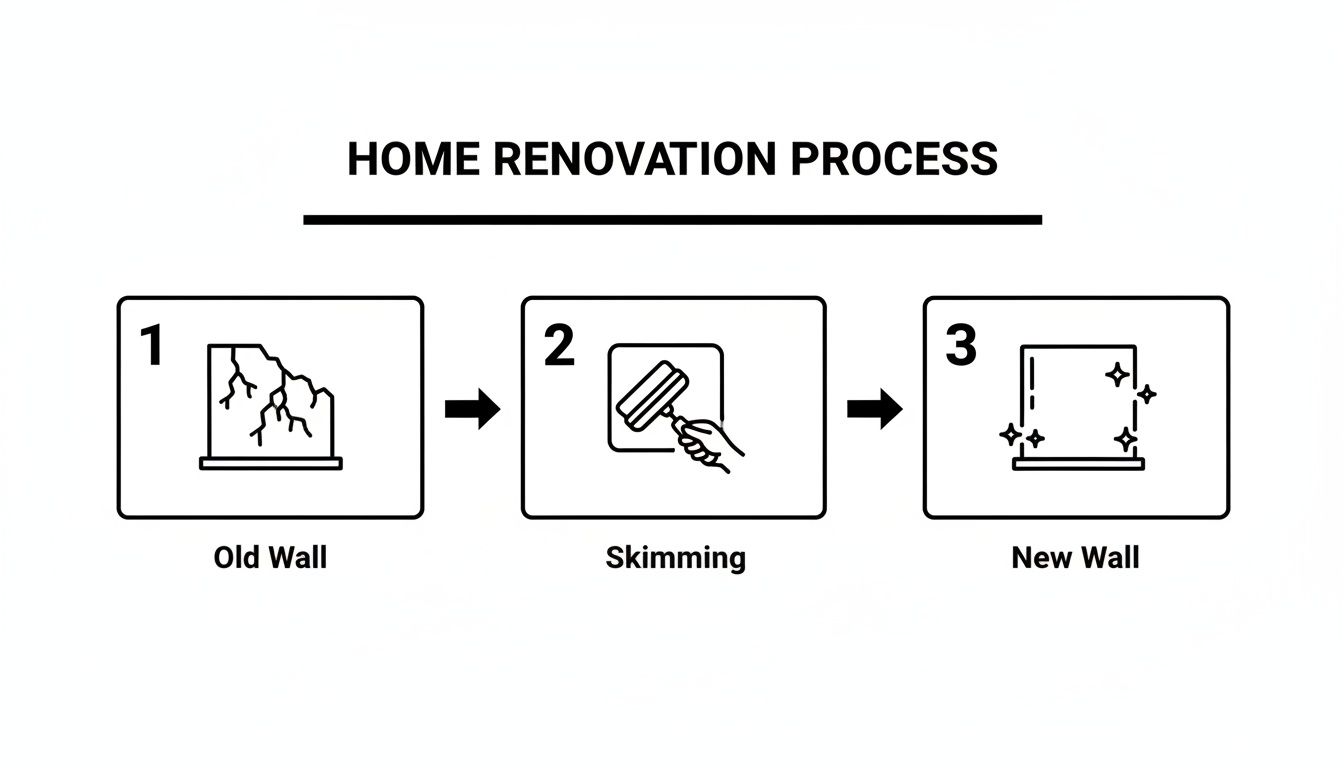
As you can see, we take a tired, uneven surface and transform it into a pristine new wall that’s ready for you to decorate however you like.
The Art And Science Of Application
Once the wall is ready, our plasterers mix the finish plaster to a specific creamy consistency. This is a game of precision; too thick, and it’s a nightmare to work with, but too thin, and it won’t cover properly. Using a hawk and trowel, the first coat goes on with smooth, confident strokes to get even coverage across the entire wall.
The second coat is applied while the first is still tacky—a technique called "wet-on-wet." This lets the two layers bond together seamlessly, creating one solid, durable skim coat.
The final stage is where the real skill comes in. The surface is troweled over and over, compressing and polishing the plaster to squeeze out every tiny imperfection until you’re left with that signature smooth finish. A flawless skim is the foundation of any high-end decorating project, and for more brilliant tips, you can find some excellent professional wall preparation techniques in this helpful guide.
Skimming Vs Plastering Vs Dry Lining Explained
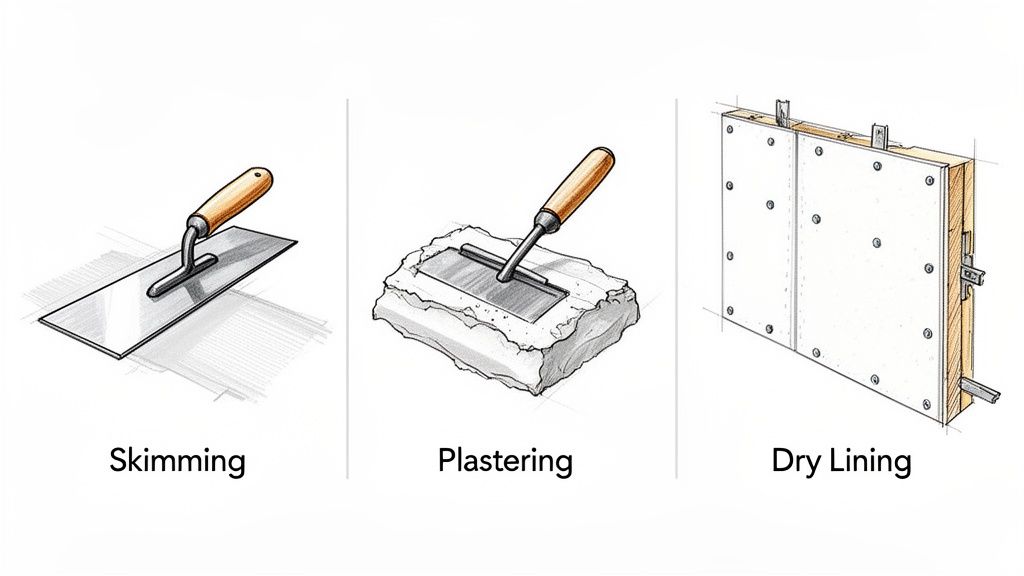
When you're planning a project in Bournemouth or Poole, it’s easy to get tangled up in the jargon. Getting your head around the difference between skimming, plastering, and dry lining is the key to talking about your job with confidence and getting the exact finish you want for your home.
Although they all involve finishing walls, they are worlds apart in what they actually do.
Think of it this way: skimming is the final, delicate touch-up. Traditional plastering is about building up a solid surface from scratch. And dry lining? That’s the modern way of putting up the wall itself. Knowing the difference helps you make smart choices for your home.
Our in-house services are fluent in all three, so we can give you honest advice on the perfect solution for any job, whether it's a small repair in Christchurch or a full-blown extension.
Comparing The Three Main Techniques
To cut through the noise, it helps to see these methods lined up side-by-side. Each has a specific job, and picking the right one comes down to the state of your walls and what you’re trying to achieve.
Here’s a simple table to clear things up.
Choosing The Right Wall Finish: Skimming vs. Plastering vs. Dry Lining
Technique | Best For | Typical Thickness | Main Purpose |
|---|---|---|---|
Skimming | Creating a glass-smooth finish over existing plaster or plasterboard. | 2–3 mm | Cosmetic finishing and surface perfection. |
Plastering | Applying a thicker base coat and finish to bare brickwork or blockwork. | 11–13 mm | Building up a new, solid wall surface from scratch. |
Dry Lining | Quickly constructing internal walls with plasterboard sheets. | 12.5 mm+ | Fast construction and providing a ready-to-skim surface. |
As you can see, skimming is the final flourish, not the foundation. It’s always applied over a surface that’s already there, like old-but-sound plaster or the plasterboard from a new dry lining job.
If your walls have more serious issues like big, ugly cracks, skimming isn't the answer just yet. Our guide on how to repair cracked ceiling plaster like a pro is a much better place to start before you even think about the finish.
For homeowners in Highcliffe or Ringwood, the main thing to remember is that these aren’t interchangeable services. Our team can pop over, assess your walls, and explain exactly which approach will give you the best, longest-lasting result for your home.
Why You Should Hire A Professional Plasterer
While the thought of a DIY project can be tempting, it’s crucial to understand that plaster skimming isn't just another task to tick off the list—it's a genuine craft that takes years to master. Getting that perfectly flat, glass-smooth finish you see in magazines isn't as simple as watching a few videos and grabbing a trowel. That's why our in-house services are here to help.
The truth is, skimming is deceptively tricky. From mixing the plaster to the exact consistency to applying it with the right, even pressure, there are a dozen points where it can all go wrong. Most DIY attempts, unfortunately, end up looking exactly like that: a DIY attempt.
The real cost of a DIY skim often shows up after the paint goes on. Every trowel mark, uneven patch, and blemish will stand out, spoiling the entire look of your room. In the end, you often have to pay a professional from our in-house service to fix the mistakes anyway.
Avoid The Pitfalls And Save Yourself The Hassle
Bringing in a professional plasterer from our in-house services for your project in Bournemouth, Southampton, or Christchurch simply removes the guesswork and the stress. You skip the mess, the frustration of trying to learn a trade in a weekend, and you get a guaranteed result.
Our dedicated in-house team at Hallmoore ensures a perfect finish, every single time. Here’s what you get when you let our experts take over:
A Flawless Finish Our team has the muscle memory and experience to deliver a perfectly smooth, seamless surface that’s ready for paint, free of any imperfections.
Serious Time Savings We can complete a job efficiently and cleanly, saving you days of hard labour and keeping your renovation project firmly on schedule.
A Clean And Stress-Free Process Our in-house services handle everything from the prep work to the final clean-up, leaving you with nothing but perfectly smooth walls.
For homeowners across Poole, Ringwood, and Highcliffe, hiring a professional isn't a luxury; it’s an investment in a quality result that will last for years. If you want a perfect finish without the risk, get a straightforward plastering quotation from our team and our in-house services will see to it.
Your Local Plastering Questions Answered
When you're planning a renovation, it's completely normal to have a few questions. To give you a clearer picture, we've pulled together the most common queries we get about plaster skimming from homeowners in Christchurch, Bournemouth, and Southampton. Here are some straightforward, practical answers.
How Much Does It Cost To Skim A Room In The Bournemouth Area?
The final cost for skimming a room depends on a few things: the size of the room, the state of the walls, and how complex the job is. Around Bournemouth or Poole, most professional plasterers will either charge by the square metre or give you a day rate for their time.
For a standard-sized room, you might be looking at a few hundred pounds, but that's just a ballpark figure. The only way to get a solid number is to have our in-house service team come out and give you a detailed, personalised quote. Our team provides completely transparent, no-obligation estimates that are tailored to your project, so you know exactly what to expect.
How Long Does Skim Plaster Need To Dry Before Painting?
This is where patience really pays off. After your walls have been freshly skimmed, they typically need 3 to 7 days to dry out properly before you can even think about painting. This drying time can shift a bit depending on things like how well the room is ventilated, the humidity in the air, and exactly how thick the plaster was applied.
We always give specific advice for each job, but a good rule of thumb is to get some gentle airflow going by cracking a window open. Crucially, don't be tempted to blast the radiators on high straight away, as intense heat can make the new plaster dry too fast and lead to cracking.
Can You Skim Directly Onto Any Wall Surface?
Skimming is an incredibly versatile finish, but good preparation is absolutely non-negotiable if you want a result that lasts. It works brilliantly over old plaster, fresh plasterboard, and even those dated Artex ceilings, provided they're prepped correctly.
However, you can't just skim over anything. Walls that are damp, unstable, or covered in a glossy paint need treating first. This usually involves applying a bonding agent like PVA to give the new plaster something to grip onto. Our in-house service team always does a thorough check first to figure out the right prep work needed for a flawless, durable finish that will stand the test of time.
When you need a perfect finish without the guesswork, trust the experts at Hallmoore developments. Our skilled in-house plasterers serve the entire Dorset and Hampshire area, delivering flawless results every time. Visit us online to discuss your project and get a free, no-obligation quote today!
Comments