.png)
How to Manage Construction Projects Like a Pro in Bournemouth, Highcliffe and Southampton
- Dan Hall
- Feb 13
- 18 min read

Getting the foundations right is everything when it comes to a successful construction project. Before a single brick is laid or a wall comes down, three crucial steps need your full attention: nailing down your vision, setting a rock-solid budget, and getting the green light from the local council. Get these right, and you’re starting on the front foot.
Defining Your Vision Before Breaking Ground in Bournemouth
Kicking off a build, whether it's a sleek extension in Christchurch or a total gut-and-rebuild in Poole, can feel overwhelming. The secret isn't in the tools or the timeline; it's in the careful, detailed planning that happens way before the work starts. This is where you turn your daydreams into a workable plan.
Your first job is to create a detailed project brief. This isn't just a wish list; it’s the instruction manual for your entire project. It needs to spell out exactly what you're aiming for – from the overall vibe and function down to the nitty-gritty details like tap finishes, flooring choices, and where the new sockets should go. "A bigger kitchen" is a starting point, but a strong brief says, "an open-plan kitchen-diner with a central island, bi-fold doors to the garden, and integrated appliances." See the difference?
This brief is your most important communication tool. It ensures everyone—from our team at Hallmoore Developments to your architect and suppliers—is on the exact same page. This level of clarity stops misunderstandings in their tracks, slashes the need for expensive changes down the line, and gives everyone a clear definition of what "done" looks like. Our in-house services are designed to help you through this crucial stage.
Creating a Realistic Budget in Southampton
With a clear vision in hand, it's time to talk money. One of the most common traps homeowners fall into is underestimating the true cost of their project, which can bring everything to a grinding halt. A proper budget for a build in areas like Ringwood or Highcliffe needs to cover every single expense, not just the big, obvious ones.
Your budget should account for:
Materials: Everything from the bricks and timber to the plaster, paint, and final finishes.
Labour: The cost for every single tradesperson, including groundworkers, electricians, plumbers, and decorators.
Professional Fees: Don't forget to factor in payments for architects, structural engineers, and building control inspectors.
Permits and Applications: Council fees for planning permission and building regulations approval soon add up.
Contingency Fund: This is absolutely non-negotiable. You must set aside 10-15% of the total project cost for the unexpected. Trust me on this.
A project without a contingency fund is a project waiting for a crisis. Unexpected damp, tricky ground conditions, or sudden material price hikes can and do happen. This fund is your financial safety net that stops a small problem from derailing the whole build.
To help you get started, here’s a simple checklist to guide those crucial first steps. Our in-house services can provide detailed costings to make this process easier.
Your Initial Project Planning Checklist
Planning Stage | Key Action | Why It Matters |
|---|---|---|
Vision & Brief | Write a detailed document with specifics on layout, style, fixtures, and finishes. | Creates a clear, shared goal for everyone involved and prevents costly misunderstandings. |
Budgeting | List all known costs (materials, labour, fees) and add a 10-15% contingency fund. | Ensures financial feasibility and provides a buffer for unexpected issues, preventing project stalls. |
Permissions | Research whether you need Planning Permission or just Building Regulations approval. | Avoids legal trouble, fines, and the risk of having to undo completed work. It’s a legal must. |
Initial Quotes | Speak to 2-3 reputable local builders to get an early feel for costs. | Helps validate your budget and allows you to compare different approaches and expertise. |
This initial groundwork might feel slow, but it's the most valuable time you'll spend on the entire project, ensuring a much smoother journey from start to finish.
Navigating Local Planning Permissions in Christchurch
Finally, you have to tackle the world of local council rules. Not every project needs planning permission, but a surprising number do, and pretty much any structural work will need to comply with Building Regulations. It’s absolutely vital to know what approvals your project needs before any work begins. For a really detailed look at this, have a look at our renovating a house checklist.
This is where having an experienced local builder in your corner makes a huge difference. At Hallmoore Developments, we’re constantly managing projects across Poole, Bournemouth, and Southampton, so we know the specific quirks and requirements of the local councils. We can advise you on whether your project is likely to fall under 'Permitted Development' rights or if you'll need a full planning application, making sure you stay on the right side of the law from day one. Our in-house services include managing these applications for you.
Getting your vision, budget, and permits sorted is the bedrock of your project. This simple diagram shows how they all flow together.
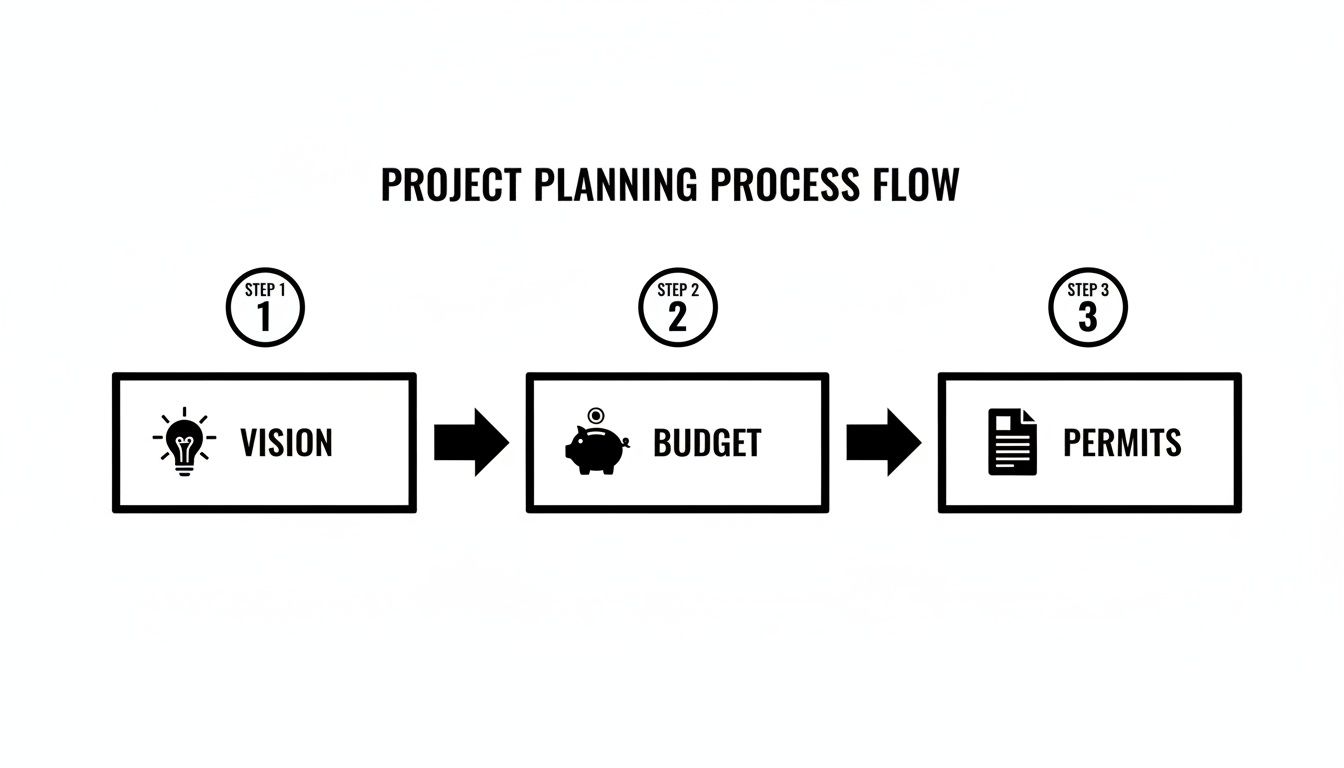
As you can see, each step builds on the last, creating a solid, logical foundation for everything that follows.
Finding and Vetting the Right Building Partner in Southampton and Ringwood
Once you've nailed down your vision and your budget, the next big step is choosing the right builder. This decision will genuinely shape the entire project. Get it right, and you’re on track for a smooth process with quality you can trust. Get it wrong, and well... it can get complicated.
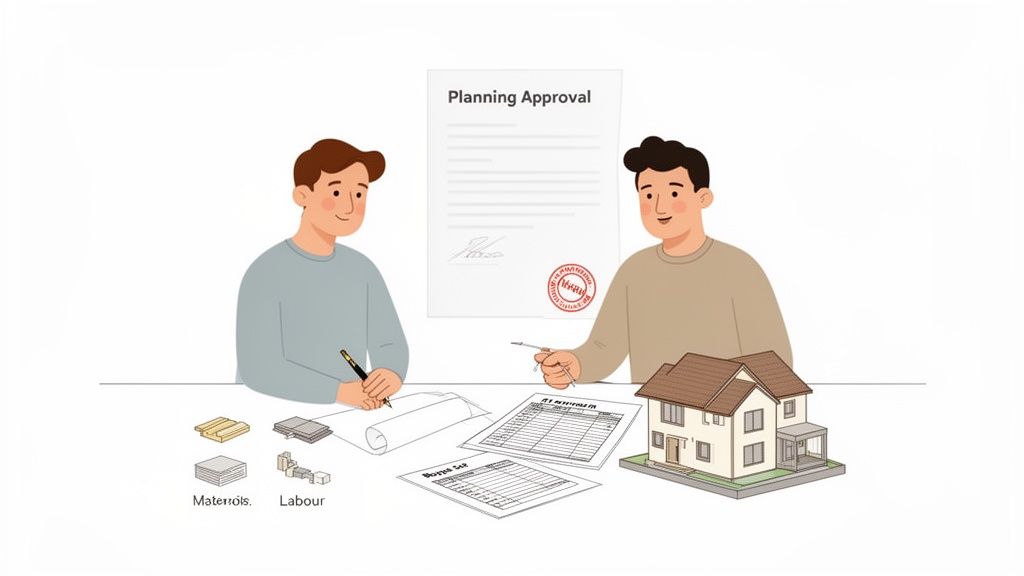
Not all builders are created equal. Some excel at extensions, others at new builds. You need someone with proven experience in your area—whether that's Poole, Christchurch, or Highcliffe—who knows the local regulations inside out.
Gathering Local Recommendations
Nothing beats genuine feedback from your local network. Neighbours, friends, and community groups are often your best source for builders they've actually worked with and trust. Online platforms like Trustpilot and Checkatrade are also useful for seeing a pattern of real client reviews over time.
Ask friends in Poole or Highcliffe about their experiences—the good, the bad, and the ugly.
Don't just look at photos; ask if you can visit a recently completed job. This lets you see the quality of their workmanship up close.
Look for consistently high ratings, ideally 4.5+ stars, over several years. A long track record speaks volumes.
“Seeing a builder’s work in person gives you a level of confidence you simply can’t get from a brochure or a website.”
This hands-on approach helps you spot the quality of the finish and the standards they work to, giving you a solid shortlist of recommended builders.
Key Questions to Ask Every Builder
Now you have a few names, it's time to dig a little deeper. Think of it as an interview process for one of the most important jobs in your home.
Local Experience: Ask them to show you recent projects in Ringwood or Boscombe. You want to know they understand the local planning quirks.
Insurance Details: Don't be shy about asking for their insurance documents. Check they have public liability and employer’s liability cover for at least £5 million.
Portfolio and References: Request photos and contact details for clients who had similar work done, like an extension in Bournemouth. Then, actually call those references.
“A builder’s past projects speak louder than promises. If they’re proud of their work, they’ll be happy to show it off.”
Getting clarity on their insurance and portfolio helps you gauge their reliability and see the real-world results they deliver.
Spotting the Red Flags
Just as important as knowing what to look for is knowing what to avoid. A vague quote with minimal detail is often a sign of hidden costs to come. High-pressure sales tactics—like pushing you to sign on the spot—usually mean they're more interested in the sale than the project.
Common Red Flags to Watch Out For:
Quotes that don’t have a clear, line-by-line breakdown of costs.
Demands for large upfront payments before any work has even started.
Reluctance to provide a written contract, guarantees, or warranty information.
Being aware of these warning signs from the outset will protect your budget and your timeline.
A Cautionary Tale from Highcliffe: A homeowner we know accepted a suspiciously low quote for their extension, only to be hit with a 25% price hike midway through for items "not included" in the original scope.
This is a perfect example of why you need to scrutinise every single line of a quote before you agree to anything.
Why a Fair Contract is Non-Negotiable
A solid, robust contract is your best friend. It should lay out the scope, timeline, and costs in plain English, leaving no room for interpretation.
Insist on a detailed payment schedule that’s tied to specific, completed milestones. The contract must also include a clear process for handling variations or changes—this prevents you from being stung with surprise bills later on.
A good contract will always include:
Scope of Work clearly defined.
Payment Schedule linked to completed stages.
Variation Clause with agreed-upon hourly or day rates for extra work.
Insurance and Warranty statements.
When everything is spelled out, there’s no opportunity for anyone to move the goalposts once the project is underway.
The Advantage of Full-Service Builders
Working with a company like Hallmoore Developments, which has all key trades in-house, can be a game-changer. It eliminates the logistical nightmare of coordinating separate electricians, plumbers, and plasterers.
Our Gas Safe registered plumbers and expert plasterers all work under a single project manager. This cuts out subcontractor delays and streamlines the whole process. You get one person to call for updates, snagging issues, and compliance checks. Our in-house services make managing construction projects simpler.
Gas Safe Assurance: Total peace of mind that all gas and heating work is fully compliant and meets legal standards.
Single Point of Accountability: One contract, one manager, one clear line of communication. No finger-pointing between different trades.
Streamlined Scheduling: All trades are coordinated efficiently to avoid dead time and prevent frustrating bottlenecks.
Comparing Builder Approaches
Feature | In-House Builder | Multi-Contractor Approach |
|---|---|---|
Single Point of Contact | Yes | No |
Contract Clarity | High | Medium |
Scheduling Ease | Streamlined | Complex |
Insurance Coverage | Bundled | Varied |
Snagging Process | Integrated | Decentralised |
This quick comparison highlights why so many homeowners in Bournemouth and Southampton prefer the simplicity and accountability of a full-service company.
For more detailed advice, check out our guide on how to find the best local building company in Bournemouth.
Choosing and vetting your builder is arguably the most critical step. With the right partner in place, you’re setting the stage for a project that finishes on time and on budget.
Tips for Finalising Your Choice
Before you sign on the dotted line, run through these final checks:
Confirm the deposit is capped at a reasonable level, typically 10%, to protect your funds.
If gas work is involved, ask to see a current Gas Safe certificate.
Request a clear build programme with achievable dates for each trade.
A bit of rigorous checking now can save you from major headaches down the line. Next, we’ll look at how to build a realistic project schedule to keep everyone on track.
Creating a Realistic Project Schedule
Let's be honest, a well-managed schedule is the absolute backbone of any successful build. Once you've shaken hands with a builder and signed a contract, the game shifts. Now, it's all about creating a detailed timeline that turns those architectural drawings into a tangible reality.
This isn't just a list of dates scribbled on a notepad. Think of it as a strategic roadmap that guides every single decision, from ordering the right kitchen cabinets for a renovation in Poole to timing the scaffolding for an extension in Highcliffe.
Without a solid schedule, projects inevitably drift. Costs creep up, frustration builds, and what started as an exciting venture becomes a source of stress. A proper plan acts as a single source of truth for everyone involved, keeping the momentum going and managing everyone's expectations. Our in-house services ensure this schedule is realistic and adhered to.
Building Your Project Timeline Step by Step
A robust construction schedule is built by mapping out every task and understanding how they all connect. It's like a chain; you can't start on one link until the previous one is firmly in place. For instance, the plasterers can't even think about starting until the first-fix electrics and plumbing are signed off. If you're curious about the specifics, we have a detailed guide on how long plastering takes for a UK home renovation.
Your builder should produce what’s called a Gantt chart or a similar programme of works. It’s a visual tool that lays everything out clearly, showing:
Key Phases: Breaking the project down into chunks like groundworks, structural work, roofing, and internal fixes.
Task Durations: A realistic estimate of how long each job will take.
Dependencies: Highlighting which tasks have to be finished before others can begin.
The Critical Path: This is the sequence of essential jobs that dictates the project's overall length. Any delay to a task on this path pushes back your completion date.
A classic rookie error is forgetting about lead times for bespoke items. That custom-made window or specific quartz worktop you’ve fallen in love with? It could easily have an 8-12 week lead time. These need to be ordered at exactly the right moment to avoid grinding the entire project to a halt.
The Importance of Clear Milestones
Milestones are the big-ticket items on your schedule. They are significant checkpoints that mark the completion of a major phase, like achieving a "watertight shell" or getting "first-fix complete."
They're absolutely crucial for tracking progress and are often tied directly to your payment schedule. For a typical extension in Bournemouth, your key milestones might look something like this:
Foundations Laid and Inspected
Superstructure (Walls and Roof) Complete and Watertight
First-Fix Electrics and Plumbing Completed
Plastering Finished and Ready for Decorating
Final Handover and Snagging Complete
Hitting these milestones on time is a brilliant indicator that the project is healthy and on track.
Establishing Effective Communication Channels
Great project management all comes down to great communication. You and your builder need to agree on a clear communication plan right from the get-go. How and when will you get updates?
Regular, scheduled site meetings are non-negotiable. Whether you're renovating in Southampton or starting a new build in Ringwood, these meetings let you see progress with your own eyes, ask questions, and nip any potential issues in the bud. A weekly site meeting, followed up with a quick email summary, keeps everyone perfectly aligned.
This disciplined approach is vital. While the UK construction industry might see spikes in new orders, converting them into finished projects is often slowed by design complexity and supply chain hiccups. This is where an integrated team like ours at Hallmoore Developments really streamlines the process. Having a single point of contact means communication is direct and efficient, massively reducing the risk of delays.
Keeping an Eye on Quality and Safety On-Site
Once the tools are out and the work kicks off, your job shifts from planner to overseer. This is where you transition from spreadsheets and mood boards to the nuts and bolts of the build, making sure the craftsmanship is up to scratch and the site is safe for everyone. It’s all about active monitoring.
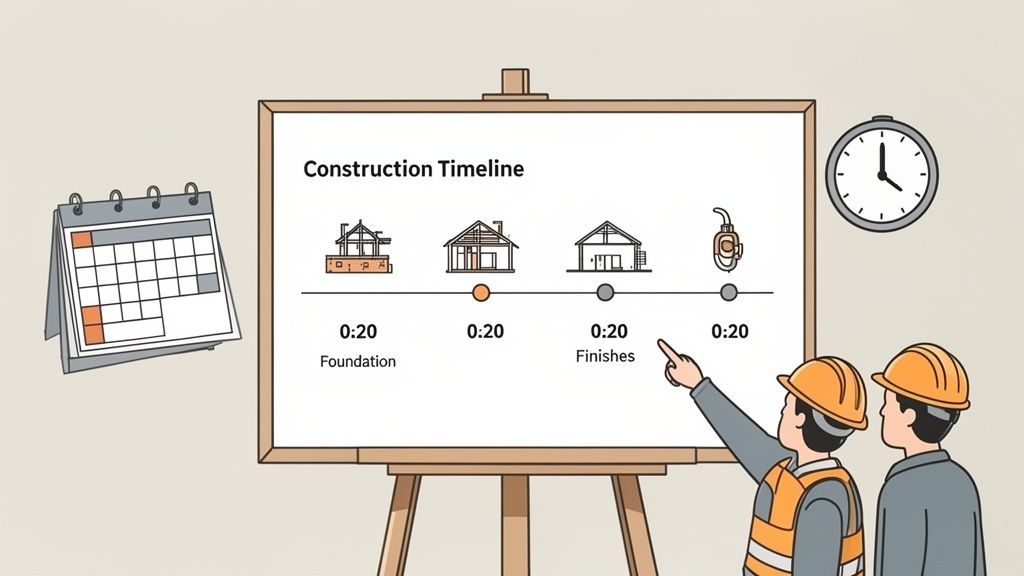
This doesn’t mean you need to micromanage your builder; it’s about being an engaged, informed client. Regular checks and a solid grasp of safety rules will help you uphold high standards, ensuring the finished project isn't just stunning but also structurally sound and fully compliant.
Checking the Work as It Happens
Don't save your inspections for the grand finale. The best way to catch potential issues is through regular, informal checks during your site visits. Spotting a problem early on saves a world of pain—and expense—down the line. You don't need a builder's eye to do this well.
Simply compare what’s being built to the plans you both signed off on. Are the walls going up in the right spot? Are the window openings the correct size and height? This simple, proactive habit is your best tool for maintaining quality.
A classic mistake is waiting until the plaster is on to check where sockets, switches, and radiators are going. It’s far easier to nudge a pipe or a wire a few inches before the walls are finished. A quick look with a tape measure can save a fortune in rework.
The Fine Art of the Snagging List
As you approach the finish line, it’s time to create a snagging list. Think of it as a formal to-do list detailing any small defects or unfinished touches that need sorting before you release that final payment. This could be anything from a tiny paint drip on a skirting board to a kitchen cabinet door that doesn't hang quite right.
Be systematic. Walk through each room, clipboard in hand, and check everything with a critical eye.
Finishes: Scan the paintwork, plastering, tiling, and flooring for any blemishes.
Fixtures & Fittings: Flick every light switch. Turn on every tap. Flush every toilet. Make sure it all works as it should.
Joinery: Open and close all doors, windows, and cupboards to check they move smoothly and latch properly.
A detailed snagging list is your final quality control checkpoint. It ensures no stone is left unturned and the finish you've paid for is the finish you get. Our in-house services include a dedicated snagging process to ensure perfection.
Upholding Safety Standards in Highcliffe and Bournemouth
Site safety is absolutely non-negotiable. While your builder is ultimately responsible for managing health and safety, you should understand the basics. This knowledge protects not only the tradespeople on site but you and your property, too. For a detailed overview, it's worth reading up on managing health and safety risks in construction.
In the UK, gas work is one of the most heavily regulated areas. Any work involving a gas boiler, hob, or fire must be done by a Gas Safe registered engineer. This isn't just good practice; it’s the law.
Here at Hallmoore Developments, this is a standard we never compromise on. Our in-house plumbing and heating experts are all Gas Safe registered, ensuring every installation in your Poole or Christchurch home is safe, compliant, and fully documented for your peace of mind. We also suggest getting familiar with the requirements detailed in our guide to UK building regulations for extensions.
Dealing with Changes and Variations Like a Pro
Even the most meticulously planned projects can hit a curveball. You might suddenly decide you want an extra skylight, or the builder might uncover an unexpected structural issue. The secret to handling these moments is having a clear, documented process for any changes.
Whenever a variation is needed, whether from you or your builder, stick to these steps:
Discuss the Change: First, have a proper conversation about what's involved, how feasible it is, and what it means for the project timeline.
Get It in Writing: Always ask for a detailed, written quote for the extra work. This document is often called a 'variation order'.
Agree Before Work Starts: Never, ever proceed on a verbal agreement. Sign the variation order to formally accept the new scope and cost.
Following this simple process stops misunderstandings in their tracks and keeps you firmly in control of the budget. It creates a transparent paper trail that protects both you and your builder from disputes over what was agreed.
Wrapping It Up: The Final Walkthrough and Project Handover
You’re almost there. The dust is settling, and your project is starting to look like the home you envisioned. But don’t pop the champagne just yet. The final steps – the walkthrough and handover – are where a good project becomes a great one. This isn't the time to rush; it’s about being methodical to ensure a perfect finish.
Getting this stage right is the culmination of all your hard work managing the project. It provides the peace of mind that your investment in your Highcliffe or Bournemouth home is safe, sound, and finished to the standard you paid for.
Conducting the Definitive Final Walkthrough
Think of the final walkthrough as your last chance to inspect every detail with your builder before signing off. It’s a collaborative process, but you’re in the driver's seat. You’ll be meticulously checking the finished work against your snagging list and the original scope.
Go room by room, systematically. Tick off each item from your snagging list, making sure it’s been sorted to the standard you expect. Don't let yourself be hurried or pressured into agreeing on anything you're not completely happy with. It’s your home, after all.
Crucial Tip: Hold back the final payment until you are 100% satisfied that every last snag has been properly fixed. This retention is your only real leverage at this point. Once that money is transferred, getting a builder back for those "little jobs" can become incredibly difficult.
This firm-but-fair approach is the hallmark of a well-managed project, right to the very end.
The Essential Document Handover in Southampton
Just as important as the physical sign-off is the paperwork. A professional builder will have a handover pack ready for you, containing all the documents you’ll need for insurance, future property sales, and your own peace of mind.
Make sure your handover file includes these non-negotiables:
Building Control Completion Certificate: The official document proving the work complies with all UK Building Regulations. This is a legal must-have.
Electrical Installation Certificate: Proof from a qualified electrician that all new wiring and electrical work is safe and up to standard.
Gas Safe Certificate: An absolute legal requirement for any work involving gas appliances or pipework, completed by a Gas Safe registered engineer.
Warranties and Manuals: All the paperwork for new appliances, your boiler, windows, and doors. You’ll be glad you have these down the line.
Missing any of these can cause serious headaches later on, so don’t even think about signing off until they are all safely in your hands.
Final Payments and Closing the Project in Poole
With the walkthrough complete, all snags put to bed, and your document folder full, it’s finally time to settle up. Ask your builder for a clear final account statement that reconciles all the costs, including any variations you agreed to along the way. Check it carefully before making that last payment.
This final step brings the project management cycle to a close. By handling the handover with the same care you put into the initial planning, you guarantee a smooth, stress-free end to your renovation in Poole or Ringwood. Now, you can finally relax and enjoy your beautifully transformed space, confident in the quality and compliance of the work. At Hallmoore Developments, our in-house services are designed to guide every client through this process flawlessly.
Common Questions About Managing a Build
Embarking on a construction project, whether it's in Highcliffe or the wider Bournemouth area, is bound to bring up questions. Knowing what to ask—and getting clear, straight answers—is the key to managing your build with confidence. Let's tackle some of the most common queries we hear from homeowners and landlords.
How Much Disruption Should I Expect?
Let’s be honest: any significant building work is going to cause some disruption. It’s unavoidable. You should be prepared for noise, dust, and a regular flow of tradespeople in your home, especially during the big phases like demolition and structural work.
A good builder, however, will always work with you to minimise the chaos. This means setting up proper exclusion zones, using dust sheets and barriers, and agreeing on sensible working hours. Talking through the schedule in advance helps you plan for the really disruptive bits, like when the water or power might need to be switched off for a few hours.
For projects in busier spots like central Southampton or Poole, a builder's job also involves managing site access and deliveries properly to reduce hassle for you and your neighbours.
What Happens If I Want to Change Something Midway Through?
Changes happen. It's a normal part of almost every building project. You might see a space taking shape and suddenly realise you’d prefer an extra socket, or maybe you want to move a non-structural wall. The key to handling this without derailing your budget or timeline is having a formal change order process.
When you request a change, your builder should give you a written quote that clearly details the cost of the extra labour and materials, plus any impact on the schedule. You must agree to this in writing before the new work begins. This simple step is your best defence against "scope creep" and makes sure there are no nasty financial surprises when the final bill arrives.
How Can I Ensure My Project Stays on Budget?
Keeping a lid on costs comes down to three things we've already touched on: a detailed initial quote, a solid contract, and that crucial contingency fund of 10-15%. Projects most often go over budget because of unforeseen issues or client-led changes.
Your contingency fund is your safety net for the unexpected, like discovering a patch of damp that needs treating before you can move on. For the changes you want to make, the formal variation order process we just discussed keeps you in the driver's seat.
Regular financial check-ins with your builder are also a great way to track spending against the original budget, keeping everything transparent. A well-managed project is all about proactive financial control, not reactive problem-solving.
Sticking to your initial vision as closely as possible is the single most effective way to protect your budget. While small tweaks are fine, rethinking major elements late in the game will almost certainly lead to significant extra costs.
For a comprehensive overview and some great insights, have a look at this detailed guide to project managing a build.
What Legal Approvals Are Absolutely Necessary?
This is a critical one. Nearly all structural work in the UK requires Building Regulations approval. This is all about ensuring the work is safe, energy-efficient, and accessible. It’s completely separate from Planning Permission, which deals with the external look and impact of a build.
Many smaller extensions or internal alterations, particularly in places like Ringwood or Christchurch, might fall under 'Permitted Development' rights. This means you don't need to go through the full planning permission process. However, you will almost certainly still need to meet Building Regulations.
It’s vital to get this clarified with your local council or an experienced builder before a single hammer is swung. For a deeper dive, you might find our guide on UK home extension planning permission useful.
Answers to Your Top Construction Management Questions
We've covered the big questions, but here are a few more quick-fire answers to common queries we get from clients across the South Coast.
Question | Answer |
|---|---|
How often should I communicate with my builder? | A weekly site meeting is ideal. For day-to-day queries, a dedicated WhatsApp group or email chain works well to keep everything documented. |
What's the difference between a quote and an estimate? | An estimate is a rough guess, often given before detailed plans exist. A quote is a fixed price for a specific scope of work defined in a contract. Always get a detailed quote. |
Should I pay for everything upfront? | Absolutely not. A reputable builder will agree to a payment schedule tied to project milestones (e.g., foundation complete, roof on). A small deposit is normal, but never pay the full amount in advance. |
Who is responsible for site safety? | The principal contractor is legally responsible for health and safety on site. However, as the client, you also have duties under the CDM 2015 regulations to ensure you appoint competent people. |
Hopefully, these answers give you a clearer picture of what to expect. Being informed is the first step toward a successful and stress-free build.
Knowing how to manage construction projects effectively empowers you to bring your vision to life on time and on budget. If you're planning a build in the Bournemouth, Southampton, or surrounding areas, the team at Hallmoore developments is here to help. Our in-house services ensure a seamless, high-quality process from start to finish. Get in touch with us to discuss your project at https://www.hallmoore.co.uk.
Comments